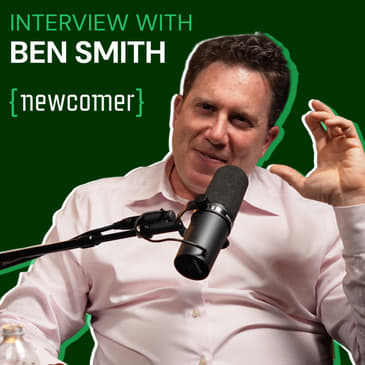
Semafor's editor-in-chief on why Washington has decided Anthropic needs to pick a side.
Ben Smith, co-founder and editor-in-chief of Semafor, joins Eric Newcomer to break down the collision between the Trump administration and Anthropic, and what it reveals about the new relationship between Washington and big tech. Ben explains why the government is taking equity stakes in companies, how the Trump family is monetizing the presidency, and why he believes this is one of the most corrupt periods in modern American governance.
The conversation also covers the politicization of the Justice Department, why CEOs now flock to Washington instead of avoiding it, the Intel deal and what it signals about industrial policy, and Ben's bet that newsletters and live events can outlast the chase for viral traffic in media.
Subscribe for weekly conversations with the founders, investors, and executives shaping the tech industry.
[00:00:00] He bet big on BuzzFeed News and built one of the defining newsrooms of the social media era, until that whole model collapsed. Only to plummet to trade lower by about 8%. Now he's making a new wager, small, premium, and direct to your inbox. As co-founder and editor-in-chief of Semaphore, Ben Smith is betting that newsletters and live events be chasing viral traffic. And, well, I sure hope so. So subscribe to Newcomer Substack, stay tuned for the Shrevelle Valley Summit live in London. This is the Newcomer Podcast.
[00:00:35] This collision of the Trump administration and Anthropic, what is this sort of DC view of Anthropic and the AI world's collision with the Trump administration? I mean, A, what an incredible, insane story. B, I think like just to pull it back, like I think in the biggest picture, maybe like the biggest story of the United States right now,
[00:01:00] and I think it's one that really begins in the Biden administration, is the very, very intense involvement of the United States government in the private sector. Like it's just, you know, the CEOs of big American companies, big global companies would never go to Washington in the 1990s and the 2000s, because you didn't have any customers there and you didn't want to be on regulators' radar. And now, and starting, you know, in part with the kind of return of industrial policy with the IRA and other Biden initiatives,
[00:01:26] there's suddenly a sense of like, wow, the U.S. government can pour money into my business if I, you know, do some combination of making a good case and kissing the right asses and donating to the right politicians. In my mind, the biggest move the Biden administration did here was failing to have Elon Musk come when they're hyping up the electric auto industry. So, I mean, it looms large in that they were trying to showcase some American companies,
[00:01:52] but the biggest effect was getting Elon very angry that he wasn't part of that showcase. Yeah, but in some sense that is like a butterfly that flaps its wings. But it's also if you just sort of step back and look at objectively a marker of how totally political, I mean, like shocker, Washington is very political. But, you know, Biden did not say we want the most ambitious and forward looking and successful American audio companies. We want it. He said we want the ones that are aligned with that political coalition, which is to say the UAW.
[00:02:20] And so, you know, that is just that is how politics, in fact, works. I mean, Trump has obviously taken it to a totally different level and place, both in a philosophy of, I mean, philosophy is a strong word, a style of government that you kind of feel racist distinctions between public and private. And the government is taking stakes in companies in ways that are, I think some people believe strategic, like Intel, like the U.S. really ought to have a domestic ship manufacturing business,
[00:02:47] even if, as a senior government official said to me the other day, it is a garbage fire because to hedge against the risk from China. Like there's obviously an argument. The Intel situation, basically, we, the U.S. government gave them money not contingent on equity. And then it was sort of like, we gave you all this money. Now you should give us equity. I think that there was a conversation that had begun around a grant and the Trump administration said, no, we want equity. You know, there's precedent for that during the auto bailout.
[00:03:16] The Obama administration wound up getting paid back and you'd like for investment from propping up the car makers. But Trump administration has a different idea, though. They think they like the idea of having U.S. companies on the U.S. government's balance sheet so the U.S. government can help them. They don't mind picking winners and losers. And then, of course, the Trump family is also in parallel monetizing the presidency and making lots of money. And their friends, you know, across different industries find ways to make money off them. I think the Trump family doesn't mostly love their friends trading on the name.
[00:03:45] They like the like the Trump family businesses are doing amazing. Occasionally really close allies like they let the Ellison family put that UFC match on pay-per-view on Paramount Plus to drive some conversions, I guess, for them. But so there's a sort of blending of public and private and also an impulse that the U.S. government should be involved in deals. They're going to do a deal with Japan for, you know, five hundred million dollars in investment. And Howard, Lottnick and Trump are going to, with the Japanese, pick where they're investing. That's the idea of that deal.
[00:04:15] A lot of it is quite happening, but there is just an involvement of the U.S. government in the private sector with no kind of philosophical overlay connected to the free market that we used to have. But you're and I want to get this back to sort of Anthropocan. Sorry. No, no, it's good. We needed to step back. But it's important to say the Trump administration with regard to sort of its handling of business is the most corrupt administration in modern history.
[00:04:43] Or like, do you think there is an objective review that there's so much self-dealing? It feels very clear to me that there's just an insane level of corruption, whether it's I mean, some of it's like the plea bargain is probably the most objective. But I mean, I think there's a million different things happening at the same time. And like the Trump family's crypto business is like totally unprecedented.
[00:05:09] You know, Trump has personally become gotten richer during the course of this two year term that I believe all other presidents come out. So like there, but, you know, but then simultaneously, there's just like a broad involvement of the U.S. government in business that, you know, it sometimes like has the usual Washington corruption. Like you better hire that. I saw a guy used to work for Trump saying, you know, you better hire a lobbyist who's connected to the administration, which is a very, very crude thing to say.
[00:05:38] That is how Washington is also how Washington has always worked. And then I think anthropic kind of happens in that context. And then there's also there's a total politicization of government. Trump uses government, views government, believes that he was persecuted by his enemies. By the way, like I think if you look at some of those prosecutions, not a crazy thing to say. And that he is playing and he said he wants to use the government to take revenge against his enemies is directing the justice.
[00:06:07] Department is actually to me above corruption is the most not whole and disturbing thing. The administration is the use of the justice department as a tool to attack his enemies. And then in an anthropic kind of walks into that vortex where the government feels is totally improvisational across the boards, like improvisation on all sorts of fronts. You know, you saw this with the war in Iran, most of all. And the improvisations that are, you know, where Trump has been had these balls in the air and they kept it now.
[00:06:35] We're almost two years in and he's running out of running out of space to keep improvising. The total improvisational, you know, very interested in rewarding their perceived friends and punishing their perceived enemies. And they decided anthropic is woke. Yeah. And then we'd also like to see them hire lobbyists closer to the Trump administration and the Trump family.
[00:06:55] Right. I mean, it feels like do you agree that the core issue seems to be one of almost like aesthetics where what anthropic needs to do is, you know, they sort of need to keep their head slightly lower than the Trump guys, you know, sort of say, oh, yes, the government is in charge, not us. You know, I think one of the issues that seems to be emerging is just, you know, and, you know, this isn't even Trump specific.
[00:07:19] But I think some people make the point that if you're a company saying we're going to have this like world historic power governments, especially the U.S. government, we're supposed to be the world historic power and control things of that scale. And so they want this show that we're. I mean, that's a pretty I would say that is a reasonable one of you. Yes. That the governments have the monopoly on violence and stuff like that. The government. Well, first of all, I mean, I think he brain lose the sight of this.
[00:07:47] You know, the number of the first branch of our system is Congress. Right. It is. Congress is not doing the things you're talking about. A subset of our government that wants people like you to see that Trump is representative of government instead of just a small or one third of it. Yes. I just I would say I just think that like I wouldn't I think just like talking to these people all the time, covering a lot.
[00:08:16] I don't think there's like a single impulse at play here. I don't think there's like a clear strategy. I think the basic you know, one of the competing polls is we don't like these guys because they're woke. Another is we love these guys because it's a huge business. Look at these numbers. This is America. This is growth. So Trump, Howard Ludnick is supposedly. I mean, the biggest, most important decision the Trump administration made in his entire presidency, arguably, was during the transition. You know, people are everybody knows Trump loves deals.
[00:08:41] And so these CEOs come in and said John Deere comes in and says, you know, we're going to build a five million dollar plan in Iowa. And Ford comes in and says we're going to build a 50 million dollar billion dollar million dollar plan somewhere else. And open and AI and Anthropic and Microsoft are just talking about adding zeros. And like Trump can count zeros. Well, there's that, you know, the Zuckerberg one where it's like, what number am I supposed to say? Yeah, but no, but the numbers are saying are real. And Trump says, whoa, like I do want to preside over an economic boom. Let's just totally we do.
[00:09:11] Let's just clear everything out of the way of these guys so that. So, you know, and I think that is, you know, that is was a real decision that the administration made to just open the doors wide as they possibly could to these AI companies. Including Anthropic, which, you know, and Amazon and, you know, and their investment. So there's like and that impulse is still there in the administration. Like they want giant companies to succeed and build lots of data centers. That's a real strain of the administration.
[00:09:35] Another strain, I think, is specifically Scott Bessendt, who people in the White House think of as the smartest guy in the room being really freaked out that. This is a guy who almost like punched Elon. Almost punched Elon. Almost punched Bill Pulte. It's like he's the real reasonable one. He's a he's a very intense. He's a very intense guy.
[00:09:55] And that he and I, you know, I talked about this not in detail, but that he's worried that, you know, he wakes up one morning and one of the big banks has been hacked in some novel way. Customers can't access their accounts or institutions can ask their accounts and the markets just like and there's a sense of like a little hint that the financial system is fundamentally unstable. And that triggers just a massive, massive crisis.
[00:10:19] And I think, you know, I think a lot of people who work in Silicon Valley don't think that's that big a risk, that that's a little overstated, you know. But he has, I think, when he saw Mithos come out, was really freaked out and got the banks really freaked out about this. And so there's all this. I would say, like, there is a impulse administration. It's just like let these frontier models cook. There's another impulse in the administration and outside administration is we got to regulate these things. They're really dangerous.
[00:10:44] And then it's fundamentally a personalist government where Donald Trump makes decisions in the black box of Donald Trump's head that come down on one side or the other of these competing things. You have a view on calculating what Donald Trump wants personally. You have a view on calculating things personally about AI? Like, do you know how much they think AI? Like, I mean, he's excited about crypto, you know, which I think of as sort of not that real. Do you think they see any difference between AI and crypto? They're like, it's another thing people are yelling about that sort of produces monies.
[00:11:14] Yeah, people I know talk to Trump that AI. I think he kind of gets it in broad strokes, maybe the way I do. I mean, he's not a technical person, but he's not an idiot. I mean, he's in the AI. And also, I think he is, he sees like everybody else does that, you know, without this current Silicon Valley boom, the U.S. is like England. You know, like it's driving his whole economy. Right, that's his saving grace for this. And the stock market, right? Like, I'm sure he's, I mean, right.
[00:11:41] Like he is, the anthropic possible IPO is like not a trivial thing to him. And maybe he's holding it hostage and he's yelling at them. But it's not like he, but he also is, you know, rooting for the stock market and for the growth numbers and for the job numbers. So there's, I mean, there's a lot of different factors. And, you know, and there's some combination of, as you say, showing personal deference to Trump and telling him he's great and building a golden statue and hiring his third lobbyist.
[00:12:07] The media feels like it's cheering for, you know, the savvy story type we talk about a lot, right? Like I think of Axios as sort of number one Politico, you know, does this type of story. You know, I don't know. I would say Ashley Goldin. I see this is a great reporter. Well, I'm breaking a lot of the news here. Ashley Goldin. But their style is, you know, it's like blind quotes from the Trump administration.
[00:12:31] And it's, I feel like there's this implicit, like every company knows you need to sort of pat some egos, suck up to the administration. And it's written from the sort of sense that their fail, Anthropoc is failing to do that. Whereas I think there's another lens, which is right now, every company in the United States is flattering the egos of the administration to get what they want. And we literally have one major tech company that's saying, we're not getting those aesthetics. Like this is America.
[00:13:00] It's a democracy. This is a very important technology. We shouldn't have to flatter the ego of the president. Is that what they're saying? I've not heard them say that. I feel like that is the, what we're, I mean, you see it from the Dario memo that got leaked by the information in the defense department fight, which is that they clearly internally see Trump as this, you know, anti-democratic force. I don't think they're screaming that, but I think there's a limit given their clearly internal belief that they're going to then just be like supplicants publicly.
[00:13:29] And that that's, and that the media effectively sort of wants to push them into the supplication. Yeah. And I don't think you don't, no, no, no. And I know, I know that I know exactly the style of article you mean, like what, like they just need to play the game. But, but I don't know. I don't, I guess I don't think the media should have a rooting interest particularly. Um, but, but I think, but it is a complicated story, right? Like they have a very set. The media should root for, yeah, democratic norms, not, not having sort of a imperial presidency. You don't, you don't think that?
[00:14:00] Definitely democratic norms. And I'm not sure the power of the presidency one way. I mean, I, you have a very, like a pre, pre Roosevelt version. Sounds great. Um, but no, I guess I, I guess I, I mean, I think the media should mostly be focused on telling you what the hell is going on, which in this story is totally. But frames, frames rule the day. I mean, it just like. Frames rule the mess. What do you mean? I don't know. I mean, I think like you can spend too much time arguing about the framing of articles on Twitter. Ultimately, I mean, I think this is, again, I'm just going back to the war because I think that's.
[00:14:30] The huge override of little story this moment. I know people are going to like, there's going to be all sorts of spin around. And no, no, this was actually a great deal. The war was genius. People will say that people write that it doesn't matter. Like it was obviously not. It was a disaster. No, it's not. You know, I think that's true. Most. I just think the narratives matter so much. I mean, literally when we started this conversation. And I was talking, we're, you know, you're setting up sort of the, the corporate corruption.
[00:14:57] It will, you did sort of start with, Oh, I started during the Biden administration. Like that's true. Yeah. But sure. There are facts, but like you're marshaling facts. To, to, to make a point, you know, it matters which facts and issues first. Yeah. No, I think you're right. And like, and, and, and it, and it's a question of how much you want to cast Trump as a total aberration from American history or not. Um, which, which you don't think he is or. Some, some ways more than others.
[00:15:25] What saying on the AI and DC topic, but switching gears slightly. Yeah. Slightly. I mean, you know, what do you make of, I guess the American public's animus towards AI from, you know, the research that I've seen seems much worse in the United States. Certainly developing countries are more excited about AI than developed. Yeah. And America in particular, where all this stuff is, you know, we're, we're making the money are the most hostile to it.
[00:15:53] Um, so I guess the American public broadly, and then how that's going to flow to the political parties and like our Democrats basically just going to be super opposed to AI. Yeah. I mean, it is a wild story. As you say, in much of the world, they see it as kind of a cool technology. They're eager to use and have their kids use to make more money. And here, the place where, as you say, we invented it and are making it, um, people, yeah, people are very, Americans are in a sour mood about everything, by the way.
[00:16:21] Like they also think the economy is terrible, which is not really what the numbers say. So I think it is a moment where people are really angry about how society is organized. They're angry about the pace of change, both of those things in terms of the wealth accumulated to the AI companies and just the strangeness of it feels like it feeds that. Um, I guess having covered the social media wars and I remember writing a piece there's in 2017 saying like both political parties are coming for the tech companies, you know, and then watching for 10 years, nothing happened.
[00:16:50] I think that like you can overestimate, I think that Americans like technology more than you think that they like products that they use, that there's a lot there. It's gets, it's very hard to regulate anything. It's anywhere within a million miles of politics and political speech. So, and, and that some of this, and that some of this stuff in, you know, the, the companies behaved in ways that really no American has ever behaved, which is like our product is terrible
[00:17:20] and dangerous. It's going to put you out of work and poison your children's minds. And so like people believe that. And I think some of the companies are starting to behave more like normal companies, which is like our, our technology is nice and useful and you will like it. Um, and, and we're going to sponsor your little league team. So you, so you're, so I guess I think it's going to normal. I actually, I think that we're in a moment where a bunch of politicians like are going to come out and take these hard line idea stands that in the year, the story a little more complicated. Well, Gavin Newsom is clearly trying to be a little friendlier.
[00:17:49] I think Newsom is, is actually probably the, this is to me the one to watch that he's a more among the Democrats, a much more experienced and kind of seasoned politician who is, I think not, who is really obviously running for president and thinking about where, where are things going to be a year from now, two years from now, not where are they white right now. And then I do think there's also a real question of like, so far AI has really, really profoundly changed the last software engineers.
[00:18:19] And then I think for white collar people like me, it's been kind of neat. Um, but like, and for kids been like kind of helping with their homework or made them lazy, but it has been sort of, it's like a really marginal for everybody who isn't a software engineer. And I think I was talking to me, one of the frontier labs, like, I think, you know, is it going to cure cancer or is it going to cause a massive catastrophe? Like those two things are really going to shape people's views. And I, and they keep promising huge, particularly medical scientific breakthroughs. I think we get one of those that'll really change how people see it. Yeah. Yeah.
[00:18:48] I think I generally agree with the story or I had an idea about animals, like they could maybe like pet health, but then they said like, it just seems like a place you could move faster than with all the regulatory rules. But apparently the idea that a frontier lab would also operate like a dog research facility seemed even for them. Well, there was Silicon Valley has this company, there's this company loyal that's working on dog life extension. Yeah. There you go. Yeah. So it's not an AI company really, but it's premise on this idea that the CEO is very interested in life extension and you can move much quicker with dogs.
[00:19:17] So there's a lot of work to be done. But so you are predicting that data centers will not become a top five issue in the sort of major. I think you're, I think journalists love to write about it. Right. People are spinning that up. Like, I don't know if we follow Charlotte Alter, you know, used to be a time as a sub stack that's, you know, she calls it the new humanism. She's a little hostile to AI and she had a democratic operative on that. He was sort of saying, it's going to be, you know, and I think it's weird. Sure.
[00:19:47] We love to talk about it so much. If you poll people, like if you, you know, open-ended polling or what is the most important issue to you? The bucket of issues around government, not working corruption is like 30%. I think technology is less than 1% of like, what are your actual top issues? If you ask people, do you want some weird humming warehouse in your backyard? The same now. But actually, interestingly, they, whether, whether you live near a data center or not has no impact on what you say about data centers. It does not.
[00:20:15] Honestly, it feels to me like sort of a fake issue. The issue, I think the kids stuff is different. I think, and you talk to politicians, the issue that they feel that they can connect on most that people are actually interested in their own lives, not as a 17th priority. If you ask me in the polls issue, but as I'm worried about this, it's kids. They feel like they failed that. And then social media for various reasons, the US never managed to regulate it. The Australians and the British now have. But I think you see like Spencer Cox in Utah, you see Josh Hawley, you see Jake Oppenquist
[00:20:44] in the House, a Democrat starting to push regulations around kids and technology, kids and AI that I think, I think when JD Vance and Estes is running for president, when people like that, I think there's going to be a really well-developed AI platform. That's going to be probably softer on the companies in various ways than people are predicting now everywhere except kids. And I think that's the place that they're going to want to make the companies squirm and push hard.
[00:21:10] And it's the place that voters feel much more viscerally. It makes sense. I think most Americans, it's like where, you know, kids can't make decisions for themselves. They deserve some government protection. I don't, I do see that in resonant. And there's nightmare stories about kids hurting themselves after talking to chatbots. Very unusual, but unbelievably scary. Yes. In a way that data centers are, I think are kind of a symbolic issue. Yeah. Yeah.
[00:21:39] I think that's reassuring. I think tech is getting, well, from the perspective of Silicon Valley, which, you know, I share in many ways. I guess I'm, as someone who's sort of, what do you think? I'm left leaning, right? But believe in technology and see a lot of this resentment online. People hate tech. They love tech products, right? And I agree with your sense that it's like, if the government like mess with Amazon tomorrow, people will lose their minds. So I largely agree.
[00:22:04] The one footnote to that is, you know, right now, Anthropic gives you this warning, like, you know, we don't have Fable anymore. And people are not like losing their minds over Fable the same way they went over like Uber not. Oh yeah. He had gotten halfway through making his chem presentation on Fable and he gets to redo it. Because it, oh, he doesn't have like the record and everything. Or whatever. Yeah. It was with, with teacher's permission.
[00:22:28] So, so yeah, I, I'm just personally worried about a situation where Democrats just become super anti-tech. And there's no history of that working in American politics. Right. And so it's just, so I don't, I mean, AOC, I mean, do you think AOC is the, a top three democratic contender for president right now? Yeah. I think if she decides to run, she'll be incredibly formidable. And yeah, there will be a real anti-tech voice and a real like, and I think, you know, what
[00:22:55] the, maybe it'll be nationalized, the labs profits in some way. Maybe it would either taking a stake in the companies or a really heavy tax on them, which by the way, I think a lot of people is looking to like favor. Right. Or maybe, and it may be, I mean, the data center moratorium is theoretically until we get some kind of regulation on the books and it sort of meant is leveraged. I don't really see how that makes sense in this dysfunctional Congress, but like where this is, but how this is supposed to play out.
[00:23:24] But it's, and then, and then, right. And then below that, there is a level of like AI is a scam. You know, it's not real. It doesn't actually work. We've all been fooled. Like the real stuff that is just not true. Ed Zitron dominates this. Yeah. Have you had him on your podcast? Oh my God. Bloomberg's having him on. I feel like, but there's such hunger in the media environment for an anti-AI voice. Yeah. But a lot of those folks made predictions two or three years ago that he did not pan out. Yeah. It's all that from my YouTube commenters. Sorry, guys.
[00:23:54] He's been saying it's going to fail since like 2024 at least. What it means to fail keeps changing. I don't know. But I think that that is a real strain of politics, but I think kind of more very online politics than real world politics. I just think that people, it's easy to overestimate when you are, if you were me, how much this is going to be a motivating issue for voters. It just seems hard for me to believe. I want to, Silica Valley is always obsessed with going direct.
[00:24:21] Andrees and Horowitz has made a big push and with their now branding as new media, they put out an essay sort of articulating it. It's Twardberg. Yeah. Eric Twardberg has come in. That's sort of their marketing effort. They have monitoring the situation, which is, you know, sort of a TVPN knockoff. I mean, OpenAI spending, you know, apparently hundreds of millions of dollars on OpenAI seemingly validating. What is new? Yeah, exactly.
[00:24:49] The comps, you know, but yeah, I don't know. I mean, we've been talking about this for a while, but like what, what do you make about of Silicon Valley's obsession with, with going direct? I guess. I mean, I think, you know, Andrewson put it pretty well in just saying, okay, it's a realization that old school, old school marketing through the media meant you basically had to avoid saying anything stupid.
[00:25:17] Like they talk to somebody like you in New York times and it's like, I'm important. They need to survive the interview. You're going to, you know, run some quote from them because they're important. And they hopefully didn't say anything that's like outside of control over what, how they appear. Yeah, exactly. So they need to play it super safe. And now they build their own channels. They actually have an incentive to be interesting, which is something that, you know, I think the media class would root for, right? That they have to be spicy to get people to pay attention.
[00:25:46] But, you know, it's to their own ends and they're not sort of using us. I don't know. What do you make of the story they're telling? Well, I mean, I think there's just like an obvious truth that you may have noticed the media has splintered. There's this whole digital space now, the centralized platforms that control the broadcast towers and the printing presses no longer control. And like, at this point, quite old and obvious technical story, which means that people can, I mean, just descriptively, you can speak to people directly.
[00:26:13] And so I don't, and I think, and for instance, there's been incredible marketing this idea about going direct, but every time they try to do it, it doesn't seem like they quite nailed it with that magazine that did Future and now with this new MTS thing. I was on it for a while. It seemed fine. But like, it doesn't. But then the most successful media eventually I've ever done, though, was these, was Mark Andreessen set up during COVID a set of private group chats that were incredibly good kind of manufacturing consent and shaping opinion on the center right and kind of rallying support for Trump in the end.
[00:26:42] And I think it were really meaningful. And the IT and Shroom Krishna and Tornberg did that. And it's actually, it was a really successful media project. I think the thing with, and I think the thing, actually, I find I'm very, I'm not truly an optimist here and in other spaces. But like, I think the thing that everyone is finding is that it turns out that asking hard confrontational questions is more interesting than asking like extremely boring, sycophantic questions.
[00:27:08] And that I'm telling like interesting, true things like where's better than lying to people and that there's like a pull even in the new, in these new media spaces, even if they were set up to be heteropartisan. Like my favorite instance of this is that, you know, Pete Hegseth like threw all the normal reporters out of the Pentagon because he didn't like them saying the war was going badly. Maybe it was a little before that, but he wouldn't have liked it. Brought in a bunch of like quite far right outlets, all of whom immediately started at like who once they got their feet and figured out what, you know, where the bathrooms were,
[00:27:37] started asking why the war was going so badly. And like he was getting jammed up by a gateway pundit, for instance, like really, you know, there's sort of a, and then you saw this with, um, you know, Dwarkech's great podcast. Amazing. But also like he's moved, he's become. I mean, he was more capable and willing to stand up to Jensen. Yeah. And I think he's always been very, very well prepared and thoughtful. But I think like, you know, like he's getting better at it as easy as we all do as you go. And that often means being a little tougher on his guests.
[00:28:05] And like, I just think that's, that's, that's not because somebody went to journalism school. It's because that's more interesting. Did you go to journalism school? Did not. Me neither. But we both came up through media and learned media norms. Like in some ways, you know, media, there was just a set of ethics that sort of, that controlled it. Right. And in a good sense. Right. I mean, it's like worry about conflicts, giving people the opportunity to respond to requests for, I don't know.
[00:28:32] There are, there are all these rules that I think every journalist who survived a couple of internships had to sort of live and breathe. And they, and I think part of what was a threat to Silicon Valley is that they superseded capitalism. Right. That it was sort of norms that transcended sort of your sort of business objectives. Or, or do you, do you see it in a way where like, do you, I sometimes talk about, it was
[00:28:58] like a priesthood of journalism in that, like you're giving up sort of these sort of earthly concerns and you have these bigger moral rules that are guiding you. And I think, you know, there's something good about that in journalism, but I think it almost required, you know, a monopoly power. You know, it's like to do non-economic things and to say, we operate by this set code. You needed to not have the competition from people who are willing to do everything under the sun. You know, I guess I see it differently.
[00:29:26] Like first I see it, those, those things that anyone would want that are kind of like where the audience wants. They don't want you to be lying to them. So you have conflicts of interest. Like these are things that come out of your responsibility to the audience, not out of some priesthood. And I, the other things I've always seen it that stole this from my old boss, Jonah Peretti, but it's more like a trade. It's like, you kind of work for the company you work for, but you also sort of work for the guild. And like, if like the, you know, the manager on site tells you that to do something that
[00:29:52] isn't like in keeping with the guild standards, you're just going to like put your tools in the bucket and go back. It's like some medieval guild. That's how it used to be. That's how it is now. Like that's what Jonah, that's the thing you're saying. It's not exactly capitalistic. It's like, you sort of work for your employer, but I remember somebody asking Jonah, like, well, can't you just get your journalist to do this? And he was like, no, no, you can't really get them to do things. Cause like, they sort of work for you, but they sort of work for the guild. And like, if you ask them to do something that isn't in keeping with their weird self-regulating standards, like Mark Andreessen clipped this.
[00:30:20] This is the most validating, this is like, you know, sort of like, but sort of like lawyers, right? Like you can ask your lawyers, at a certain point you ask a lawyer to do something and they're like, no, I'm not going to do that. Right. But they're more regulated, like journalists are self-regulating in ways that are good and bad. But journalists really will just kind of be like, no, I'm not going to do that in a way to be frustrating for people who manage them, including me. Like, you know, write about cloud companies more than our sponsors or what? Or just like whatever, you know, where you, I mean, you know, you've, you've ever managed
[00:30:49] journals, you've been to journalists. No, more like, Hey, would you write this story? No, I think it's boring. There's not normal employees. And you think that's not going away? Well, the thing about journalism is that the best reporters are usually the ones who are worst at following the rules. So it's messy. Probably true in a lot of professions. I mean, to push back just on one of the points you made, which I largely agree with what you're saying.
[00:31:16] I mean, I think in Silicon Valley, people like these media personalities who are like in the mix, you know, like they've invested, I mean, all in obviously most famously, I mean, they, they're almost overselling how credible they are to, to get support from their readers. So they, their readers are their viewers want them to sort of be conflicted because it shows that they get it, that they're on the inside.
[00:31:41] So this idea that the audience that you're serving your own business interests by not being conflicted. I don't know. Right. It's just a spectrum of people who are right. Like just business people and political leaders are going direct people who are becoming something more like journalists and commentators while also, I mean, I think it's just, that's just the nature of this ecosystem now. Yeah. But I think, but I think the idea, but I think within that there's just obviously a role for independent journalism. People both would like to hear interesting opinions from people who might have conflicts and would be like to have people that trust all the time.
[00:32:11] What's going on? Like, I don't think those things are really in conflict with each other, but it, are we pursuing niche audiences for the rest of time? Like, do you think people are going to build new reach all of America type publications or it's just this race? And I just think, I think that's like fundamentally a technological story and all this stuff. I guess my big, I think all this stuff in media that we wring our hands about and is, did the media get too left wing for too right wing for a bunch of social factors or because the business class on everything else would analyze a business based on their
[00:32:42] financial incentives. And then in the media, they're like, it's all this cultural stuff. Sometimes it is the cultural stuff, but I just think like when people say, well, trust in media collapse because the way Dan Rather covered during which you know for, it's like, I just think there are these big structural factors. And again, just, it's so obvious that I think people don't pause to think about it. But for this long period in the 20th century, you could only reach a mass audience if you had a license to some television spectrum or an enormous printing plant. Near a city and a huge fleet of trucks. And these are both like incredibly capital intensive and most people can't have them.
[00:33:11] The spectrum is in fact, you know, is, is scientific, you know, is limited by physics. And so that produced this media for a period in the 20th century, which had not existed before and will not exist again. That's consolidated into a handful of centralized outlets. But that wasn't because there was people wanted it culturally or didn't want it culturally. That was just technology. Um, like right now there's only one way to get satellite internet in Malawi and it's star-like, but that's not because that's not a feature of the universe. That's just where we are.
[00:33:41] And I think that sort of was true of, there was only one, you know, a couple of ways to get news in Indianapolis. There was the ABC affiliate, the CBS affiliate in Indianapolis star. And so like that creates a totally different environment than the one that America, the hyper-polarized partisan fragmented one that had preceded it or the hyper-polarized partisan fragmented one. Now that doesn't mean that there aren't more mass proof of the entertainment properties and always have been. Marilyn Monroe is great. But like, but the, um, like she was on the margin with that.
[00:34:11] But, um, but I just think it doesn't necessarily mean niche, but it just, that's just descriptive of a totally different technical universe. Yeah. And I think that, I think the anomaly was this spec, the television, the invention of television, really. That we had technology that made it, that we could just distribute widely, but then it was still very controlled. Yeah. That just required enormous amounts of capital. And in fact, lift physical limits to, and critically in the U S where you have these cities that are really far apart from each other.
[00:34:39] So you, in Britain, you never had these regional, these powerful regional newspapers in the U S is just hard to get the New York times to Indiana. I'm sure you've talked about it. So I don't want to spend a ton of time on it, but you know, the collapse of Buzzfeed over time, is it fundamentally just a Facebook story or it's like it was riding the social wave, the social wave didn't sustain outside publications. And that was that, or is it a more complicated story? Yeah. And I thought about this a lot. Yeah. Book about it. Traffic. Yeah. Check it out. We have our books are sold.
[00:35:08] Um, you know, from a kind of investment perspective, cause I see one of the things I didn't write a book, but after the book came out, a question I got a lot was particularly from investors. It was like, why did anybody put $500 million? And then Chris, he was, he was on the board. He was Andreessen, the rep on the board. Like what were people thinking? And there's actually a real answer to that. That's interesting, which is that a lot of the early investors in Buzzfeed and Vice in particular had come out of and had their formative experiences in the cable era.
[00:35:36] These are the people who invested in MTV and the companies that came by a com MTV, comedy central. And the core thing they'd learned was these entrepreneurs create a new technology, cable, new pipes, new wires. And then there's gotta be content that's purpose built for it. There's HBO, there's ESPN, there's CNN, there's comedy, you know, there's all these amazing new brands. And if you're the guy, if you're the cable operator, if you're Comcast, it's in your interest to, to, to shape a system in which content companies get paid, make great, make great
[00:36:05] money bill, you know, making great content for you so that people will pay for your service. And so that was the analogy that they took into the social age, which was that these new pipes now, Facebook, Twitter, Pinterest, YouTube. Whatever. And there's gonna be a new Viacom that's gonna be building new content. Instead of, oh my God, all these people are gonna do it for free this summer. Yeah. And they didn't bet on, and they, and they, I would say they did not only, like, it wasn't that they weren't aware that user generated content was a thing, but I think their bet
[00:36:32] was that these companies would, in their competition with one another, wind up licensing professional content. And by the way, like, I don't think that was an insane bet. It's not how it played out. But I think if you look back at the declining Facebook blue app now, and you said, huh, like, what if they had tried to become Netflix? They'd be better if they were Netflix than what they are. Right. So like, I don't think UGC has always been like the right path.
[00:36:57] And in fact, YouTube now is really build a business that, that, that people can build businesses on top of. Right. That's what I think. Mr. Reese is a company. Yeah, exactly. But that was, maybe they underestimate how much it would be totally different. Individual creators. And I think YouTube in particular, I think that my sort of personal experience is like creator is a word that was invented by these platforms to turn, to make sure that, that
[00:37:24] content creators couldn't actually agglomerate into media companies or any other organization. Like they want to deal with Uber drivers, not with taxi flights. Hmm. And they, so that they have all the leverage, which is smart. But I think that, you know, Buzzfeed and these other companies, Mr. We didn't print it for the future wrong, but I don't think it was like a crazy prediction. But it makes sense to nature of venture. It's a bit of wrong. Right. I mean, I think the customer consumers want human beings. Right.
[00:37:52] I think part of what explains the creator phenomenon is just people now, whether it's sort of a mood or whether it's because they can get access to it, want vibrant, full people and not brands. Like they'd rather their brand mostly roll up to a human being. People don't like institutions in this moment, but always have liked humans. I mean, the humans are, I mean, television is always, you know, populated by humans. And now you're seeing like Kylo Scamblin went to CNN this week.
[00:38:18] Like there's a pendulum swing where a lot of the humans are being reconsolidated. And all the, where you see the clips of like the TV shows that look like podcast studios, where they have, they steal the mic silings of podcasts. That's a mic is being a plug. It's like, it needs to look like just a couple of guys, you know, hanging out. So it's amazing. The, the sort of aesthetic copycatting of it all. What, how do you personally, like, I mean, one thing I'm, you know, I am actively,
[00:38:50] struggling with is always how much I want to sort of be a media executive versus be, you know, the journalists, you know, themselves. Like I was doing an exercise and it's sort of like, you know, am I, how much do I want to be the entrepreneur? You know, the writer, the sort of media persona, like having a podcast, hosting events. And then now the, for this, you know, parent time. And it's sort of like, you know, we wear these different hats. Like, how do you think about, I don't know, the hats you're wearing,
[00:39:18] what ones you like and want? Yeah. I mean, I kind of like it all. Although I would say I'm not, I would never be a good CEO. I'm not a good, I'm not a good business executive. Like at BuzzFeed, there was a period where I was trying to be that. Interesting. I just don't think I could, I don't know. I'm not strategic in that way. Like again, I had my partner, Justin Smith to me is like one of the reasons I was, I wanted to work with him is when I'd, when I was really failing at BuzzFeed, I was talking to people for like, what should I do? And he gave me, when I had lunch, he took me out to lunch.
[00:39:48] He gave me advice that I was like, oh my God, this is good advice. And I'm personally unable to execute on this. And so that's why I wanted to work with him. No, I mean, I'm a journalist, I'm an editor. And like, I love, I love a lot of this, you know, the stuff around it and kind of trying to think of ways to do deals and shaping our events, which I really consider journalism. But the thing that I also love stories. And you have an event. I'm a blogger. It's true. I see you haven't even plugged it. Sam, this is why, this is honestly why I have a bad executive. You said Justin was on here. The first thing he would have said.
[00:40:18] It was somewhat competitive event. I mean, I think we're going to be friendly about it. No, it's a friendly, friendly event. But after you leave Cerebral Valley, if you are lucky, we will invite you. Oh my God. And if you know, we're having this event that actually circling back to the thing we were talking about the first, like this contact between government and technology is just so the central story now. It's also true that I think a lot of people in Cerebral Valley don't want to like spend a week in Davos hobnobbing the politicians.
[00:40:44] And so our theory was, let's do an event like the SF standard called Davos by the Bay, but called Silicon Valley in the world, taking over the, you know, iconic hotel in Silicon Valley and, and bringing in and a number of big tech leaders, Jensen Wang, Sachin Nadella, what Lisa Su, big, a long list of really key figures are on the advisory board or co-chairing it. And it is this collision of tech.
[00:41:11] And the idea is that we'll invite political figures and world leaders to the valley to be where, because I think that they're, they're more inclined to go to the valley and really try to figure out what's going on there and meet these folks. Then a lot of these people are to go anywhere else. Like people are really busy and they don't necessarily always want to leave. And so I think that we, and so I think we're trying to, and I think it will be the sort of premier conversation, you know, at a really, really high level about that intersection of politics and technology. You talked your book.
[00:41:40] The, uh, I get, I get carried away by like yapping about the stories and I forget. How much do you see yourself as wanting to be, you know, like in a media environment that demands faces and people wanting to be sort of one of the main characters of the publication versus I'll sort of pull the newsroom. I actually like love scoops more than I love being right. And like often you get your best scoops cause you see, I'll say something I said that this podcast was idiotic. And somebody will call you, you know this, somebody will call you up and be like, you got that twist you're on.
[00:42:10] And like, here's the deal. And I said, instead of just to be in the mix rather than right. And I, and I like love that feeling of like, Oh my God, that's amazing. Like what, what did really happen? And I think like that probably, I don't know, at some point that gets in the way of you're having a personal brand where you're really sure and right all the time. But I don't know. I love getting to that. I love help. I mean, helping other, honestly, the best part of being an editor is like helping reporters get scoops. The best way to be right is to know, you know, to have the scoop, you know, I think the best
[00:42:37] takes are like, you're talking to the people who are informed. And so you write it like, I think, Oh, sure. It's a direction. And you do that a lot, right? Yes. I am reasonably informed, but, but, but I just would say that I think like my personal motivations, I think I love it for me and I want to know what's happening. So you'd rather sort of push the issue to the level that somebody is calling you and saying, yeah, like I care. I really do. And I think this is probably to, I think it's probably why I'm a better editor than I am talent. But like, I would really rather get a scoop than advance my personal brand by being right. Like I'm addicted.
[00:43:06] You're addicted to the adrenaline of it. I don't know. I'm just, yeah, maybe. And I think it's like my, you know, and I think, and I love working with reporters who want to break news and want to figure out what's going on. Your, your friend, competitor, Rudel Borgatti, you know, very much among them. Like, you know, like it just, yeah, I think it's. Well, Bali. They call it news because you want something, you want to know what's going on. Balaji, you know, the network state on the other crypto guy. At one time media critic, maybe got bored of it. He got boring. He's sort of lonely. Like he used, we got Taylor Loren.
[00:43:36] He was on with Taylor runs on monitoring the situation. And he was almost like, nobody argues with us anymore. It's like you block people. You like, just that's so boring. The tech media thing got so. But he, he seems to be advancing this. He is like an interesting thinker. Yeah, for sure. Ben is advancing a view. I think that like, basically we should only really care about people's online selves that like, that there are sort of like offline selves should almost be off out of bounds and that
[00:44:03] we will live online and all that can be sort of scrutinized. And then, you know, who cares, you know, where your house is? I mean, I mean, him and a lot of people in Silicon Valley who some of them, you know, are fearful for getting attacked, especially after the United CEO. Yeah. Really get mad when the media talks about where they live. And, you know, obviously we saw it with Mom Donnie, the thing outside what he can Griffin's house. I don't know that you get there. I'm making sort of two points.
[00:44:30] One is sort of like, do you see a world where like we change norms to sort of like, we're really obsessed with what happens online, but offline is almost like secret and pretend. I mean, it's not my personal favorite kind of journalism to produce, right? Like gossip and. Or like what is somebody's house? Did somebody break up with their celebrity girlfriend or did they buy a house? Which, by the way, maybe they also did enjoy taking New York Times with Dahlia Furland and showing off how we're staying. Yeah, because really what's the point of owning things like that?
[00:44:59] If you don't show them off, they seem otherwise quite inconvenient to own. But but that's not my kind of journalism. Should we should there be laws or norms that put TMZ and the Daily Mail out of business? Like probably not in the United States. The First Amendment's going to. Yeah, I guess I think there are a lot of things offline besides. I still think we live in a world where for the most part, like one thing that keeps me up at night is just I feel like we hear so much about leaders where we really don't know much about them.
[00:45:28] You know, like I feel like if we lived in a small community, like if I lived in a small town and like the mayor's kids hated them. Yeah, that would be very important to me. But we've created a culture on the national level where like Rudy Giuliani is like shouting at us on TV constantly. And we we don't really care. Everybody's about their like inner their their moral life in their like community within their family. And I think those things should actually matter a lot.
[00:45:55] So I am constantly of the view, one, that there's a lot of powerful decisions that are made in like rooms and not online, but also not people's houses and the address or some random person can go intimidate them. But like the facts about like their how they live their lives really matter a lot. Yeah. And I think you see that a couple of reactions to that one is that you certainly see that right now in this presidential administration more than I had or ever. And a old somebody not a long time who works in the administration was saying to me, you
[00:46:23] know, very ideological conservative who was there to smash the administrative state in their view. You know, they and part of that and there's a whole Claremont Institute philosophy of to elect a Caesar who's going to come and smash everything because who else can smash it but a Caesar. But this person said to me, well, we didn't really consider that once you get the Caesar in, they may have their own ideas. Right. Like they may not want to smash things. They may just want to do other stuff and crypto and and that they felt like they're working for like this is that fundamentally is a personalist government.
[00:46:52] And so I don't think I'm not sure the character of President has ever mattered more because Trump is so unconstrained by ideology and ideas and patterns and norms. The other thing, you know, the story that what you just said made me think of, though, is that sort of I mean, to me, like invasive and awful story that everybody laughed about, about Christy Gnome's husband's like unusual sexual preferences. And I don't know if you saw there's a Times reporter who was happy, who was in the town
[00:47:19] that we chase obviously chasing the same story when the mail broke it and then talk to people in the town and they were all like, oh, he's a nice guy, like kind of who cares? Like, leave this poor guy alone. He's had these hard enough for it. In some ways that it was still sort of dehumanized. Yeah. But like that is the year. But what you said, like it is like you just get these sort of two dimensional, exactly. Totally politicized views of people. I mean, that is obviously product. And people love.
[00:47:46] I mean, not to get so mad at it, but it's I had Aaron D'Souza, who's one of a teal acolyte, the guy who helped bring down Gawker on my podcast. And I, you know, I disagree with him on. He helped bring down Gawker on your podcast? No, no. I taught him. I had him on my podcast. He was one of the guys. You know, I know his role in the doctor. Yeah. No, not not. I was unrelated and critical. But, you know, he holds up podcasting as this, you know, medium with no artifice.
[00:48:15] It's like, oh, you're getting the real person. And like, you know, we were talking before the show. You know, I don't think our conversation is so different than how we're talking before the show, it is somewhat different. And, you know, you're not getting like if we were having drink. I don't know. I don't know. Like this is the most meta me question in the world. But like, do you see podcasting is like an authentic medium that is delivering an answer to this problem of like we need to stare into their soul? Oh, OK. Like good news. Yes. Bad news. That's the problem. It's like blogging.
[00:48:44] It's like an amateur medium that is now professionalizing. Most people do not actually want like like whatever. We're going to talk for an hour. 20 minutes will be the most interesting 20 minutes of that. 20 minutes will be the middle and 20 minutes will be the most boring. You're going to put the whole thing online. But as this medium professionalizes and becomes something more like television, your producers can be like, hey, we're going to cut the boring part and only use the interesting part. It's going to be a 20. Oh, that's a great answer. It's just like every new medium, it feels authentic and real. And then you remember blogging.
[00:49:12] It's like real, but it's also shaggy and unprofessional and parts of it are good and parts of it are bad. And as it moves up this production ladder and in a very, very intense, completely competitive environment, suddenly and there is, you know, there will remain an ability to reach smaller audience and higher value. Like obviously because it is different. But to me, one of the most telling things about this moment is that if you look at the list of top podcasters five years ago, it was a bunch of like our weirdo podcast friends. If you look at the list of podcasters now, it is almost without exception, entirely.
[00:49:41] Apparently the cable news lineup of the 20. Well, Amy Poehler, isn't she? Yeah. And these are basically like the most gifted broadcasters in the world. Like to me, Piers Morgan, like whatever you think of Piers Morgan is just an unbelievably like gifted interviewer. Like raw. He's just his whatever you think of what he says and what he thinks. He has like this technical gift. And so no wonder his show is popular. And why wasn't he doing it on the internet before? Because he was getting paid $50 million a year to do on TV.
[00:50:11] Now he's getting paid something like that to do it on the internet. So he does it on the internet. And I think there's this, this professionalization of these media that always happens. They start as amateur and as games and you can't make any money out of it. It's really fun. It's really human and real. And then it professionalizes. And I think that in broadcasting to me is, I think it's, I think in five years, if you say you have a podcast, it will be like saying you had a blog. If I said to you now that I have a blog. Either it is bridged to becoming a show. Yeah. Or just like silly.
[00:50:42] Well, or it's like cute. Like if I have a blog, right? And if I told you, oh, I have a blog, it would be like, like, what would my blog be about? Well, I'd be like, you can, you know, get all these email addresses with a newsletter. You need to do this newsletter. But my, my last question, I thought that was a really great take AI as it sort of speaks to media consumption. Like, I don't know. And there's the geo like generative engine. I don't even know what the acronym stands for, but it's the new version of SEO.
[00:51:09] Like, you know, some one narrative, maybe Pat is like, oh, it's going to be great for media because you need to get a story, especially in Semaphore with no paywall, because that's what's going to define what's going to be behind the model. But I mean, do you think, you know, people are going to just read the news in chat, GBT and therefore not come to Semaphore? Like, what's your sense of how the models are going to impact news? I mean, I think, you know, because we started Semaphore recently and in this era, we think about a lot.
[00:51:38] And I think a lot, you know, it'll obviously swallow commodity kind of commodity news, the sort of rewrite of the press release very, very fast. So you have to think about what's, you know, what is, what is it not going to do? It's not going to break original news. And it doesn't give you that kind of human connection. And in some sense, everything in the spectrum between those is very vulnerable. So, but, but, but I think that those are, have always been the most valuable parts of journalism and the most, and the most rewarding for journalists, which is to gather the information
[00:52:08] and then to really like in a way that you're putting your personal credibility on the line, even though at Semaphore, we're very, I think we do try really hard to have a humility about our own perspective. Like, here's my view, but here's somebody who disagrees with me. And that's how we structure our stories. But I think, so I think we've, you know, we're really interested in having great talented journalists speaking in their own voices and then also in breaking news a lot. I think those, I mean, those are the things that I think, you know, feel defensible to AI.
[00:52:36] And then we use these twos all the time for everything in between. One thing I feel like tech people don't get about news is that they often see things as like a big data problem. And so it's like, oh, you want like the best white house summary. You just like take all the beat, all, all the coverage and just sort of like bundle it all together. But I think like savvy news consumers often say, well, right now it's Maggie Haberman or I mean, it's not right now she's writing a book, but like, you know, whatever reporter
[00:53:05] of the moment on the beat, they're like, they're getting it. And the scoops are assigned. They're talking to the real execs. If you're super savvy, you're like, this person really represents this camp, but this person represents this camp. Yeah. And like, do you think that this sort of, do you agree that there is that sort of singular nature where people think of media as like so large, but they're often, there's very small set. And then do you think those really great takes then somehow get licensed to the models or the models miss them or what, what, what happens there?
[00:53:33] And I think that that's not something people would be under the models for anytime soon. But I agree with you that he's like, you know, I mean, times a lot of reporters, but I will read Maggie's story immediately. And if it's whoever happened, if like, you know, if I was at the times and somebody got stuck covering the white house on a Saturday, cause nobody else could do it. He shouldn't read my search. Like, I don't know more than anybody else. You should read Maggie's story. And they're both in the New York times, but they're really totally different kinds of thing. Um, and so I think it, again, pushes toward this, you know, you want to hear from an individual person.
[00:54:02] And the times, interestingly, like, I think we at some point have really thought a ton about building around these big individual voices. And I think for startups and it's true of you too, it's a big advantage to have started from scratch in this moment, able to build around voices. I think the times, despite having 1700 journalists and the politics, internal politics has been incredibly complicated. Actually have embraced this a lot more than I would expect. I loved your melt, uh, buoys, tick tock, like as our clients, obviously doing a really good job. They just lost. So it's chemistry. Yeah, I see.
[00:54:30] That is the problem for media companies though. You, you is, is there's always a pull to become Eric newcomer. And so thanks so much for joining us. Thank you. That's our episode. This is the newcomer podcast where we chop it up on all things, Silicon Valley. Thanks for watching. Please like, comment, subscribe, go read the newcomer sub stack. If you want to get really in the weeds and understand the real business of venture capital and startups at newcomer.co. If you still yearn for podcasts, I've got this Rewable Valley show with Max Schaul and James Wilsterman.
[00:55:01] Otherwise, probably see you in about a week. Thanks for all your support. That's our show.