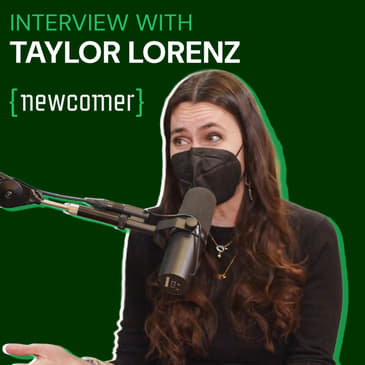
Taylor Lorenz on why the social media panic is overblown and who's actually driving it.
Taylor Lorenz, journalist and author of Extremely Online, joins Eric Newcomer to push back on the moral panic around phones, social media, and screen time. Taylor argues there is no such thing as social media addiction, that age verification laws do more harm than good, and that the groups pushing child protection legislation have their own agendas. She and Eric also get into the surveillance state, anonymous speech online, why podcasters are secretly taking money to book guests, and what the creator economy has gotten badly wrong.
Listen to Taylor's newsletter and reporting at UserMag.co.
Subscribe for weekly conversations with the founders, investors, and executives shaping the tech industry.
[00:00:00] Oh no, you made the product too good. We have to destroy it because you made it too enjoyable for people. There's no such thing as being addicted to consuming media and communicating with people. You know, you can tweet from your vape net. I'm not kidding you. On this show, I've sat down with Peter Thiel's Fixer, gotten in a yelling match with Keith Ravoy, and had AI's number one hater, Ed Zitron, on twice. But no guest seems to cause a bigger stir online than the one I have today. Taylor Lorenz has covered internet culture for The New York Times, The Atlantic, and The Washington Post.
[00:00:28] She wrote the book on creators, extremely online. Then she left Legacy Media and went independent with Usermag. Nobody covers the internet like Taylor, and nobody gets attacked by it quite like her either. Taylor Lorenz, welcome to Newcomer Pod. I'm Eric Newcomer. Subscribe to the Newcomer Substack at newcomer.co.
[00:00:54] I wanted to start off though, really on your, I don't know, core ethos of the moment, which is maybe being one of the last people in the world who wants to defend an anonymous internet It feels like a lot of people have just sort of forgotten about it. Or, you know, we want to protect children to such a degree that we're willing to give up anonymity on the internet. Which endangers children, by the way. But yeah. Yeah. So is this a lost cause? Are you fighting a fight that's already over? Oh God. I know.
[00:01:23] Is all of my coverage worthless? Potentially. I, yeah, I don't think it's over. I think that these court battles are happening right now. And these laws are being written right now. These are state laws. Right now, basically a bunch of states are in. We have, yeah, exactly. There's over 25 states that have age verification laws on the books. The App Store Accountability Act was just upheld in Texas. I mean, this is a very active fight. And I will tell you, you know, who definitely cares is the tech companies who are lobbying on all different sides. You know, is this going to be done at the device level? Is this going to be done on the app level? Like, what is it, you know, what is this going to look like?
[00:01:52] I do think that, like, the culture, like the broader culture has gotten on board with this campaign. But I think we're going to start seeing backlash because I've been reporting a lot about what's going on in the UK. The UK has been a little bit ahead of us in terms of passing these types of laws. And people are irate. And, you know, or look at like the complete failure of the social media ban in Australia. You know, like I think people are starting to see through the grift a little bit and starting to recognize like, number one, none of this is about protecting children. And number two. You think that's true? Yeah.
[00:02:22] I mean, I've been covering this movement for a decade. I think that there are some well-intentioned people who falsely believe that this is going to protect children somehow. What I would say to them is in what way does mass surveillance sort of protect? Like, show me an example of any of these policies that has protected children. This is tangent, but I think you'll understand. Do you sleep with your phone in your bedroom? Sometimes. Yeah. Like, you agree that there's some toxic aura to having the phone with you all the time?
[00:02:50] Well, I think you should take a break if you need to take a break. I think everybody has a different relationship to their phone. For instance, I have no notifications on. But as a full-grown adult. Yeah. I mean, you know, I've started at the advice of an executive coach sleeping with my phone outside of my bedroom. Yeah. Just because even me, sort of a 36-year-old grown human with a daughter now, I can't overcome the addiction that is a phone. And so, obviously, I just don't think my young child is going to be able to overcome it. Now, is that a problem that the government should solve?
[00:03:20] Well, that's right. Yeah, right, right. Right. But that's why I just want to start with, does your own sort of sense that the phone is, there's a danger there that people are worried about legitimately? I don't think it's just the phone. I think people, I mean, you're seeing this across the spectrum. You're seeing people really resentful of the influence that they feel technology has on their life. And, you know, they learn about sort of like interaction design, right? And they hear, or, you know, people design these products for them to be used. How terrible.
[00:03:48] Like, let's prosecute them, you know? Like, and I just- But there are some bad things. It's funny. Sure, sure. Are we going to get into like the public? Because, I mean, I hate red badges, right? Yeah. Do you not hate red badges? What do you mean by red badges? Like, you know, just the buttons, you know? And like Substack, as they've become more of a social media platform, I'll go onto Substack to publish my newsletter where I think and write deeply. Yeah. And then I'll have, you know, weird people who wrote me direct messages and I need to navigate to some part of the app to clear out, you know, the little, just the red circle. Yeah.
[00:04:18] The notification button. Right. Totally. And I would encourage you to- It is psychologically like burdensome to have there. You know? Here's the thing, Eric. You can turn notifications off. You can turn notifications off. They make it hard. You have to like bury. Well, so, right. And I think we can encourage these platforms to make it easier. I'm all for more user controls. I think it's great to give users options. I think it's great. I think, you know, it's a little bit difficult because a lot of people, as any designer knows, like a lot of people express that they want and then sort of what they actually want or, you know, their sort of revealed preferences are quite different sometimes.
[00:04:48] But to get back to sort of like the anonymity thing, I think that we just need to think about what sort of what internet we want to build and what internet facilitates innovation and how can we kind of encourage people to build positive technology, you know, while also cracking down on bad actors. I'm not saying everyone should fire their trust and safety team, right? That's crazy. But I think when we look at these laws and what these laws do, they're not protecting children. Forcing children to upload their biometric data and encouraging kids to put more information
[00:05:17] about themselves out on the internet, which is what these laws incentivize. You know, they're not even enforcing COPPA in many cases now in order to protect children by having them upload their ID. It just it's ridiculous. I agree with you to the extent that the argument that like we're accidentally giving up anonymity on the internet as adults and this obsession about children. Yeah. Yeah. That worries me. I think it's become such a bedrock of the internet that you should be able to operate on it without
[00:05:43] the government or companies knowing who you are and to give that up for children. I agree with you there. I start to disagree with you when you say there's really no sincere interest in protecting children. Well, no, no, no. I wouldn't say that. Of course, there's sincere interest. I don't think the people with the sincere interests are the ones leading this political movement and writing these laws. Who are they? And let me tell you why. There are groups like Morality in Media, which has renamed themselves Nicosi, a National
[00:06:12] Center on Sexual Exploitation. This is an anti-LGBTQ hate group that was lobbying anti-LGBTQ laws in Africa, has been responsible for horrible things that constantly pushes out moral panic, slop. Like, you know, this is a very irresponsible group that I would argue does not care about the children. The Heritage Foundation. You know, the Heritage Foundation has been, you know, a huge proponent of these policies. I would argue the Heritage Foundation does not care very much about children.
[00:06:39] You know, a lot of states that are passing these laws, take a look at some of their child labor. You know, these are the states that are allowing kids to work in meat factories or, you know, in sort of dangerous environments. I think, I just think that it's a bit disingenuous. And I also think what we need to talk about is like protect children from what, right? If it's protecting them from news and information, I don't think children should be protected from that. I think children also have a right to speech, to expression and to receive information and knowledge.
[00:07:07] I also think it's really important to build media literacy skills. And you cannot do that when you cut kids off from the internet until they turn 18, which is the ultimate goal of this political project. And then what? Throw them, you know, throw them out into the wild. Like, also, if there are online harms, we should address those for adults as well as children. You know, why does the internet suddenly stop being dangerous or whatever when you turn 18? What about the 65 year olds that are getting scammed or taken advantage of? Why would we just, you know, cigarettes? There are lots of things where as a culture- Cigarettes are not speech. Let's compare, let's talk, if you want to talk about-
[00:07:37] I'm just saying it's not new that we would create a dividing line between children and adults in terms of our expectations of how prepared they are to make serious decisions. But in terms of, but let's talk about speech and media law because it's very easy for people to compare technological, you know, sort of media products, social media products to illicit substances. What I would say is compare it to any other form of speech or any other sort of media product and tell me how you, you know, what sort of regulatory scheme you would like. Because I think it's what's really scary is for people to make these comparisons between
[00:08:06] illicit substances and then imply that we should take that regulatory scheme that restricts illicit substances and apply that to the internet and to speech. So I think it's, yeah, I just think it's a slippery slope and that there's a lot of unintended consequences and a lot of people advocating for these laws don't care about those. Yeah. I mean, I generally agree with you. I guess, you know, one of my issues with social media right now, besides the sort of
[00:08:33] notifications, the psychological manipulation is just, you know, the degradation of Twitter, right? I, you know, you go into some reply and, you know, literally you'll see like white supremacists and I don't know that I think the government should solve this necessarily, but I, what I want is just a forum for the national discourse where reputations actually matter. Like, I don't know that I'm cheering, I guess, putting aside regulation, whether I'm cheering
[00:09:00] for anonymity as the main way that we interact with each other, like building reputations that are earned, I guess, whether real identities or... Yeah, you can have an anonymous reputation. Like, I mean, you don't, that doesn't mean you have to have your legal name. And also we know that removing anonymity actually censors speech and it doesn't make the online world safer or less harmful or less full of trolls. So I hear you... And why? Why, doesn't it? Because, I mean, well, fundamentally you're removing the most marginalized voices.
[00:09:28] So you're removing people that are, you know, immigrants, trans, you know, whatever. And yeah, I mean, what I would tell people that ask sort of, well, well, what do you mean? Go look at the comments on Facebook. Go look at the average comment section on Facebook. People post crazy things under their government name, unfortunately. Like, you're not going to solve this problem of sort of negativity on the internet by making everyone have to upload their government ID to post and use their real name. That does not incentivize better behavior. In fact, it's just more surveillance. And...
[00:09:57] I'd like to see the research. I go for it. Look at Wired has written a great piece. There's tons of... But you can have a reputation. You build social currency and you can build a reputation now without inputting your government data and your biometric... You're uploading your government... Oh my God. Uploading your government ID and biometric data. And I think what you're asking for, it sounds like, is a nicer online experience where maybe you don't encounter ideas that you consider repulsive, which I totally understand.
[00:10:27] Well, not encountering. It's more... It's sort of a waste of my time. If someone has staked out a position that I find so abhorrent or so incorrect, or like, say they support January 6th or they think the election was stolen, I think there's something valuable to be able to write that person off and write off those views. Like it is a waste of time to... For you. For you. Right, right, right. As an experience trying to navigate an information ecosystem to be sort of burdened by sort of people
[00:10:56] with views that you're like, these should be outside of my window of acceptable views. I think... Right. And I think everyone has a different window of acceptable views. Right. And I think that if you want to have a better experience, I'm all for, again, giving users the option to curate their own experience. You know, making algorithms more tailored towards users' interests, which is ironically what they're being villainized for, let's not forget. Because if you listen to the critics here, they would say what I'm suggesting is bad and evil.
[00:11:25] I'm going to make you more addicted, Eric, because you're going to be so addicted because you're only going to see stuff you like. So I think, again, shows why those arguments are silly. But, you know, I love what Twitter did in terms of restricting replies, allowing you to turn off your replies, making your replies sort of limited to mutuals only. I use that tool a lot. I also think it's great to have competitive products. So I wish that we had more spaces online. Capitalism. Where people... Seriously, right? More innovation, more startups, more people creating online experiences and worlds where,
[00:11:55] okay, I don't like the user experience on this app. There's other options for me to go towards. One thing I've been obsessed with on this channel is sort of the negative sentiment towards AI and technology. You know, I cover startups and venture capital often from the point of view of startup founders. So they're underdogs, but they're leading businesses. I would never claim to be sort of connected, I guess, to the average YouTube consumer. You're sort of more in touch with them.
[00:12:24] I mean, you came up as someone excited about sort of consumer products. Here you're arguing for anonymity on the internet, which in some ways is sort of holding on to the core identity of what made the internet great. What do you make of sort of this negative turn against the internet and technology from, I guess, people that are often hyper, hyper users of these products themselves? These people are more online. You'll hear from them first in the replies always, which I think is hilarious.
[00:12:54] They're like, please, government, stop me from this addiction. I mean, in some cases, it is sort of a case for this is an addictive technology that they hate it so much, yet use it constantly. They don't hate it. They don't hate it. This is the thing. They use these products constantly. One, because I would argue these products have captured an enormous amount of the market share and they want to engage in discourse. And so if they want to engage in this sort of public discourse, they are going to be on these products. And I think they recognize that value.
[00:13:20] I guess the addiction thing, I just want to say, side note, I think is very silly. Again, there's no such thing as being addicted to consuming media and communicating with people. Now, can you have maladaptive behaviors? Can you have compulsions? Can you use these products in an unhealthy way? Absolutely. But I'm just telling you, as somebody that covered the social media addiction trial, I mean, this is just ridiculous. And also, they're trying to make all these product liability cases like, oh, no, you made the product too good. You know, we have to destroy it because you made it too enjoyable for people.
[00:13:49] And it's just, it is, I think, in classic moral panic territory. I think we should empower users, allow people to have a better relationship with their phones, with the internet. The more that you believe that you're addicted, there's that great study out of Cal State that Ian Anderson published last year showing the more you believe that you're addicted, Eric, the harder it is for you to moderate your own use. So I would encourage people to stop with that narrative. It is counterproductive. Because basically they've lost control. It's like, whatever. It's, I can't do anything.
[00:14:16] It's good for you to feel empowered to change your habits, which I think is great. You putting your phone in the bedroom, you know, the other room, whatever. I also think that a lot of these, this panic over screen time specifically is just silly. Like the form factor of the screen where we have this slab in our pocket, I don't think is even going to be a thing in 10 years. So I think just chill out about it. We almost need to figure it out before it's hardwired into our brain. Or you're talking about glasses or you're talking about Neuralink? Neuralink, wearables.
[00:14:43] I mean, already, like, you know, they're trying to do these phone bans in school, which I'm, you know, I'm for as long as again, it's not a government thing. It's more of the school's decision instead of the, you know. You are for schools having the choice. Schools should be able to do whatever you want. Okay, I was worried you weren't. What I have a problem is like cops doing, you know, shakedowns on kids or trying to arrest, you know, that it's more the civil liberties aspect that I have an issue with. But, you know, it's so funny. I talk to parents and educators and it's like, they, you know, you can tweet from your vape now. I'm not kidding you. Wow, I'm out of touch. That's fascinating. And go on WhatsApp on the vape.
[00:15:13] So it's just, it's, you know, and we've got smart fridges and everything's internet. So I just, I think this is a losing battle. I think that we all need to build a healthy relationship to technology while also recognizing that like waging war on a screen specifically is short-sighted. Let's talk about the broader, what relationship do we want to have with technology in our lives? Well, returning to sort of the anger about technology. Which is what I think is driving a lot of this, because I think too many people feel like it's too ever present in their lives. Just they're just using their phones too much.
[00:15:41] They're using their phones too much and they feel technology's influence on the world and it scares them. And I understand, like, I am a tech optimist. Like they just don't have friends anymore because they're on their phone too often? No, I don't think it's that. I think they feel disconnected. I think that our economic system and a lot of sort of social economic issues are very, very real. I think people are lonely. I think there are fewer and fewer third places. I think there's a lot of sort of structural problems in our society. And I think people are externalizing a lot of that shift onto technology.
[00:16:11] The media, I think, encourages this belief. And I think people blame the technology companies in a lot of instances where these are bigger sort of societal problems. And it's more of a symptom, right? You're on your phone all the time because you don't have a community, because you can't get, you have to drive 30 minutes to go somewhere, right? It's hard for you to get out. Maybe you don't have that much expendable income. Well, I mean, you know, the Andreessen's of the world and sort of the, you know, free market tech people love to point to a chart, which I think is compelling.
[00:16:40] That shows, you know, TV prices plummeting and healthcare prices skyrocketing. Basically with the idea that things that capitalists could influence, they really drove the prices down and things they couldn't, they drove the prices up. And I think there's often this sort of argument that it's like we've been given, you know, TVs basically and the phone to sort of solve the fact that we can't get the house we wanted. And I just don't know that that's the fault of technologists.
[00:17:06] Now, I get that some of these technologists are using the money they've made to sort of fend off the type of redistribution that might help someone get a house. I don't know if I totally buy that, but it's weird to blame the sort of tech for the broader ills. I think tech can exacerbate these inequalities in society. I mean, look at like the rise of delivery apps, for instance. Wait, but are you on the side of it as a human right disabled people should be able to get delivery?
[00:17:34] Actually, well, so yes, that's a good example. It is a human right for disabled people to have access to food. And unfortunately, because these systems of community care and these low cost delivery options for disabled people have been effectively driven out of business by much better platforms like Uber, right? That provide a better experience that can get people. But the prices are very high.
[00:17:56] So now you have this very vulnerable population left to depend on these consumer apps, which are fundamentally not built for the purpose of serving a very marginalized, you know, disabled population. What I would argue is let's build community delivery networks, right, where we have Meals on Wheels expanded, which is very hard to get. Or we have sort of programs like this to make sure that these disabled people are not forced to rely on Uber and pay exorbitant prices and, you know, suffer because of that.
[00:18:23] And also, let's look at the working conditions that these delivery apps are providing in a lot of ways. And I used to be a messenger, so, you know, which was like gig work before, you know, it was all sort of done by app. But, like, I understand, you know, how difficult it is. And you're sort of like you're running around a lot. And also, like, you don't know how much work you're going to get that day or tomorrow. It's very unstable. So I think it's amazing that these companies have provided a lot of economic opportunities for people that maybe want more flexible work environments.
[00:18:53] But I also think that there are a lot of people that are falling behind in the system and they're rightfully angry. And it is easy to look at these big tech billionaires and get angry at them. But DoorDash isn't killing the community that would have provided you food, right? No, but I think that they are. It's sort of you're not being bought into the community that then when you're struggling is sort of there for you, right? No, I think it's a combination of things.
[00:19:18] One, I do think that DoorDash and Uber did sort of because they became such popular products. Like, you'll note that, like, a lot of grocery stores, even local grocery stores now, like, they just – these are better consumer products than a lot of the options before that were maybe more community focused. So in that sense, I don't think it was necessarily intentional, but they did sort of drive them out of business. And their goal is to drive competitors out of business as any company would, right? They're going to compete with other sort of businesses. But I think people feel angry at these companies.
[00:19:48] I think they've not always been responsible. I'm not just talking about delivery companies, but all tech companies, right? There are the headlines. They have done irresponsible things. And I think people see these billionaires, and I think they see the irresponsible behavior from some of the companies, and they get very angry about it, right? And they look at what they have, and they look at their decline – you know, the wealth inequality skyrocketing. They read these headlines about tech. They see the tech billionaires. I totally understand why they're angry at them, right? I don't understand. You don't? I don't understand.
[00:20:15] I mean, we live in one of the best societies probably of all time in terms of life expectancy, quality of life, especially America. There are heat waves everywhere. We have air conditioning. And people complaining are often heavy users of the products that they don't seem to appreciate. But you yourself have that resentment. You yourself have that resentment. You earlier, just five minutes ago, were saying that you – There are things about – yeah, the business – yeah, the sort of – I was complaining about red badges. So you feel – You feel –
[00:20:45] But that's true of like any – like, you know, a restaurant. I'm like, oh, the service should be X, Y, Z. It's like, yeah, there are quibbles around the edges. I'm not saying don't have free thought, change from one company to the next. But ultimately, I just think the competition between businesses to pull one set of users to another is the most likely thing to solve. Sure, but I think we need more competition. I think we have not had enough competition in areas of the tech ecosystem.
[00:21:11] I think that people generally, they see – you know, it's interesting because I talk to a lot of people and I'll say like, do you think we're better now than 10 years ago or 15 years ago? And they'll increasingly say no. And I would argue like the world – technology is improving. We have cancer treatments right today that we didn't have 10 years ago, whatever. But I do think that there's a nostalgia and this feeling that life is declining and opportunities are declining and people feel hopeless, especially young people and isolated and sad. And so –
[00:21:39] Yeah, my solution would be the Democratic Party should provide single-payer health care to everybody. Well, that would be amazing. I mean, that at least is a specific thing rather than spend a bunch of energy fighting data centers because we're angry. Like, what is your view? So the AI hates specifically and you're – you know, I'm center left. You're, I guess, more sort of DSA world aligned. At least you know, you know, know Hassan and people.
[00:22:05] Like, what is your sense – can we walk back from the anger around AI and data centers or is the AOC wing, Momdani wing of the party just going to be so anti-AI, anti-technology that it's going to be alienating to people like me? Well, I think there's a few things there. One, the reason people are angry at data centers is because it's just a physical manifestation.
[00:22:35] And Mark Cuban did this tweet recently about this and I thought he was correct. People got so mad at him. I agreed with him. He was correct. And Dario at Anthropic has basically said the same thing in an essay. So it's not like the AI industry necessarily disagrees with you. But yeah. Yeah. So I buy that argument, though a lot of people say that's not what it's really about. I mean, listen, I talked – like there are many reasons to be against data centers. Would I want to live next door to a giant data center? Probably not. I'll be real, right? So I think people object to these data centers for legitimate reasons in their communities for whatever reason.
[00:23:04] Just the way that they would, you know, reject a solar wind farm next to them or something, you know, right? Like people – it is like nimbyism. But it's also like there is real construction damage to the wells sometimes, right, that allows AOC to hold up a dirty water thing. So – and there's energy costs, right? We're – you know, a lot of these are gas-powered. But you definitely believe a lot of farming is far worse. Well, again, I'm vegan. So it makes me laugh when these people come out of the woodwork from, you know, the leftist circles and they start talking about water usage.
[00:23:32] I'm like let's talk about water usage actually. Let's talk about factory farming. Like you guys want to fix the water problem in America. Because I brought this up because you brought the wells and I think one of the key – I think it was Oregon or something. Yeah. Where I think Amazon maybe settled over a data center and it's like, oh, farms were doing a lot of the damage. And like the data center was sort of like a tertiary. Maybe they recycled some farm water. And so it wasn't just like a what about farms. It was like specifically these data centers get blamed for pollution that is far worse often from farming. Yeah.
[00:24:01] I mean I would argue factory farming is obliterating our environment. And I have very, you know, probably extremely anti sort of factory farming views. But I think also, you know, we're talking about also construction projects, right, that is inherently disruptive. What I'm saying is like there are legitimate reasons for people in various communities across the country to oppose data centers. That is not just because it's a manifestation of big tech. But most people in America do not live nearby a data center actually. A lot of these data centers are in pretty remote places.
[00:24:30] So most of people, especially in on the coasts and stuff in these major cities, their objection to data centers is just that they are this representation of big tech. And that they're this sort of like physical manifestation of big tech and AI and this AI future, which they're very resistant to. And so I think that is what's driving it. And if you're asking if the Democrats. Are you sympathetic to them? And yeah, are the Democrats going to take up that anger? I think the Democrats love it.
[00:24:55] They love it because they just released their Project 2029, which is very insane tech policy. Like the Democrats have been so out to launch on tech policy for so long. They're so uneducated on sort of tech generally. And I think they're willing to feed people slop about tech if it means rallying them up for their cause. And I think that's a mistake. I think it's very short sighted because I think you are fundamentally feeding people into this sort of like reactionary movement that is that is anti progress. And I think that that's bad.
[00:25:24] Now, that does not mean that I'm like pro data center hyperscale. Let's put Colossus data centers in everyone's backyard. No, that's very silly. Right. But I think we need to have a smarter and more nuanced conversation than we're currently having. And part of the reason we can't have that conversation is because we have a lot of misinformation, a lot of like and a lot of people just using it for political purposes. I mean, the one thing that gives me hope is that AOC is so social media native.
[00:25:51] Like there's no way in her heart of hearts she hates technology. I don't know. I don't think it's about hating technology. I think that's a mistake. But if you ban the data centers, then one day you just don't have. But I don't think it's driven by hate. You need the data centers to power the technology. My favorite thing was I was on a call with a data center executive doing a press call recently. And he was like, you know, when you take the data centers down and you can't have the hospitals or whatever. And it's like, sure, of course, data centers power a lot.
[00:26:19] I was laughing in my neighborhood group in Los Angeles. Somebody found out that there is a data center in downtown L.A. Oh, my God. And it was everyone's like, where? And, you know, maybe this is why my dog is sick. And, you know, well, L.A. is ground zero for like 5G is going to melt my brain or whatever. Absolutely. But but I'm just saying, like, clearly it's it's hitting hard. This has become this very topical issue. It's a proxy for the A.I. wars. I think AOC rightly recognizes that this is something to tap into. And I'm not even against tapping into some of it.
[00:26:49] I just think it needs to be wielded in a productive way. And what is our ultimate goal? That's what I worry about. And a lot of these people, when you ask them, what's the ultimate goal? Ban A.I. End A.I. You know, ban the data center. Data center moratorium. No A.I. No future. No. And as somebody that not only loves technology, that's why I'm a tech reporter. Like, you know, I'm sorry to tell other leftists, but I do love technology. That is why I like A.I., right? Well, I think it's it could be. You're not going to get that quote out. What do you like? You're not going to catch me in 4K. I love it.
[00:27:18] No, but I do think A.I. is useful. And I think if we refuse to acknowledge the benefits and utility of some of these A.I. tools and products and models, we can't ensure that they're equally distributed. And that's a huge mistake and a huge miss. And I think that, again, I think a lot of the discourse on this is just very short sighted. And I think we should say, what do we want? Do we want a clean energy revolution? Is there a way to get these companies to pay for that, you know, pay for some of that? Can we regulate this in a smart way? Like also. Right.
[00:27:47] To the extent what we're doing is giving cities more negotiating leverage when they go up against an Amazon that comes to town and says it will pay you this much. And now we say, well, are all our constituents are scared? Now we can extract a little bit more. Great. I'm fine with that. Like that's reasonable. But I just worry that that sort of negotiating leverage is going to spill into something truly insane. Like Bernie Sanders is literally saying he wants a data center moratorium. Bernie Sanders wants to like nationalize A.I. or whatever the heck he was talking about.
[00:28:18] I mean, Bernie Sanders also interviewing Yudkowski. I mean, what? Interesting. You're like, he's out. It's over. Yeah, like just I think a lot of people on the left, again, they have they they are not fundamentally engaged in these discussions on technology and they don't care about tech policy. They like the anti-tech sentiment because it's something that they can wield and feed into this sort of populist revolution that's happening, which I generally like. I like the sort of populist sentiment that's coming out of the Democrats in a lot of ways. I think it can be productive.
[00:28:45] I think there are these elites in the party, for lack of a better word, that have been basically telling the base to go screw themselves for a while and they keep losing because of it. And I, you know, I think it's great that they're being maybe more accountable to their political base. As a New Yorker mom, Donnie, it's amazing right now. I don't know if I I don't agree with the rent freeze probably. But the idea that you need to govern effectively to prove that progressivism works is an amazing idea.
[00:29:09] And so if it's still worried about crime, still worried about potholes and like running, you know, if he wants a couple free grocery stores to run the experiment that I probably disagree with. I don't think it's going to ruin the city. So, so far. I think everybody's it's it's amazing here in New York. Like, I think he's done an excellent job. I think he's done a great job of coalition building. Certainly as this sort of happy warrior leader figure, he's doing a great job representing the city. And crime is down. I think like these, you know, I think he's done a really great job.
[00:29:38] I think the Democrats generally just generally I worry about this. This this road that they're going down with the tech industry and specifically the project 2029 nonsense that they released recently where they're like, we're going to, you know, dismantle Section 230 and ban social media for under 16. Like these laws where it's like, what does that do to get us closer to health care? What does that do to make sure that there's economic opportunity? What are we doing to facilitate, you know, better public education in this country?
[00:30:06] Like what what what is the answer to that? Because it seems like you're solving none of those problems. You're going to put a bunch of censorship and surveillance laws in place that are going to stifle innovation, that are going to hurt small businesses, that are going to hurt entrepreneurs and startups and just individual like hackers and tinkerers. Like I love the like Linux developer community and open source community because they've been so rightfully outraged at these like operating system level, like identity verification things where it's like, do you even know how technology works?
[00:30:34] Like I don't think you do because you want to, you know, they're telling these developers like the Linux people like, yeah, you have to like age verify like every use. And it's like, well, OK, so let's talk about like, again, just the fundamentals of technology. I think they think of technology as Facebook. And how can I how can I seem tough on Mark Zuckerberg? Which is ironically not dismantling Section 230. But yeah, right. The I had Ben Smith on my podcast, you know, editor of Semaphore.
[00:31:01] And he basically made the argument that I guess is a little reassuring to the tech industry that AI, while people are poll very negatively about it in the United States, is just like issue number like 23 on the list, you know, and that no one is really going to vote on AI. And so even if AOC wins and she ran and one of the things she said was anti-AI, like there's gonna be so much tech money that says like, just don't make this your top thing and use capital on something else. Like, I don't know. Do you buy that? That sure.
[00:31:31] It's just like people don't care enough and they care about other issues like health care. I think people as they should, by the way, as they should. And of course, AI can exacerbate all that. Like what I worry about is, you know, health care and AI and the ability to harvest massive amounts of data and use that to deny people health care, deny health care claims, which we already know that, you know, these health care companies buy up data from data brokers and use that in a different way.
[00:31:55] But the argument, you know, is that insurance companies have been professionally denying claims and it's often been hard for health systems to fight back. And now with AI, they can sort of navigate these complicated systems more easily. I mean, it's an arms race on both sides. Yeah, I think. And fundamentally, I think the insurers have the upper hand because they're the ones denying coverage to sick and dying people. Yeah, I think.
[00:32:18] But I think like what I worry about is like in the pursuit of, quote unquote, cracking down on AI or whatever. Again, we do things like remove anonymity from the Internet. Make it so that you have to upload your government passport and, you know, photo ID to look up something on Claude. And then, of course, that becomes part of your permanent browsing history that can then be used against you. Do you agree we should have almost a constitutional level like attorney-client privilege with Claude? Like it is insane to me.
[00:32:46] Like, first of all, the government has access to AI that they're going to use against me. So it's only making them more powerful. But it's also treated like a therapist or a lawyer. I just think we should have a right to privacy that's pretty extreme. We should have a right to privacy and we should have a right to receive information. And there's a huge effort right now to restrict people's access to information and to censor the content that is coming out of this, you know, these large language models. And I hate that. And I think it's incredibly dangerous. And I'm very against it. I mean, it's amazing. I think part of it is Trump.
[00:33:15] You know, Trump looms so large that stuff like anonymity on the Internet would be major society-wide sort of policy debates that we've just like lost sight of in this culture. Like another related theme that's happening, which I don't know where what I think about is sort of the flocks of the world or just the idea for the police state to catch criminals very quickly. Like, you know, we just have like a surveillance net that's pretty effective at the moment.
[00:33:45] I would argue it's not always effective. You know, my question with the flock cameras is these were sold as license plate readers. They do a lot more than license plate reading. They are being used by cops sometimes to stalk people. They're being directed at bike paths, at children's playgrounds, at sports practices. Like, I think we are, again, constructing this mass surveillance state. And before we lean further into the surveillance, you know, superstructure or whatever that we're building, we should hear from some privacy advocates.
[00:34:14] Like, let's have some privacy because I think privacy is this luxury. It's something that only, you know, vanishingly sort of smaller and smaller amount of people have access to. And privacy is so important. And I think that we deserve that. I just don't know that I think it's realistic. Like, to me, I'm like privacy sort of lost. Like, the surveillance state exists. You are. Then why don't you live in communist China? Why don't you go live in communist China? We have democracy, right? Barely.
[00:34:39] I'm saying the answer is to enshrine rules, give us our defense, not say tear down that camera. Like, you know, I'm a private person. I have cameras outside my home. You have no idea how much worse it could get. You have no idea. You are delusional. People, I hate this argument so much. People, oh my God, we live in, oh, we already live in an authoritarian surveillance state. No, I'm not saying we live in authoritarian. I'm saying we live in, there are cameras everywhere. And the government is quickly figuring out how to organize them. You don't even know how bad it could get.
[00:35:07] I really encourage you to look at what it's like in places like China. Look at what it's like in some of these other countries, Eric. One answer we could have. Democracy is not going to stop us from building that. We could have. We could have. We're hurtling towards that. Right. I agree with you in terms of the capability. But I'm saying an alternative. And how it's used. An alternative is to have a law that says the police can activate all these cameras for like murder, this, this, and not for like petty theft. Here's the thing. This is my point.
[00:35:34] You could just through law sort of divide access to this. Right. And what I'm advocating for are those laws. Right. Are those privacy laws. Are you saying tear down the cameras? Well, I'm saying, unfortunately, I don't know that it's going to be. I don't know that they're going to. Again, once you lose a right, it's really hard to get it back. I don't know that we are going to get. I would love to see. Listen, if you want to go tear down the cameras, I'm not going to be mad about that. But what I would say is before we build those cameras, let's talk about what do they have the right? Where can you put them? What can they be used for legally? Right.
[00:36:04] I agree with all this. And why are we building them? And also, if we're going to spend so much money building this surveillance state, is that the most effective tool? And how can we protect democracy? I don't understand Democrats or like being opposed to like the gunshot detectors. Like that makes so much sense. What's what you do object to sort of the police departments putting up like gunshots? You know, they're all I forget what company does. But they're huge police departments where they can sort of hear where a gunshot went off to like immediately send cops and say, oh, it was like this block.
[00:36:33] I do think that's a big part of it. Yeah, yeah, yeah. Oh, my God. It might be a flock product. I'm not sure. But, yeah, it's it's a big part of the police state. I'm not a flock fan. Well, listen, I think that, again, let's get some privacy laws in place. Let's make sure we protect people's civil liberties. I think that these surveillance tech companies are having a field day. I think they're, you know, building out this stuff. They're making a zillion dollars, you know.
[00:36:57] And I think that we don't have the right protections in place online or offline to protect against this system that we're building. We see Donald Trump already weaponizing, you know, the surveillance system against immigrants. So nothing has made me more small government than watching, you know, ICE and Trump and realizing, oh, man, you know, you're going to give the keys to some of the worst people in the world. Absolutely. And so let's restrict the government's power. Let's have a lot more oversight.
[00:37:24] Let's enshrine people's right to privacy and all of this stuff and really be thoughtful before we enact this sort of surveillance stuff. And I think that's something that, by the way, like everyone should agree on. Like this should not be a controversial position. I don't think that, you know, it's frustrating. I think that that a lot of these topics get so politicized. But are there politicians that represent this this view? I mean, what is like the Rand Pauls? Ron Paul and Ron Wyden, I would say.
[00:37:52] I mean, Wyden has been phenomenal on on privacy rights and has a and also has a great law called the Jawbone Act, where he's, you know, trying to make it illegal for adding transparency to the process of, you know, these big tech companies being forced to bow to government pressure. Sure. You'd think that these tech companies should get on board with a law like that. They, you know, they whined about it so much during the Biden pressure.
[00:38:13] I know. But but listen, like everyone should just again, everyone, Democrat and Republican, they each one of them, they constantly want laws where they sort of just they want they want to imagine a world where they're in power and they can use these laws against these enemies, their enemies and their enemies are never going to get power. And it's just like, guys, again, Biden was president four years ago. Who knows who's going to be president in four years?
[00:38:35] We should have laws where even if your worst enemy, sort of the person you hate the most has the power in government that you will be protected. That makes it hard to disagree with that. I want to talk about, you know, the media and the influencer ecosystem today. I mean, you know, we both come up through journalism.
[00:38:58] You know, I climbed the sort of old school ladder, like Macon Telegraph, Sunset and Old Tampa Bay Times, like very Tampa Bay. Yeah, just all summer internships. I did. And then the New York Times. I did like the classic do the summer internship ladder. I was from the South. So then it was all the Florida papers were very good. So anyway, I what I'm about to say comes from the privilege of being deep in the journalism world and understand understood to be a journalist.
[00:39:24] But I often say that I'd rather be a creator that exceeds expectations than a journalist that disappoints them. I do think there's been this weird paradigm where journalists get dunked on for like every little failing and creators are held to absolutely like no standard. Do you think that's still the dynamic today? Or you think people the sort of online again, this imagined sort of like YouTube information environment, TikTok news consumer?
[00:39:53] Like, do you think they're sort of starting to understand, oh, creators have shortcomings, too. And there was some value in the journalists or what do you see as sort of the sentiment right now? I want to believe that they are going to see value in us again. So many creators that have just been like, I don't know, so corrupt. I mean, you've written about, you know, dark money. Yeah. The Democrats, you know, funding. Why is that so bad? Well, what I what I've also written about is like leading the future and the pro, you know, the AI safety.
[00:40:20] Like it's like all these people are so angry that leading the future is funding, you know, all these influencer things. Well, now the Transformer had a great story just recently about the AI safety movement and the stuff that they're funding. So people say it's good. People say it's bad. They're all on the take. They're all taking money. And let me tell you, we're not taking money. We are not taking money. I host an AI conference, though, which has its own sponsors. But I am not being paid to say anything. I am also not being paid to say anything. But it's frustrating, right?
[00:40:46] Because I think to make these distinctions is really hard to consumers who sort of just they're just there for the entertainment. They're just there to kind of consume information. I think it's really good to educate people. So I just try to talk about it a lot and say, like, by the way, guys, I don't take my. So when you see me asking for a subscription, like give it to me and not some person that, by the way, has like some six figure check from the Democrats as well. You know, is a subscription the main way you make money? Yeah. Subscriptions. So if you like my work, use our mag.co. So but but yeah, I don't know. I'm a paying subscriber. Thank you. Thank you.
[00:41:17] But I think, yeah, I think that like hopefully we're seeing a little bit of a boomerang back. I think that it got so craven and so ridiculous that people have begun to be like, OK, I want like trusted information. And can I trust this person? But I also think that that might just be the case of sort of like a small sort of like elite group of people that really want that high quality information. I would say most Americans, I mean, they don't even know the name of it. Like they just sort of you use the word journalist to describe yourself mostly. Yeah. I mean, I would say I'm a reporter.
[00:41:47] I had the opposite way of getting into media because I started as a blogger back in 2009. How old I am. But and there was all these discussions like are bloggers journalists like bloggers. And you would go on blogger trips. And it was like a blogger, you know. And I know I worried I'd miss the real cool thing in journalism at the moment. So I had to get on Substack and we collided. Yeah. You know, but when I was a blogger, like I remember people in the journalism world were like, oh, you can't call yourself a journalist, you know.
[00:42:12] And then when I started to work in traditional media, really through the like through Business Insider and digital media, which was sort of the only on ramp at the time because you couldn't really monetize very well as a blogger. Then I was like, OK, I'm like my job title is reporter. Right. Like and I learned out scooping everybody at the time. Back in the day. But also like you learn about journalistic ethics. Right. And you learn like asking for comment, following, you know, these certain practices.
[00:42:39] And I think a lot of people online in the content creator ecosystem, they don't follow those practices. And I think their content is worse for, you know, it's like. What's funny to me, you know, all the startups complained about journalists forever. And now they have to deal with creators where they just say whatever, a little shit on somebody without, you know, even asking if something's true. Yeah. Just shoot first, ask questions later. And it's like, oh, yeah, the devil, you know, versus the devil, you don't. Also, they often ask for money. Right. Like I hear that from companies a lot where they're like, well, they want to do an interview.
[00:43:09] And especially because I have my own like YouTube and stuff. And they'll be like, and just to be clear, we don't have to pay you. Right. And I'm like, no, that would be hugely unethical. Are you paying people? No. Yeah. To pay, you know. I know this undisclosed influence or undisclosed sponsor. You think it's rampant. I think it's a huge problem. I think a lot of podcasters out there are taking money in exchange for booking and they're not disclosing it. And there's just a lot of undisclosed ads going around. Oh, what are we going to do about it? Or like, how is it? It's illegal, right? Like you have to disclose. Isn't it? Or am I naive?
[00:43:39] I thought it was against the law. It's not real. I wasn't there the whole period. Didn't Kim Kardashian get in trouble with like the FTC for this? You know what's so funny? I wrote about this in my book, Extremely Online, which I came out a couple years. Now we're deep enough in the show that you're like, all right, if you're still here, if you're still here. You need to buy some of my shit. No, no, no.
[00:43:57] I just note that because I actually reported extensively on this for that where I wrote about this moment in 2017 when the FTC was like, hey, like if somebody pays you directly in exchange, like I am giving you money to say this online, like so direct, you have to disclose that. And so all these influencers started disclosing it. And people kept – all these stupid think pieces like it's the end of the influencer era. Oh, the influencers are going to disclose. They're going to lose all their influence.
[00:44:23] What it did is it overnight turned branded content into aspirational. So suddenly they started to see how many brand deals their favorite influencers were getting. And that became this new aspirational thing. Right, but that was at least okay. It was disclosed. So anyway, what that did is it led to the rise of fake sponsored content where people will often make things appear as if they did a partnership when they didn't. And also I think it led the companies to kind of innovate around it where now they'll be like, well, we're paying you a booking fee.
[00:44:53] That's not – we're not paying for you to say something necessarily. We're just paying you to host this person's idea. We're just paying for that. And so they don't – so anyway, they avoid disclosure rules. Who should the Democrats court in terms of online influencers? Aside from us. No, I mean I don't mean to fix it. I'm just so worried. The Democrats hate me. So they're not coming to my door anytime soon. Well, we had the Ezra Klein. Do they – Oh, they don't fuck with me at all. The Ezra Klein like, you know, don't take down Hassan. Like I don't know.
[00:45:22] What's your read on – Well, Ezra is smart to say that because Hassan has a very dedicated – like Hassan is incredibly powerful and I think like to – and I think the Democratic Party is going through this sort of like Tea Party moment and I think it's like this populist revolution and I think like for Ezra, who's such a like voice of the establishment, like to come out against the main figure, that would just make him seem out of touch and stupid. It's so funny that all these like online commentators have built up Ezra as this like terrible – but he's such – he's a liberal, liberal, liberal person.
[00:45:52] He's like pretty left of certainly most of the country, you know. Yeah. Yeah. I know. But I'm sympathetic on like, yeah, we shouldn't run around canceling every like leftist influencer certainly as a party. No, no. No. I mean I think that there's – I mean no, absolutely not. And I think that the moral panic around Hassan is ridiculous. It's absurd. I think he's built a powerful audience and he speaks about real issues that people care about.
[00:46:18] And I think he is very good at giving voice to, again, this sentiment that we're talking about that is leading to the anger about data centers, that's leading to the anger about big tech. Like there is this anger among the population. Is he intellectually honest about the – I haven't watched enough Hassan to know how he treats the data center. He doesn't cover tech policy very much. But he has defended Section 230 and I think he's – you know, he's very privacy focused. I think he's also as a member of the left like dealt with censorship and spoken about censorship,
[00:46:46] which is more than I can say of 99 percent of content creators on the left. They generally do not speak about censorship. I mean they have more recently – You broke a story about him getting interviewed when he came back to the country or something. Oh, yeah. He – Well, right. He was targeted by the – yeah, the government like put him through. So I think a lot of leftists understand speech – sort of speech restrictions through the lens of – like they see it happening with Palestine. That was this thing that sort of woke them up where they're like, oh, wait a minute. Maybe censorship is bad.
[00:47:13] And it's like, yes, now like apply that to everything, right? Like you also need to be intellectually honest and defend the speech of people you disagree with and defend the speech that you might find abhorrent. You must have been shouting during the pandemic that COVID deniers shouldn't be allowed to run around on social media platforms or where were you on that issue at the time? I have a very nuanced view of that. Obviously, I'm immunocompromised. I have my mask on right now.
[00:47:41] I think that what – unfortunately, what happened during the earliest days of the pandemic is that there was a lot of censorship around people that were diverging from maybe institutional scientific beliefs around certain things. And I think that we were in this period where everything was evolving so rapidly and there was misinformation coming from the government itself. And I think, again, a lot of liberals understand this with Trump, right? They were like, oh, Trump said to drink bleach or whatever, whatever. Right.
[00:48:10] We're not like, oh, that should be the policy of Facebook now that you can only say that. So it's like they understand that maybe Trump or RFK might give misinformation. But what I would say to them is Joe Biden and Anthony Fauci also said some things that were ultimately sort of maybe untrue. OK? And that does not – I'm not saying like, oh, don't listen to the medical experts. I think the huge problem right now in America is that people are not listening to medical experts and they're sort of listening to these wellness influencers online that are selling them a grift. But I think that we should be able to have these conversations in public.
[00:48:39] I think that we should be able to – I think my view at the time, if I look back, maybe was just that you obviously could write a thoughtful piece saying it leaked out of a lab. Like I listened to like Steve Bannon and Tom Cotton on a podcast at peak censorship talking about this. And I found it on Twitter and you could share that. But you couldn't – What I would do was be sort of like the rabble just being like China virus, China virus, China virus. And sure, maybe it was wrong to censor those people.
[00:49:07] But like how much does all the dumb content matter? Like all this sort of like just shouting attitudes rather than an actual argument. Like nobody is really censoring the full argument. It was about the like short, dumb takes. Eric, people were censoring. And I would say you're right. Twitter, not so much as my – although Twitter, I wrote a story for the Washington Post. People can go back and read. Twitter actually censored a lot of scientists.
[00:49:32] And under Joe Biden, actually, they were censoring scientists, public health experts, academics, and disabled people who were saying, hey, Joe Biden – hey, the vaccines are actually not fully sterilizing. So you should still take extra precautions. And actually, the pandemic is not magically over. Joe Biden is not. So they were trying to raise alarm about the long-term implications of COVID. They had their accounts deleted, content removed, et cetera. So a huge amount of people that have tried to mitigate disease have been censored. Also, what I would say to you, Eric.
[00:50:02] Mostly Facebook, you're saying. No, no, no. That was happening on Twitter. That was Twitter that did that. Meta is a whole other story. Meta just loves whoever's in power at the moment. Meta will censor – and they're like, Joe Biden wants this. That's what we're doing. Mark Zuckerberg – And I think this is the whole problem, right? And this is why we need to protect free speech online because – and I will always fight for free speech of anyone, even people I vehemently disagree with.
[00:50:24] Because otherwise, we have these major tech platforms that are effectively just moderating in any way that they feel like will give them a friendly regulatory environment. And they have no commitment to free speech or free discussion of ideas. And these are the de facto sort of public squares, right? And we need to be able to debate ideas. And it's also – it's dangerous to have the government deputizing these big tech platforms effectively as government centers. And this was your stance during the pandemic? The pandemic, I would say, is ongoing.
[00:50:52] But yes, this has always been – and by the way, you can – if you don't believe – go look at my coverage. The one thing that I have always been involved in and been in libertarian circles on and stuff is civil liberties and speech rights. But I'm a journalist. I care about these things because I was a blogger. And I care about being able to speak and publish. And I think everyone should have the right to self-publish and the right to voice their opinions.
[00:51:17] That doesn't mean necessarily that I agree with them or I think that they should be platformed artificially by these things. But I do think that we need – I would defend people that were anti-lockdown. I would defend their right to speak, even to this day. I defend people's rights all the time that I disagree with. I'm obviously an extremely cautious person about COVID. Again, I am immunocompromised. I don't agree with a lot of these people.
[00:51:42] But I think that if we ban everyone whose ideas we don't like, we go down a very slippery slope. Going back to this journalism versus creator distinction, I mean, one contradiction a viewer might see is that we both express political sympathies on the show. What's your view on sort of opinion in journalism?
[00:52:01] I think personally, again, I come from this blogger mindset where I just – I never came up through institutional media. And when I got into these old school institutions, it was very clear that all of – that political ideology drives editorial coverage. It just allows sort of moderates to win by having sort of view from nowhere reporting. Also, like how is the moderate view the neutral view?
[00:52:30] You know, like so you're a moderate Democrat. And I mean that is the main sort of political ideology reflected in the mainstream media. But to act like political agendas or ideologies and belief systems don't drive, you know, news coverage is very silly. Not just from headline choices. But, I mean, I've worked on stories where we're actively trying to get laws changed, right? Sometimes gun laws. Sometimes other – right? Like – Right. To win a Pulitzer, you want a policy to change when you're avoiding – Yes, it's like a win when you get a law overturned or something, right?
[00:52:59] So to act like that's not political or something is very silly. And I think it's just like all of these liberal media institutions have really been exposed as, you know, sort of – I wouldn't say like it's not like fraud. But it's ridiculous, right, to say that like, oh, well, we don't have any – you know, you can't say political opinions. But then you – but you can say – you can say certain political opinions. But you can say these political opinions. I mean I agree with you mostly. You know, I want to be able to – part of the reason I left Bloomberg was to be able to get rid of view from nowhere and have my own perspective.
[00:53:28] And I think that's what the reader generally wants. I still think there's value in these newsrooms that try to discourage people from – you know, but like certainly the AP. I don't think you'd want the AP, the Associated Press, to abandon view from nowhere. No, no, no. Not their – but what I would say is like they're – I mean when you look at my reporting, my reporting I would say is fair and accurate. And that is my goal. It is not necessarily to be neutral. It's to be fair and accurate. And, you know, I love reading the AP and I think they do a really good job of being fair and accurate and whatever.
[00:53:57] But I think it's also honest of – I try to be honest with my audience and say here's my belief. And by the way, I mean I was trying to write a story recently about Zionists being deplat – you know, being deplat. The government was like trying to encourage their accounts to be deleted on Twitter because they were speaking about Iran or something. I don't agree with these people on almost anything. Certainly not on foreign policy, right? I'm very critical of Israel. But I would defend their – you know, like – and I would do that story. Like I'm constantly writing stories that I don't agree with everyone involved, right?
[00:54:26] I just think it's much more interesting and compelling to the reader to understand why you're interested in this story and to get the plain English explanation than rather than some sort of – you're almost hiding, like leading them to something rather than saying directly. I think it's interesting because I believe in free speech and this is a – And this is a – An issue that would push me to, you know, stand for free speech even if it's against a crowd that normally I would disagree with. Or I'm interested in covering the Democrats because, you know, X, Y, Z.
[00:54:55] Like I used to be – you know, I used to have affinity for their party and now, you know, I want to report on them. Do you think the New York Times is a great American institution? Oh, what does that even mean? I think it's one of the most important institutions in America certainly today. Like for all the criticism – the most I get canceled online is defending the New York Times. Oh, God. I mean – You're trying to get that contributor job. No, no, no.
[00:55:20] I have no – I was going to ask, like, do you think you'll ever be back in mainstream media? I freelance for mainstream media all the time. I'm happy to go there. I'm happy to – if they want to – like I freelance in mainstream media. I'm not like destroy the mainstream media. I think it's actually like a really valuable – you know, I think that the business model of mainstream media for all its flaws still supports journalism to an extent. And I think if we completely obliterate the mainstream media, like there's a lot of journalists that –
[00:55:46] I think a lot of people in our culture broadly, both the sort of online people I'm complaining about and the business community, just far under a rate how much information would not become public without dogged reporting. Like facts don't just come online. I feel like we have this culture where once something has been reported, everybody just like takes for granted. They see it on the poly market Twitter and they think it just fell out of the sky. Yeah, it's just like we're owed this. Like, I mean, I don't know. You're probably on the other side of this.
[00:56:14] But I get annoyed when people are so mad at Maggie Haberman for getting information for a book. Oh, absolutely. You agree with me or you are – I agree with you completely. Yeah, because it's like she had to get that information. Anyone else in the world could have gotten this information. And as you well know, there are people who cooperate for a book that wouldn't cooperate for something else. So – and, you know, yeah. But that's ridiculous. Like I don't even take those people seriously because I'm like – It's a very common view.
[00:56:43] Like I think people are obsessed with this idea of the New York Times holding back facts for books. Yeah, the New York Times, let me tell you. They're not holding back facts. They would love to publish it. They love it. I secretly held this information for what – like no one's doing that. It is very different getting people to talk to you for a book versus not. It's very silly. You know, the New York Times has a lot of flaws. I love their tech coverage. I'm sorry.
[00:57:12] I know the tech people like for whatever reason they have this like, you know, be in a bonnet about that. I think they do a good job. Like I do. I don't know how I'd sum up their tech coverage right now. I think they feed a little moral panic nonsense honestly. But I think overall they do a pretty good job and I think the reporters there are talented. I think there are – They just lost Casey Newton and Kevin – well, their podcast, hard fork. The podcast has gone independent. Their podcasters are leaving. Kevin Roussag was the columnist. Casey was independent. Mike Isaac, one of the best iconic tech reporters of all time.
[00:57:41] Like there are so many talented people at the New York Times and they do really great tech journalism. And I think, you know, they also have interesting people like Jasmine Sun wrote that piece actually for the opinion section. That I thought was really good. So I think they do good tech coverage. We were talking about who's sort of off camera, like who's up and coming right now. She's one that I think is doing a good job. She's so talented. Yeah.
[00:58:04] And I think she's able to write about tech in an interesting way that doesn't feel dogmatic and doesn't feel anti-tech but also doesn't feel like boosterism. And I think that that's just an incredible skill. Like I think she's a curious person that has nuanced thoughts and is – yeah. So I love her coverage and I think that's what was kind of making people mad where they were like, oh, it's – you wrote a mean thing about Clubhouse. You hate – you know, whatever, whatever. And it's like, no, I actually like love technology. I actually like I'm a tech reporter because of that, right? But –
[00:58:33] Well, I just reject these tribes. You know, it's like you – you know, I guess – you know, you're always on my mind. But one reason you got back on my mind was your conversation with Balaji Srinivasan on – Speaking of someone that's obsessed with the New York Times. Right, exactly. Monitoring the situation. It was so funny. One thing that stood out to me – I was probably one of like 10 people who watched that conversation. They had double digits watch time. I like scrubbed through it. I can't claim to watch every second of it. Oh, God.
[00:58:59] But he was almost like sad and like wistful that like he wasn't fighting with journalists anymore. It was sad. It was beautiful. But it's like he like opted out of it. Like I don't – he's such – Well, what was so funny, what a loud mouth online. All these VCs love to like – especially when I worked at the New York Times, they were always really, you know, yelling at me for some reason. And it's like they never really knew why they were mad at me either.
[00:59:22] As Kara Swisher said about that time, she was like if there's any tech journalists to like pick a fight with, like why are you yelling at Taylor when like she's not even covering – like I cover tech from the user side. You're excited often about new consumer ideas. Yeah, I'm like not like covering like venture capital in any way. So I'm like who are these people even? But yeah, Balaji is sort of has this like chip on his shoulder. And what I would say is like listen, is the New York Times perfect? No, no institution is. But there's a lot of people doing a lot of really incredible journalism. And I think you can hate their foreign policy coverage for some reason. You can hate whatever.
[00:59:51] But they really – I will say the tech editors there are phenomenal. But he's obsessed with tribes, which is part of why I brought him up. Like if I had to distill, I think one of – He's in a tribe. Right, exactly. I think he – what he calls it like the gray tribe or something. You know, it's like there's the tech. There's New York Times, CCP. I forget what – there is a third one. You've seen this? Are you kidding me? No, I've seen it. I feel like the network state. There's like command and control. My favorite was – And there must be like – is there another right wing one?
[01:00:21] I forget what the third. Didn't he have everyone living in some like apartment complex in Singapore where he was trying to do like the network state. And they got all – everyone got like mold poisoning. Again, I'm like happy people try to run these experiments. Like nobody seems to want to move to these communities. Yeah. But yeah, I do worry that like one of the problems – I mean, I guess our last topic and I'll let you go. Like I mean just the audience capture issue to me fits into the same tribe dynamic. Like as a – you know, I'm of Substack. Like Substack, I get it.
[01:00:51] Like I have my audience. I understand it. Conferences, I understand it. YouTube, I'm like pretty openly like who are these people watching this video right now? Like are you – and I just feel like YouTubers crave tribe so much. And they want like – so much of YouTube is built around here's a thing that will make you angry. Like watch it and we'll validate it. I'm amazed like how many videos can people watch being like AI sucks. Like even if you – that's your belief. Like how many times are you going to watch that fucking video? A million times. Let me tell you. What's going on?
[01:01:21] Like and so what's your view of like the audience and then what it does to the creator? I think, you know, on YouTube especially, you are so incentivized to be extreme and to kind of feed the – like feed – and this is actually I think just a big problem as a creator too, right? Because TikTok incentivizes it. I think YouTube does it to an extreme. But like it's so hard to have nuance and especially if you're a journalist where you're constantly telling people things they actually often don't want to hear.
[01:01:51] Like I feel like I'm constantly like, hey, you're kind of wrong. It's actually not like this. It's actually a lot more nuanced than you think and blah, blah, blah. And that is so much less popular every single time than – bomb a data center. I mean I'm really proud to be able to build a brand on – you know, it's like, oh, this story you heard that's sort of neat and easy. It's actually not as neat and easy as you thought. But you have to say it's not as neat and easy as you thought in a way that validates your preexisting beliefs. Right.
[01:02:17] It still feeds into some – you have to know where their head is at and successfully bring them to where you're going. But that's all good writing and communicating. You do have to have a sense of whoever your audience, where their heads are at to bring them somewhere. And I guess part of what I'm saying about YouTube is like where – I can't claim to be in touch with where their heads are at. But you're getting there. It takes a while. YouTube, it takes a while. It's a slow burn platform.
[01:02:42] It's not like TikTok where you're like – although they're feeding – they're sort of becoming more and more like fast twitch, sort of responsive. You'll note that like the lifetime for a lot of videos is shorter than it used to be. And there's all this sort of like gamified. But do you feel pressure? Are you captured? Or where is your audience pushing you? Well, I have really struggled. I've really struggled in this.
[01:03:02] I think, again, because like I have a lot of nuanced takes and a lot of takes especially about technology and speech and beliefs that are maybe not aligned with the leftist audience that I have. And I love – I'm a very progressive person. I believe in equal rights. I believe in trans rights. I believe in all of these things. But I also believe in like free speech and privacy in like a very libertarian way. And I, you know, I'm not like going to burn down the data centers.
[01:03:29] I think maybe we need some data centers and like maybe like AI is not like the worst thing, you know, that's ever been invented. Like we can use it for some things. And I don't think that makes you evil if you like to use cloud code, right? Like – and I think that that is – it's difficult. And I think when I went independent and I was talking about this recently, like, you know, I – and I mentioned to you, I collaborated with a lot of leftist influencers. And a lot of these people are my friends personally.
[01:03:57] I also – I have friends all over the political spectrum truly. But – and I was so happy, right, to like collaborate with – or collaborate is such a stupid word and very like – But it is how they – They view it as like – Let's collab. They view it – That's what we're doing right now. They were like canceling – they were canceling one of these leftist influencers who I literally went on their show like, I don't know, whatever. It's like I'm a guest on their podcast or something and they're like, you collaborated with her. And I'm like, I guess I went on to talk about COSA. Like I don't – anyway. But yeah, it's like everyone –
[01:04:27] So you started, you built a lot of your audience with this leftist. So I built an audience and I think I'm trying to kind of find people now that are willing to hear a little bit more nuance, that are willing to be less dogmatic. And also like you can criticize the Republicans and the Democrats and you can, you know, criticize tech companies but also enjoy technology products and like just have that kind of more nuanced take because I think hopefully there's other people like that out there.
[01:04:52] Like I don't want to live in this world where it's so reactive and so negative and so like – because I could just make anti-data center videos all day and do very well. Like that is so financially profitable and I could make pro AI slop and probably get a leading the future check or something, right? Like you – But integrity is priceless. And it's also like what's the point of doing journalism?
[01:05:16] Like what's the point of being a journalist if you're not going to sort of, you know, live by those standards, I guess? And so I don't know. I'm trying to evolve the audience and also get them on board and just be like again like – Bring them with you, yeah. Let's like – yeah, because I want them to come on board and I want us all to build a better future. And what I care about the most is building a better internet and building a better technology landscape. And I think the left has been totally checked out.
[01:05:44] They have literally checked out of tech policy for like 10 years and now they're getting involved because they're paying attention to AI. And so I like that – I want to like harness that attention and bring it to a productive place. Taylor Lorenz, great to have you on the show. Thanks for having me. Thank you. That's our show. I'm Eric Newcomer. Thanks for listening. Please like, comment, subscribe. Check out the sub stack at newcomer.co. Thank you for all your support. We'll see you next week.