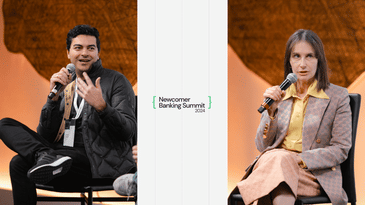
Today we’re highlighting two fireside chats from the Newcomer Banking Summit on March 14.
First up is Mercury CEO Immad Akhund. He talked about how the Silicon Valley Bank crisis sent customers rushing to his digital banking service.
He pitched a world where software — not human bankers — solve most of customers’ problems. Akhund told me, “My experience with relationship banking was I need to send a wire and I literally cannot figure out to do it, please help me. Which to me never felt like a relationship, it felt very transactional and painful — and with Mercury you don’t have to do that.”
Mercury is limited by the fact that it is not a bank — it’s a software company on top of banking partners — at a time when regulators are looking closely at how banks work with fintech partners.
We concluded our summit with Jackie Reses — who was a top executive at Square before leaving to buy a bank. Reses is the CEO of Lead Bank, a regional Kansas City bank that still serves local customers but has built an onramp for financial technology companies to connect with the banking system.
“The thing I saw at Square — which I consider to be a very strong, innovative fintech — is that owning a bank and operating a bank is a 10X delta in understanding compliance to working in a tech company,” Reses said. At Square, Reses said, she learned to “appreciate the complexity of what it takes to do this, so that we could learn how to serve our clients better and help them scale — but make sure we never put ourselves in the position to risk the relationship that we have operating with our regulators.”
You can give the episodes a listen or watch them on YouTube.
Also: The Future of Banking with Rho, Jiko, and Ripple
In case you missed it, we’ve posted another panel with three fintech/banking leaders.
Rho CEO Everett Cook, Jiko CEO Stephane Lintner, and Ripple President Monica Long are all trying to solve shortcomings in the legacy banking system, with different approaches. Check it out to see their takes on the major problems with banking today.
Get full access to Newcomer at www.newcomer.co/subscribe
[00:00:00] Hey, it's Eric Newcomer. Welcome to the Newcomer Podcast. We've got two conversations
[00:00:05] from our banking summit. First up is my chat with Amata Kuhn, the CEO of Mercury, followed
[00:00:12] by Jackie Reese's former top square executive and now the CEO of Lead Bank. Both companies
[00:00:19] are competing aggressively where the banking business. Mercury is a little bit more in
[00:00:24] the direct customer facing. It is not itself a bank, it is working with partner banks.
[00:00:31] Meanwhile, Jackie's Lead Bank is a chartered bank and is often sort of behind many of
[00:00:38] the financial technology product that you're familiar with. Give it a listen.
[00:00:42] Can you just start off? Why did you start Mercury? Actually, what is the founding story?
[00:00:48] Yeah, hi everyone. I've been doing startups since 2006 and how many years have I lost
[00:00:55] 2016-17? I was just always really frustrated with the banking experience that I had. In 2006
[00:01:02] as an entrepreneur everything sucked. I remember there was no slack, there was no stripe. I did
[00:01:07] the thing that you did before stripe existed which was impossible. Then I had this idea for
[00:01:12] Mercury in 2013 and basically everything had improved apart from banking and banking
[00:01:17] was the same. Not to be harsh to them. Hundred year old institutions that have the same
[00:01:23] product and maybe they have a mobile app but they're not this product led and frankly
[00:01:30] the expectations had for software and services were just way higher and I didn't think
[00:01:35] the banks were going to build it. How long did it take to have something that people
[00:01:40] could use from this sort of business? Yeah, so I had this idea in 2013 and then I sold
[00:01:45] my previous company in 2016. At the start of 2017 I was like okay you know I think I
[00:01:51] know what to do on the product and how to get customers but no idea how to kind of launch
[00:01:57] a bank account. So basically 2017 I kind of started and at the same time I was having a
[00:02:02] kid and all this who was in like full time and then figured out how to do it and we decided
[00:02:09] to go kind of the route way we partner with existing banks and it took us about a year
[00:02:13] and a half kind of from like starting building it to kind of doing bank partnership and getting
[00:02:18] everything live and launching in April 2019. How transformative or not was the SVB crisis
[00:02:25] for Mercury? Like on the one hand I imagine it's like oh we need a new bank account you're
[00:02:30] easy to open. On the other hand you know if people are running to JPMorgan are they you
[00:02:36] know going to a startup for their banking or how did that play out for them? I thought
[00:02:40] it might be fun to do a little show of hands. I don't know how many entrepreneurs are there
[00:02:44] but how many people use Mercury? How many people from that used it because of March 2023
[00:02:51] versus just before? So everyone there already used Mercury so I think like you know we've
[00:03:00] been doing this since 2019 and we've been growing you know fairly consistently, fairly
[00:03:05] fast we've been you know when from a basically a 9 person it's kind of seed stage company to
[00:03:11] raise the series A and then the series B in 2021. And you know 2023 especially March
[00:03:18] it was definitely significant for us at the time there was a big blip we got about 8,700 kind
[00:03:24] of customers in a short 1,700 you say what a percent increase that was or anything like that?
[00:03:31] So we've said it before we have about 100,000 kind of customers more than 100,000 customers
[00:03:36] live something like that so you know you can get the rough idea. So we were already yeah fairly
[00:03:42] bigger at the time but was definitely like a significant bump and obviously these customers were
[00:03:47] on the bigger side in general what it has done for us is it's really kind of kind of
[00:03:51] been an inflection point in terms of how fast we've been growing so even since then
[00:03:56] you know we've been growing basically twice as fast as we were pre-SVB so like January and February
[00:04:01] this year was where our biggest excluding that one month in March were by far biggest
[00:04:07] at months we've ever had. And I think it's really when I think about product I think about like
[00:04:12] amazing user experience and all these things when you know when banks think about product they mean
[00:04:18] like what kind of loan they can sell you right? So it's like a very different mindset and I think
[00:04:23] tech enable companies and entrepreneurs like you know they're looking for a banking service that
[00:04:30] matches the rest of the expectations of software they use. You've got a banking service or like
[00:04:35] you go to your website you know banking I think is the first word but then you have this like we
[00:04:39] are not a bank you know we work with choice financial group or whatever I think people
[00:04:43] you're savvy enough to understand that probably but the decision not to be a bank is a pretty core one
[00:04:49] why did you decide to be the software platform work with banks and not be a bank yourself?
[00:04:55] I think in general you know people want to feel like they're money safe and people want a great
[00:05:01] product and they don't get too much if like Mercury is a bank or not and actually I think we can
[00:05:07] provide a much safer product by not being a bank so by default anyone that signs up to Mercury gets
[00:05:12] a sweep account and we sweep it to kind of 20 20 banks underneath the hood so it's like
[00:05:17] some of the traditional banks like we'll have sweep but it's not default is that sort of the
[00:05:21] 10. Yeah I mean yes you have to jump through a lot of hoops to get these kinds of things
[00:05:26] of banks yes it's possible like they call it ICS but it's not easy and then you know we also
[00:05:31] have kind of US government T-Build product or Mercury Treasury that makes it very easy to put
[00:05:35] your money together and that's something we launched over the weekend when this SVB crisis
[00:05:40] happened we launched something called Mercury Vault which helps you understand where your money is
[00:05:44] and we also extended FDIC insurance from 1 million to kind of 3 and then 5 so overall I think it
[00:05:52] matters a lot more to be kind of a chartered bank if you are doing lending I think there's not
[00:05:59] that many fintechs that have pulled on like at scale lending without being a bank but in terms
[00:06:05] of providing depository services payments kind of all the software that you need to run your business
[00:06:10] you I don't think you need to be a bank are you going to reevaluate the decision
[00:06:14] I mean we look at it every year yeah in the UK actually most of the new banks became banks because
[00:06:21] the UK has like some kind of fintech friendly charter so does Germany and Brazil so yeah the US
[00:06:28] hasn't done that are you in the UK no so that's your way of saying oh if we wanted to go to the UK
[00:06:34] we would have to become a bank no I mean there's also other ways to and you can partner there as well
[00:06:39] I'm just from the UK so I was thinking yes I always think about the UK and like that was part
[00:06:44] actually part of Mercury's inspiration like there's a lot more yeah now actually the US has
[00:06:50] got up to some extent but in 2017 there was a ton more innovation in kind of new banking in
[00:06:55] Europe what are the main ways right now that Mercury generates revenue yeah so we have five or
[00:07:01] several revenue streams we have a lot of deposits and we have a very deposit rich kind of
[00:07:06] customer base so we make money both on on our treasury but we have kind of fees on it and the
[00:07:12] treasury is like you run that yeah and the deposits the bank runs it and pays you some money
[00:07:17] yes exactly so those are two and then we have both credit cards and debit cards and we get
[00:07:21] interchange on those and we also have effects and we also have a venture debt lending book we make
[00:07:26] we get fees but we work with the bank on that and we get fees from that as well you're just like
[00:07:31] funnel to basically well we do all the servicing origination but they do the balance sheet part
[00:07:35] and would you want to do lending yourself well we'll probably we're not a bank so we can't
[00:07:41] do it using our deposits so we always have like some balance sheet provider for it but yeah we're
[00:07:45] going the lending book as well venture debt is our current current kind of product there but we
[00:07:50] are kind of experimenting with others I mean a big theme of the day has been what's the state
[00:07:56] of relationship banking right I mean we've got like several banks or that are basically
[00:08:01] steve or citizens or whether they're premised on you know you like us at this bank you'll love
[00:08:08] us at this bank you know yeah so that's a belief in relationship banking I think Matt's presentation
[00:08:13] was very sort of skeptical of that model if people are able to use like generative AI models
[00:08:19] to price shop and sort of that inertia goes away and people are much more conscious of getting
[00:08:25] the best deal you know you're you're sort of focused on product what do you think of relationships
[00:08:30] when it comes to banking yeah I mean my experience experience with relationship banking was
[00:08:37] I need to send a wire and I literally can't figure out how to do it please help me which like to me
[00:08:43] never felt like a relationship it felt very transactional and like painful and with mercury you don't
[00:08:49] have to do that I think there is an element of like okay things are getting complicated I'm considering
[00:08:55] loan options and things like that and I think for those relationships matter a little bit more I
[00:09:00] would say ideally there is a product that can answer your questions right like as I mean if you take
[00:09:06] lending ideally it's like hey we already have your banking data and like here's a generated loan
[00:09:11] that you just click on to accept right like I think that would be the better customer experience
[00:09:15] but yeah we we have relationship managers now and we do that as well but yeah I don't think
[00:09:20] that's the future I think the future is a product based approach to do banking and I think frankly
[00:09:26] that that's kind of one people want definitely elements where you know you want to make sure
[00:09:31] there's someone there and sometimes that that human can really help you but you know maybe the AI
[00:09:36] can answer what you're going to share okay so I was gonna ask about AI like generative AI yeah I'm
[00:09:41] sure you're experimenting with it where do you think it might be useful to your business yeah
[00:09:47] I mean I think the first part of Matt's presentation on the Gen AI thing is like hey
[00:09:52] increases efficiency I think there's definitely elements of that and we already experimenting you know
[00:09:57] when it comes to fraud and things like that there's always been machine learning anyway and yeah there's
[00:10:02] other I don't know if Gen AI pays a big piece there but customer service understanding you know
[00:10:07] even something like receipts like it's way better to like OCR them using kind of these modern
[00:10:12] techniques so there's lots of like this kind of efficiency things to be had and that's where our
[00:10:17] focus has been on on the regulatory front I mean there's clearly been some push for Finda
[00:10:25] companies have a tighter relationship with the underlying banks or how would you characterize sort
[00:10:31] of the pressure and feedback that you're getting in terms of your banking partners and how much
[00:10:37] they want them to be involved with your business on a high level 2021 saw a ton of innovation
[00:10:45] like a lot of fintechs you know launched but actually a lot of new partner banks came along that
[00:10:50] like previously were not partnering with fintechs that started partnering with it so and then
[00:10:54] you know when there was a crypto crisis of 2022 there's a lot of companies that kind of had issues
[00:11:00] and then obviously the SVB thing the regulators saying those were red flags is like crypto
[00:11:06] yeah from a regulatory perspective it's like hey we need to check out what's happening
[00:11:12] in Silicon Valley and that's fair we will always kind of operate it on like yeah we do business banking
[00:11:19] like we're not doing any weird crypto thing right like I mean I like crypto but no crypto
[00:11:24] from Merck well we're not doing any crypto products but you know we've always done like fairly vanilla
[00:11:30] products but just in from a regulatory perspective but you know obviously packaged in a really nice
[00:11:35] way and we've always felt that compliance and risk is like a very important thing for us to get
[00:11:40] right and we've always invested heavily in it so I think the current regulatory scrutiny
[00:11:46] and both fintechs and these banks having to kind of look at what they're doing and go hey are we
[00:11:53] doing this in like a fully compliant way I think it's healthy and we're going to come out of this
[00:11:58] there'll probably be less fintechs and there'll probably be less kind of banks that work with
[00:12:02] fintechs but the ones that come out on the other side will be in a kind of much healthier position
[00:12:07] and with like you know products that hopefully are in a position where they can scale.
[00:12:12] How does it translate on just cost or you know are you just having to do more work telling your
[00:12:17] banking partners about customers or is it having yet does it change for the cost structure of your
[00:12:23] business? Yeah I don't think it changes the unique economics and costs significantly I think it's
[00:12:28] you know you can still like yeah business as I mercury will always have like a lot more kind
[00:12:35] of automation and even when we have people we can give them a lot of leverage with the tools we
[00:12:39] build so we have our own risk product team and we build yeah we still use third parties but a lot
[00:12:44] of our tools are built internally so we can like do things really fast and with a lot of information
[00:12:49] so overall I don't think it changes the risk and like it doesn't change the
[00:12:54] economics what we've tried to really be careful about is you know how does it change the user
[00:12:59] experience and actually yeah one of the things to think about is like a lot of the time when people
[00:13:05] complain about their banking or financial services experience but the really complaining about
[00:13:10] is like my account froze I couldn't get this thing done over slow to do this and those are all like
[00:13:15] actually like compliance and risk friction so how do we do that in a way that actually like is
[00:13:22] some of the friction is necessary but I don't think it's all necessary right like if you've already
[00:13:26] collected the document on the user like let's make sure that we don't have to ask them again right
[00:13:31] or like pre-emptively if we know something's gonna come up let's try to be ahead of it so that's
[00:13:35] the kind of thing we think about it. You work with two banks right now right? What's complicated
[00:13:40] but yeah we have two main partner banks but we also have kind of two providers on the international
[00:13:45] payment side and we also with my crew treasury will work with apex as a custodian. Is that a good
[00:13:51] equilibrium or is there sort of an ideal you know one bank mini-banks or how do you think about why
[00:13:59] I have to or think two is a good number maybe three slightly better but I don't think I think one
[00:14:05] is bad because you need redundancy and I think it's as a fintech it's responsible to have like
[00:14:10] multiple partners that you can work with I think if you have more than three it's just gonna be a
[00:14:15] lot of work too follow all the rules and make sure everyone is like fully abreast on things so
[00:14:21] I think two is a good number for us it's you know we have a really strong and deep relationship
[00:14:26] with both of the partner banks so you know we talk directly with them both in terms of the technology
[00:14:31] side and the kind of compliance counterparts and things like that so yeah and it's important for
[00:14:36] us to go really deep. You know we heard I think on the rippling panel this idea okay where you
[00:14:40] really need a dig deep with partner banks especially if you're like a big company
[00:14:46] you know I've been hitting on this thing but like you know mercury is the brand but then
[00:14:51] it sort of leads your customer not to do or think about the underlying banks or how much
[00:14:57] I mean I'm dealing with bigger customers are you spending more time educating them on the banks behind
[00:15:02] mercury so I think Matt Harris said this and I completely agree that I don't think our customers
[00:15:09] should be checking the balance sheet of them. I mean also did you see his graphs like who's
[00:15:14] gonna who is who here even and we're banking experts as like you know qualified to look at all
[00:15:20] this data to make an assessment on their on their bank and like you know what people looking
[00:15:24] as VB data and going like oh this might have a bank run so I don't think that's realistic I mean
[00:15:30] I think it's much better to go like hey we have 5 million FDIC insurance and you
[00:15:35] should anything above that you can put into US government tea bills like you know that is something where
[00:15:40] we can help our customers understand how that works and we have a lot of information and we
[00:15:44] have this product called volt where we explain it but I feel like that's the answer I think I
[00:15:49] don't think the answer is everyone's gonna become bank experts. I'm gonna open it up to questions soon
[00:15:54] how is it been living through the Fintech hype cycle or where are we right now you know what's
[00:16:01] your read on the mood in terms of venture capital and and Fintech companies like you're on?
[00:16:06] Yeah I mean you know 2021 serious hype cycle I've been in the valley since 2007 so I'm like a
[00:16:12] little little immune to these things but you know I much prefer building a company outside a hype
[00:16:19] cycle it's easier to hire people and you know you get less competition like there's a while
[00:16:25] everyone was like every single product is gonna have a bank account attached to it I was skeptical
[00:16:30] but you know obviously as a startup I'm like well maybe all every single company is gonna
[00:16:34] compete against ourselves or something but I think it's it's healthier and yeah overall like
[00:16:41] I just looked this up because I was I was like what percentage of GDP is financial services so
[00:16:47] it's 8.3% according to a quick Google I did earlier so that's huge right and I think the trends
[00:16:54] that are underlying it yeah everyone's interacting with things on their phone as
[00:17:00] Generative AI trend the Matt talked about like it's inevitable that most people will relate
[00:17:06] to financial services via tech products some of that's gonna be from existing banks but I think
[00:17:12] a lot of it is gonna be from fintech so I think these trends are gonna go on for a long time
[00:17:18] you know I'm happier to do it outside a hype cycle though any questions the question was where
[00:17:23] does bass 2.0 go I think you know there's this movement there was a moment in time where a lot
[00:17:31] of banks wanted to work with fintechs but they couldn't do it easily and you know bass kind
[00:17:37] of sprang up as like the middle man in the space I think the next set of things is banks
[00:17:43] either themselves or working with technology providers to have bass internally and that's basically
[00:17:49] what we're seeing so you know column and leader these two kind of bass banks where you know we have
[00:17:55] Silicon Valley people go buy a bank and then apply technology to it the two banks we work with
[00:17:59] choice involved have built all of the tech internally to you know to work with us and to work with
[00:18:06] other fintechs I really think that's the future and not just from a regulatory perspective it's also
[00:18:12] just like you know if you can remove the middle man and there's one less person taking margins like
[00:18:16] it's just kind of in inevitability so that's where I see it going and I think that's yeah if
[00:18:21] you go three years from now I would think most banks will be working directly with fintechs especially
[00:18:27] at scale I think the bit that the middle man do really help with is when you're first starting out
[00:18:33] when mercury launch there was an in nine of our semi-murkery and that would have been
[00:18:36] quite hard to get like a direct bank partnership done and be able to service that fully
[00:18:41] leads next like what have you thought about working with them or leader column or yeah we don't
[00:18:47] work with them currently by my huge fan of Jackie where is she uh hi Jackie and and William over
[00:18:56] columns so I'm sure we will at some point yeah it depends why you're looking for diversification
[00:19:01] I think the way the sweep network works and you know mercury treasury like at least in terms of
[00:19:06] like putting your money somewhere safe I think that we've got that covered and mercury's been profitable
[00:19:12] for the last six I guess almost seven quarters so yeah we feel like we're in a very stable
[00:19:17] place and we think about the long term so I would say you should you'll be happy with mercury
[00:19:23] so just one bank sure I mean we're not a one bank we're a flat uh we're not a bank at all actually
[00:19:30] if if you were to start a Fintech company today with sidron is there an area you're excited about or
[00:19:37] where would you know honestly I'm pretty excited about these Jenny i agents someone's gonna have
[00:19:42] to make those actually invested in a company building like Fintech Jenny i agents I think those
[00:19:46] look really cool what do they do well they know lives uh won't say exactly what they do but the
[00:19:51] it's this exact thing it's like hey if you want to buy car insurer and so mortgage like who wants to
[00:19:58] click those buttons like have it automated find me the best one swap it out whenever something cheaper
[00:20:03] comes you know it's like that kind of thing my final question and you know it's sort of this
[00:20:08] this same take stock question I've been asking like as a founder you know watching like an institution
[00:20:13] like Silicon Valley bank unravel like did you do anything differently afterwards or how did it
[00:20:20] change your perspective as a CEO I mean for us it was a is a weird moment right because yeah they were
[00:20:27] the 800 pound gorilla competitor for us right like when we when we launched yeah people would say like
[00:20:33] oh yeah why would I not use SVB instead of mercury that gives us always a always a thing and then
[00:20:39] you know post march like i don't know if we've been fully reversed but it feels like a very
[00:20:46] different world right like now when i talk to customers yeah i'm sorry mark from SVB but when
[00:20:53] i talk to customers it's mostly like should i use jpmc or should i use mercury like those are
[00:20:57] the conversations now so like the paradigm has shifted quite a bit and yeah I was really sad about
[00:21:03] it like I used SVB in my previous company and you know I think even though we were competing against
[00:21:09] them like I never thought badly of them I think they're like great people the yeah it was a sad moment
[00:21:14] it also gave us this opportunity to grow faster great i'm not thank you very much yeah thanks for
[00:21:20] thank you resist lead bank thank you for joining me of course i'm happy too so yeah you are a bank
[00:21:27] and it's been tech all in one yes i've built one and i've bought one how did you become a bank tell
[00:21:33] us that story i went and bought one having built one as a denovo charter at square it was one of the
[00:21:39] most painful experiences of my life one of my co-founders is here hamam it was probably the most
[00:21:45] painful experience of his life as well because he spent years working with the fd i c teaching
[00:21:51] and working on algorithmic lending for example and going through how machine learning works
[00:21:58] but in that process you realize when you write the first lines of code and you write
[00:22:02] the first set of policies and procedures that you get to think about banking in a first principles
[00:22:09] mindset of like what should this be and how would i build it and so it really changes the framework
[00:22:15] for how you would think like huh i just started from zero i'm good and build the ultimate bank now in
[00:22:23] that context we were able to think of that but we were only serving one customer and so it became
[00:22:30] that's a square but it made it more obvious that no one had built the bank we wanted to be
[00:22:39] and we had worked across the industry with many of what i would describe is the best banking
[00:22:45] partners even still out there while we were at square and we saw many challenges as a customer
[00:22:51] and so given that we decided that there was a better way to do this and there are four of us who left
[00:23:00] square Erica Calili and Ronik Vias so that my other two co-founders and we searched across the country
[00:23:10] for a certain profile of charter that we were looking for that we thought would maximize the
[00:23:17] opportunity of banking as a service and we went and found the best high quality company we could
[00:23:26] and that's lead bank and lead bank was owned by a very old school family in Kansas City
[00:23:33] that were very well known you know the mom who was the chairman of the bank is the chairman of
[00:23:39] the symphony very philanthropic city the banks are absolutely gorgeous if you walk in you'd be
[00:23:45] amazed are you still operating them absolutely we're a part of the community and are the owners
[00:23:51] involved anymore we are now the owners so they're gone we bought it a hundred percent
[00:23:57] but we thought very methodically about what charter we wanted what company we wanted what kind
[00:24:04] of employees we wanted in what kind of location and in what state and so we ended up with an A-plus
[00:24:13] opportunity because even if everything wasn't perfect at lead before we owned it and there are
[00:24:19] examples where you're like oh that's kind of you know not perfect in their history it had
[00:24:27] the infrastructure and mindset of the team that we could use to go build and continue to grow
[00:24:36] banking as a service how big was the acquisition about $52 million dollars
[00:24:42] and what was the first product that you want to provide or what when it be when you bought it
[00:24:48] you're like okay now we are a FinTech bank like what was the beginning the best part of lead was
[00:24:53] that they already were a FinTech bank and they had wonderful clients and so we were able to take
[00:24:59] what was already there and supplement with some of the world's greatest engineers and so our
[00:25:05] engineering team is amazing we knew almost everybody that we hired right out of the gate they all
[00:25:11] came from square from stripe from Yahoo they'd built some of the largest payment systems in the world
[00:25:17] they built some of the largest banking systems in the world and several of them have accounting
[00:25:23] degrees and CFAs and so they have been through the ringer with us in prior circumstances around
[00:25:30] building out APIs for banking products and so we took what was already a strong banking as a service
[00:25:37] partner bank and then added us added the engineering and product team added a much deeper
[00:25:46] compliance and legal team and with that came extreme product market fit and I will say extreme
[00:25:54] product market fit and so we don't have sales we don't have marketing we have in bounds of people
[00:26:01] who know us who have been credentialized through people we know through compliance teams we know
[00:26:07] and we have an extreme level of inbound interest in working with us your partners like what are they
[00:26:13] getting like what is what services are you providing so four main product areas so lending all kinds
[00:26:21] of lending APIs around any kind of card product any kind of loan product by now pay later accounts
[00:26:28] so either virtual accounts or actual DDAs that you might need payment rails so all kinds of money
[00:26:35] movement things like that and then issuing and so card issuing been sponsorship things like that
[00:26:41] the only thing we don't do and don't have on our roadmap right now is acquiring and it's just
[00:26:48] frankly because of our size we're about a billion one in assets right now and when we're bigger
[00:26:55] in size I think we'd look at doing acquiring in the future it's just not anywhere on our we've
[00:27:00] so much to build with such strong inbound demand come we do you want a customer facing brand
[00:27:06] at all or you want to be facilitating other companies to build those brands so in Kansas City
[00:27:12] our home market we take a really active presence and we have amazing customers we have 3000
[00:27:18] customers in is that a regulatory strategy or it's a strategy to stay active in the market because
[00:27:25] the purpose of community banks in a local market is to serve the community and we are blessed with
[00:27:32] a great group of clients some of whom I've become really good friends with and there's someone
[00:27:38] here from Kansas City where is he where do you go there he is and he knows where we're at in Kansas
[00:27:43] City and likes how we show up thank you very much and you know there's no reason to stop it we have
[00:27:49] an amazing customer base but you were saying that is the public facing part otherwise it is the
[00:27:52] public facing part we have an app it's built by Fieserve it's awful if Frank were here I'd ask
[00:27:59] that he update the design of that app on behalf of community banks across the United States but
[00:28:05] that is a customer facing community bank app and so most of the business locally is real estate
[00:28:12] developers they're not in office they're in mixed use kinds of activities we don't have any
[00:28:18] issues with regard to liquidity deposits bad loans the bank actually operated pretty clean from
[00:28:28] a lending point of view and we diligence that pretty actively and then the the other part of
[00:28:33] the business which is the growth is banking as a service but interestingly even some of our local
[00:28:39] clients want to use like ACH rails because they're a real estate developer and they want to work
[00:28:44] with clients to do ACH and while their volume might be smaller because they're local they love
[00:28:50] the fact that we could bring technology feedback to them to support their own banking needs
[00:28:56] that's not everybody out of the 3000 maybe that's 20 but it feels good to be able to change
[00:29:02] the nature of what we do in a local community and bring technology expertise to Kansas City.
[00:29:07] There are some of your bigger customers that you can talk about are there only a few that are
[00:29:12] public and one of our strategies is to not really talk about our customers let them talk about us
[00:29:19] if they want to and so we show up on a few websites like ramp and affirm a few other fintechs
[00:29:26] like flex and credit key but otherwise I don't know that anyone's put us on their website so I won't
[00:29:32] comment our clients are some of the biggest e-commerce fintech big and scaling also fintech e-commerce
[00:29:40] consumer companies we have many public companies on our rails we have many up and
[00:29:46] commerce of people that came through our network that we know that we want to help support
[00:29:50] that we feel like have really good strong teams we know who they are we know who their compliance
[00:29:54] teams are and so we vet all the in-bounds but thankfully we're part of the tech community so we usually
[00:30:03] know these folks and through someone in our network we have pretty good insight into what kind
[00:30:09] of operator they are and what the perspective is on the likely growth of their business and so
[00:30:15] we do have several small small clients on our rails and then we also have some crypto companies
[00:30:23] on our rails and we're one of the only banks in the US that's been through a full three-year exam
[00:30:29] with crypto that has been included in our bank and I think that when we went through those exams
[00:30:38] I think it's because the depth of understanding of the team and the type of enhanced due diligence
[00:30:43] we did with those clients in order to take fiat-only currency I think they believed
[00:30:50] through our behavior or through the understanding of the products that we were able to understand
[00:30:55] how to do enhanced due diligence and what's to look for with red flags outside of the community bank
[00:31:00] do you hold a lot of customer deposits on behalf of these companies or it's mostly money passing through
[00:31:06] so part of the strategy with FinTechs is that in some cases for some of the products there is
[00:31:12] more liquidity that stays on your balance sheet in some cases it's very short duration
[00:31:17] in other cases it's you know holding customer funds on behalf of a FinTech
[00:31:22] because we work with FinTechs to try to be a good partner to them and rate is one component
[00:31:28] of being a good partner to them. Rate is not our strategy though and by any stretch of the
[00:31:32] imagination what we build and how we execute from a technology point of view is the strategy
[00:31:38] and so I'd say they come to us first for the way we build products and the way we operate
[00:31:43] from a compliance point of view and the way we are foundationally strong financially
[00:31:50] how we operate across the balance sheet is just one component of the application. How do you
[00:31:53] substantially substantiate your financially strong or what are the key signals to people?
[00:31:59] Oh so then this was something that came up in the last discussion is people have to do due diligence
[00:32:03] on us and thankfully we report numbers to the FDIC every quarter and so everyone can pull up our
[00:32:10] call report and we advise FinTechs before they choose a bank to go do reverse diligence on us.
[00:32:16] What are the key numbers give us some of what we find? We did about 140 million in sales last year
[00:32:23] 55 million of what I describe as gross profit and 16.4 million a net income
[00:32:30] and so what billion won in assets those numbers are publicly available there's nothing secret
[00:32:36] of about them. You're supposed to position this is a big reveal. The big reveal no but you know
[00:32:41] it's interesting as a size point of view because we're actually a pretty big partner bank size
[00:32:48] you know most people want to partner with someone below the Durban size which is 10 billion dollars
[00:32:53] so that they can make money on interchange? Well you can make money either way it's just a matter of
[00:32:58] how the fees are calculated but it's more that there aren't that many that are actually that
[00:33:04] big in scale there's a handful and then when you look by product they're only handful that are good
[00:33:10] at different kinds of products and so we've already distinguished ourselves you know we bought
[00:33:15] this bank about two years ago we've already distinguished ourselves in size pretty substantially
[00:33:21] and kind of separated ourselves from a you know a pack of smaller players and so when people do
[00:33:28] due diligence on us first of all like our CFO's bio is extraordinary then you talk to her
[00:33:35] and you're like this woman knows what she is doing she was the ex CFO of post bankruptcy
[00:33:40] Lehman Brothers and so she managed the entire dissolution of their $132 billion dollar balance sheet
[00:33:47] and has been had been working there for 10 years and before that ran FPNA it will us
[00:33:53] and so she has an extreme level of detailed understanding of complexity of balance sheet at scale
[00:34:01] and she has a detailed understanding of how to build unusual balance sheet structures in order to
[00:34:09] support the financing needs of clients then I'd make one more point she doesn't come from tech
[00:34:18] so she can look at us and call bullshit and say like yeah I get that yeah we're not going to do
[00:34:24] that and let's figure out why and what makes sense and why you're going to do something and it helped
[00:34:31] makes the conversation better when you're not all coming from a closed ecosystem of understanding
[00:34:38] you want to have divergent perspectives in order to make the conversation smarter and so she's
[00:34:43] a very can do person I think she's an incredible approach but when a client goes and
[00:34:49] you know asks her questions about how we manage risk how we manage interj money flows because I
[00:34:55] do think that's going to be the challenge of banks for the next few years because of the complexity
[00:35:02] of money moving soon 24 7 365 there's not enough volume yet but it's coming and all the flows
[00:35:09] amongst all the counter parties are still not aligned yet and so you know I wanted someone who
[00:35:15] was going to understand that complexity. So you're saying just the speed of money movement is going
[00:35:20] to become the core issue or I just want to speed of money movement velocity of what flows
[00:35:25] intraday because most of the metrics that are looked at are measured at ends of periods ends of
[00:35:34] are not a distinctive moment for liquidity challenges and in some cases there's mismatches
[00:35:41] of windows that operate between all different kinds of counter parties that might be fine where
[00:35:47] you have closed fed windows and I think that touched on this a little bit but when you are in a
[00:35:52] world with Fed now and 24 7 money movement you have to make sure that every counterparty can pull
[00:35:59] to the same moment in time and today that's not the case. Big question but what is your broad read
[00:36:08] on regulatory friendliness to fintechs right now or how much has sort of regulatory scrutiny changed
[00:36:14] how you operate. Where are you operate within the guidelines and confines of the regulation I
[00:36:20] haven't seen issues. Full stop where are you able to actually answer questions and substantively
[00:36:27] step back with a framework of understanding around how your clients operate KYC KYB red flags
[00:36:35] I haven't seen any issues full stop now that doesn't mean that regulators are necessarily
[00:36:41] forward looking to take proactive views of how the market's moving and they're not on their
[00:36:49] forefront or their their their forward foot trying to change the way banking operates to experiment
[00:36:55] but last I checked when the American taxpayer is ensuring banks I don't know that we all as taxpayers
[00:37:05] want banking regulators to be flippant about risks that banks are taking and so you know you hope
[00:37:13] that where there's innovation and features of what people are doing around the edges
[00:37:19] that regulators who operate and understand them but I think they need to see data first
[00:37:24] and you know I'm pretty thankful that they're pretty detailed in their analysis and so where
[00:37:32] you have very high profile high class very strong compliant customers I think they operate
[00:37:41] you know quite safely within the context of banks that they work with. Do you have to say no to
[00:37:46] your clients a lot or it's more just building the product in a way that they can. It's definitely not
[00:37:51] a no it's most of our clients are super high quality they want to scale and they want to scale safely
[00:37:58] having a mistake from a banking point of view is existential no one wants to do something stupid
[00:38:03] and so the situation I am more likely to see is not understanding something
[00:38:11] and when you explain it with a strong rationale I rarely see instances of debate but if you're
[00:38:22] taking a position on something you I'll give you an example used to drive me crazy
[00:38:26] that a bank I worked with in Utah would not let us do CBD loans and it used to drive me crazy because
[00:38:34] I would say like okay but now so when I go into whole foods let's see I mapped it out on Google
[00:38:40] and I think there are half mile from you when I go into whole foods and I buy CBD bubble bath
[00:38:46] and I put it on my Visa card and then that runs through Stripe you're telling me
[00:38:52] that those products aren't banked you know in however yeah I know I know I know and you'd get like an
[00:39:01] answer of like yeah that seems kind of ridiculous but let me just shrug my shoulders and say like
[00:39:07] yeah I don't get it but we're not changing those answers are illogical and if in fact you
[00:39:14] and the way we try to respond to clients respond with a better answer better advice a
[00:39:20] can do approach to solving their problems we usually get pretty thankful people who are happy
[00:39:25] we've got their back open open to questions while people think about it well when you started
[00:39:33] lead or now managing it what was the main sort of leadership lesson you learned from your time at
[00:39:39] square what what did you take from square or what did you reject when you started it so when I
[00:39:44] was at square I oversaw hundreds of licenses so I ran a very heavy heavily regulated part of square
[00:39:52] I was shot not just a tech executive or you know an engineer or a product manager I sat on top
[00:39:59] of lending and banking and I started a bank first principles and the thing I saw at square which
[00:40:05] I consider to be a very strong innovative fintech was that owning a bank and operating a bank
[00:40:14] is a 10x delta in understanding compliance to working in a tech company and the language you use
[00:40:22] and the mode of operation and the way that you run a company is night and day different and even
[00:40:28] if you think because you sit on licenses like mtls which is often what I hear oh we have mtls we know
[00:40:35] what we're doing oh this is a different world and and so my learning I got to learn thankfully in
[00:40:43] the context of square and living it every day was to appreciate the complexity of what it takes to do
[00:40:51] this so that we could learn how to serve our clients better and help them scale but make sure we
[00:40:59] never put ourselves in a position to risk the relationship that we have operating with our regulators
[00:41:08] question one of the questions I had was around this trend towards like real-time payments
[00:41:14] kind of money being moved instantly 24-7 and kind of gearing up towards you know a world where we
[00:41:21] do have instant money movement like what are the things that you're thinking about for lead bank
[00:41:26] that you need to have to be prepared to be able to facilitate you know this huge volume
[00:41:32] to make sure that there's you know you're covered in terms of like anti-fraud just curious high
[00:41:38] level like how are you thinking about that transition yeah for us around real-time payments I don't
[00:41:43] think there's anything from a technology point of view that we need to do today to be prepared for
[00:41:50] that we actually haven't connected to Fed now yet even though Mark Gold who runs it I know very
[00:41:57] well from the Fed I have the world's most like unbelievable respect for him we worked at the San Francisco
[00:42:03] Fed together I would was an advisor to them for nine years and he's amazing and he's methodically
[00:42:11] going through the roadmap but we didn't have client demand for it and so we just decided not
[00:42:15] to hook it up until we're ready but our APIs and the way that we operate as a platform as soon
[00:42:25] as we're ready we're going to connect to Fed now and I don't think there's anything we need to
[00:42:29] change we're kind of we are ready and I think that's because of the sophistication of the systems
[00:42:35] we built thus far and so whether it be any of the core money movement APIs or even our anomaly
[00:42:42] detection system I think we're prepared for it from a fraud point of view I do think they need
[00:42:48] more volume going through the system and you know up to now they've only had a few hundred banks
[00:42:55] involved and at some point they have enough functionality they open up the dollar value of each
[00:43:03] transaction you're allowed to send and the functionality grows enough that it actually can be
[00:43:10] an unbelievable platform and that's when I think you're going to see
[00:43:14] unbelievable growth do you think that lead bank is a model for community banking in general
[00:43:21] given there are lots of questions about the future of community banking
[00:43:24] you know I don't in a sense one of the things that I think is problematic about
[00:43:30] many of the banks that have operated in banking as a service is that they've done it opportunistically
[00:43:35] they've fallen into a client because of a lawyer an accountant an advisor or it came through their
[00:43:41] local area by fluke but they're working with people who I don't think truly understand the
[00:43:47] products and that's when I think banks get into trouble if they're not able to explain the
[00:43:52] products to regulators all of a sudden you get a very squishy feeling that it's unclear that
[00:43:59] they've done the appropriate amount of compliance KYB KYC checks that they need to be doing or even
[00:44:04] red flags SARS you name it and so I do I'm very weary of banks trying to be opportunistic
[00:44:12] of doing that having said that I do think there are models for banks to deploy technology
[00:44:18] in a better way than they do and I think that would help community banking if their apps were
[00:44:25] better if they were able to use applications that other fintechs who serve banks
[00:44:34] sell into that channel and so I do think there's a market for them to deploy third party technology
[00:44:41] in order to offer different kinds of services I see a need for community banking I see what we do
[00:44:47] at a local level even though I'm the biggest advocate for lending and context of where transactions
[00:44:54] happen I think there's an and not an or and the end is being part of a local community and
[00:45:01] lending to people that a fintech might not reach or supporting part of the community at the most
[00:45:09] local level with entrepreneurs who come in you know and hang out in your office on a Tuesday and
[00:45:15] you know learn different financial skills I just there's so many things that happen in order to make
[00:45:21] the texture of a community better and so I don't know that we need 4,000 banks but we certainly
[00:45:26] need community banking across the United States to thrive and so I do hope technology more integrates
[00:45:33] into the banks as opposed to banks deciding that they can necessarily go build for you know the
[00:45:41] most sophisticated technology companies in the world just just get the last word like a zoom out
[00:45:47] sort of question you know it feels like sort of coming out of the wilderness or hopefully if
[00:45:52] there are more bank crises you know it's like Silicon Valley went through this svb crisis frb
[00:45:59] there were the crypto banks and then fintech overall is retrenched you know would you tell somebody
[00:46:06] to start a fintech company today or what message would you give people about what they should do going
[00:46:12] forward reacting to sort of all these I don't know traumas yeah absolutely I think you heard in our
[00:46:18] last presentation it's you know a huge part of the economy 25 trillion dollars of assets sitting
[00:46:25] the banking system and the one thing I think is amazing about fintech is that it provides real
[00:46:34] functionality that everybody uses every day and so I do think they're such an incredible market
[00:46:40] opportunity you know it's really just open to creativity now I think it's actually harder
[00:46:47] to build fintechs than it is many other kinds of companies because precision and regulation
[00:46:55] are two components of the ecosystem and value chain that have to be built where in some cases you
[00:47:01] don't need precision and so I think there's incredible utility that fintechs provide and because
[00:47:08] it's such an important part of the u.s. economy and because banking is such an old industry where more
[00:47:14] than 50 percent of the market cap is over 50 years old there's an incredible room for invention
[00:47:20] everywhere along financial services including in consumer companies and this idea of having
[00:47:29] banking and financial transactions happen in context of where you are it doesn't have to look like a
[00:47:34] bank app in order to be banking great Jackie thank you so much thanks everybody for coming
[00:47:41] that's our episode on Eric Newcomer thanks so much for listening shout out to Giko and
[00:47:46] being capital ventures for sponsoring the Newcomer banking summit you can follow along with more
[00:47:51] coverage of the summit at nucomer.co and check out our youtube channel where we'll be posting
[00:47:57] conversations from the summit thanks so much