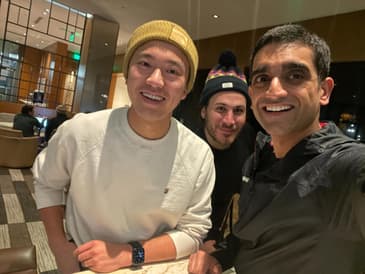
I was the first to report that Nan Li, Adam Goulburn, and Zavain Dar were setting out to create a venture capital firm back in August 2022. So when the trio finally announced their $350 million life sciences and technology-focused venture firm, called Dimension, I had to have them on the podcast.
I wanted to hear why Goulburn and Dar, general partners at Lux Capital, and Li, a general partner at Obvious Ventures, decided to embark on the long, hard trek of building their own firm.
The three investors have become true believers about the rapid developments happening at the intersection of life sciences and software.
Software engineers have made their way into the drug development process and the laboratory wet bench.
Li describes having a realization, “Wow, this seemingly small area that we used to cover when we were coming up in the industry together is now reorganizing the entire industry. And we’re seeing signs of that everywhere.”
He explained how the speed of lab experiments is opening the door for a bigger role for software in laboratory research.
“Experiments are getting very high throughput. They’re very cheap to run. And labs are generating data streams that look kind of like internet platform companies. There are certain biotechs that we work with, that generate more data per day than Twitter does,” Li said on the podcast. “And that’s where data science and software must come in. It’s really out of necessity. The way a modern lab works today looks nothing like 20 years ago.”
So, at probably the worst time to raise a new venture capital firm in recent memory, the trio set out to build a new one. On the podcast, Li, Goulburn, and Dar tell me how they did it. I ask them what technologies they are most optimistic about in the life sciences. And I pester them about whether healthy billionaires are getting vastly better healthcare than the rest of us — or are they just driving themselves crazy with tests?
Give it a listen
Read the automated transcript
Get full access to Newcomer at www.newcomer.co/subscribe
00:00:05
Welcome everybody, Welcome to Dead cat.
00:00:14
This is Eric newcomer, very exciting podcast episode.
00:00:19
I think I was the first, I was just checking this.
00:00:22
I was the first to write about Dimension.
00:00:25
New, 350 million dollar fund and I have the entire team, right?
00:00:29
Or the three. Three founders, at least here.
00:00:32
Zov and are and Adam. Goulbourne both from Lux and
00:00:37
then non Lee from obvious. Ventures.
00:00:40
Thanks guys for coming on. I really appreciate it.
00:00:42
Thanks for having us, dude. And say who you are at the
00:00:45
beginning. When you start talking for the
00:00:46
first time as people start to learn your voices and I'm just
00:00:50
going to throw questions on. You guys can fight about who
00:00:52
gets to answer what but why did you decide to start a new Fund
00:00:57
in the first place? I mean, you guys were cool
00:00:59
venture. Ons, like why go independent?
00:01:03
This is oven, by the way, thanks for having us in so many ways.
00:01:06
We kind of grew up in Industry. We were best friends.
00:01:10
Whether Adam and Don would say that about me, TBD not and I
00:01:14
taught at Stanford for four or five years.
00:01:16
We first met at Innovation Endeavors.
00:01:18
We were roommates in Oakland for a number of years before Oakland
00:01:22
was cool. And then Adam and I actually met
00:01:24
at JP Morgan in San Francisco in 2014.
00:01:27
And also very quickly became good friends with a nine month.
00:01:30
Of meeting Adam. He had recruited me over to
00:01:32
Locks and then we poem digital dark crafts together.
00:01:35
We built our biotech practices at obvious where non went and
00:01:39
was one of the founding investors and ultimately a GP
00:01:41
and and it locks as well. And so, there's a chance.
00:01:44
How many years ago did the idea of a the three of us might start
00:01:48
a fun first. By the way, I will say at the
00:01:52
2014 JPMorgan, Healthcare conference.
00:01:55
This is Adam. By the way, you'll know my voice
00:01:57
but the mishmash of Australian and New York and by watching
00:02:02
Hawkins door. So it's a blend.
00:02:04
But that, that same conference, I met my wife and I met Zoe of
00:02:07
in the space of, wow. He met his life Port partner and
00:02:13
then less importantly, his work partner wind within one hour
00:02:16
which yeah. Insane.
00:02:18
So when you make all your portfolio companies, go public
00:02:21
with JP, you know you'll know yeah.
00:02:24
Very close to the bank like is the bank at deal flow out of
00:02:27
this or not. You'll plug that way.
00:02:30
We're obviously close to the bank.
00:02:32
I was very close to only. They were invited to the
00:02:35
wedding. Yeah.
00:02:38
When did you first think we might do a fun together, or what
00:02:42
was this? Like text thread for a long time
00:02:45
or this is non. By the way, I really think it
00:02:48
was a 10-year long conversation. You know, it was sort of the
00:02:51
slow build of growing up in the industry together, getting to
00:02:55
know each other definitely being on text threads about this space
00:02:59
and what we're seeing You're catching up every time we were
00:03:03
in the same city or at a conference.
00:03:05
So it was this really gradual build.
00:03:07
I think, especially through the sort of Boom period of 2020
00:03:12
2021. Some of the earlier companies
00:03:14
that we worked with were scaled and some of them went public and
00:03:18
the space just really exploded in activity.
00:03:21
So I think there is a forcing function of the realization
00:03:24
that. Wow, this seemingly small area
00:03:27
that we used to cover when we were coming up in the industry.
00:03:30
Together is now reorganizing the entire industry and we're seeing
00:03:34
signs of that everywhere. So the three of us just kind of
00:03:36
looked at each other and said you know our ability to cover
00:03:39
this as one member of this broad firm is really limited and the
00:03:45
space is so large and there's so much opportunity that we just
00:03:48
felt like we were doing a disservice by get the sector
00:03:50
deserves its own fund and we just felt if we didn't do it you
00:03:54
know the three of us know each other.
00:03:55
Well we've been doing work for a long time.
00:03:58
If we don't do it will really regret Not making that move,
00:04:01
right? It's more fun to think of it as
00:04:03
a three friends go off and Silicon Valley version of raise
00:04:07
a you know instead of a band you raise a fund and get 350 million
00:04:12
dollars to chase Your Wildest Dreams.
00:04:13
But yeah, I mean, you guys are all sort of DieHard, Believers
00:04:19
in this sort of thesis and that's really what I want, you
00:04:21
know, the episode to be about because I think this is a cool
00:04:25
fun where it's like, okay, we are, I mean, you kept evoking in
00:04:29
our conversation, Before this Ribbit Capital, you know, which
00:04:32
is a very successful Focus fun, very different space that went
00:04:36
all in on fintech and crypto and a wildly successful fund.
00:04:39
And so I like this idea that you guys see a space that sort of
00:04:43
coming and want to define the firm around it.
00:04:46
So you know, it's life sciences and Technology I sort of get it
00:04:50
but explain to me like what is the organizing principle of the
00:04:54
investment thesis of Dimension? Will it?
00:04:57
I think you're spot on when we laughed and we had a kind of
00:05:00
Asians about leaving and then when we think about what we can
00:05:02
become it's what making multitude.
00:05:04
But Ribbit it's what's Anil and Mike have done with amplify.
00:05:07
Its but cursing, green did with DTC and 4Runner even map and
00:05:11
Fred a paradigm in crypto and met three.
00:05:13
There's a chance before things are obvious to build a firm and
00:05:16
not only capture the best entrepreneurs and support and
00:05:18
Steward them. But also be a little bit of a
00:05:20
rallying call for the broader ecosystem.
00:05:23
I think if we do it right at the mentioned, that's ultimately
00:05:25
what we want to do and what we want Dimension to become a
00:05:28
forum, kind of in that mode. Oh, Dan in that ilk, what we
00:05:32
saw. And we'll keep it high level,
00:05:33
but double click in any and all questions.
00:05:35
Eric is that the leading practitioners on both sides?
00:05:39
Whether they were kind of machine, learning researchers
00:05:41
and computer scientists at deepmind or open AI or metal AI
00:05:45
or Microsoft, research, or diesel research.
00:05:48
They were one by one uniformly and independently building out
00:05:51
their own weapons capabilities and then simultaneously
00:05:55
attacking biology and chemistry's.
00:05:57
Most vexing problems really over the last three or four decades
00:06:00
Kids with increasing traction and adopters Alpha fold.
00:06:03
There's a multitude of other examples, we can point to, but
00:06:06
that was happening on the computer science side and then
00:06:08
conversely on the molecular biology and the chemistry side,
00:06:12
every leading research lab to go to a Harvard and Yale and
00:06:15
Stanford and MIT as so on and so forth.
00:06:18
All of them were increasingly fluent in software packages,
00:06:21
like tensorflow. They were all coding on a
00:06:24
regular daily basis in a way that even five years ago would
00:06:27
have been pretty surprising. And, in 10 years ago would have
00:06:29
been absolutely Solutely null. So the realization for us was
00:06:32
that at the Two Poles, the leading experts were
00:06:36
increasingly speaking each other's languages and capital
00:06:39
markets were still entirely dichotomies today.
00:06:41
If you're an investor you're either a software investor or
00:06:43
you're a biotech investor, you're either investing in SAS
00:06:46
and ARR sorts of companies or you're investing in single
00:06:50
molecules and assets. But as the disciplines become
00:06:53
increasingly affluent between themselves, the sorts of
00:06:56
businesses that can be built are changing in and of themselves.
00:06:58
And we had a chance to kind of bridge the Gap in really basic
00:07:01
terms and I'm cribbing from lines that you guys have said,
00:07:05
but the part of the idea here is that, you know, there are
00:07:08
companies that did like drug research or whatever and they're
00:07:11
there, the scientists. And then there were companies
00:07:13
that had software engineers and their the tech companies and
00:07:17
what you're seeing and what's already starting to happen, you
00:07:20
know, is those two sets of people sort of work together and
00:07:24
build a company? Right?
00:07:25
Am I getting that right? And like why would I guess if
00:07:29
we're sticking with the Drug development company example, in
00:07:32
particular, why would a drug development company needs
00:07:35
software Engineers? Look if you just kind of go back
00:07:37
to the core unit of progress in life sciences is the experiment,
00:07:43
it's were running experiments and that's what drug Discovery
00:07:45
companies do and that's what scientific Labs do the rate of
00:07:50
experimentation the quality of experiments and the cost have
00:07:53
all sort of compounded exponentially over a decade.
00:07:57
And the result of that is that lab today.
00:08:00
You are just turning out tons of data sets on a daily basis and
00:08:04
it's getting sort of unmanageable, so before
00:08:07
experimentation was very manual. And in some ways artisanal where
00:08:11
the scientists could read the output of an instrument, or an
00:08:13
assay and just sort of infer what that meant and then go
00:08:16
about designing the next experiment.
00:08:19
But now the experiments are getting very high throughput.
00:08:22
They're very cheap to run and labs are generating data streams
00:08:26
that look kind of like internet platform companies.
00:08:30
There are certain biotechs that we work with that generate more
00:08:32
data per day than Twitter does and that's where sort of data
00:08:36
science and software must come in it's really out of necessity.
00:08:40
You know the way a modern LAB Works today looks nothing like
00:08:44
20 years ago and it's really the result of a tremendous amount of
00:08:47
progress and essentially every single type of molecular tool,
00:08:51
the scientist would want to run. So if you think Eric then about
00:08:54
the tools, the Technologies and the products that need to be
00:08:57
built for the modern lab in the modern, Biotech.
00:09:01
It's very different to what it was, you know, 10 or 20 years
00:09:03
ago and for us informing Dimension.
00:09:06
It was crazy that there wasn't a firm that could invest in what
00:09:10
would be what we view as the next you know, product
00:09:14
discovered drug Discovery engines that are out there a
00:09:16
biologist, a chemist, and a computer scientist but also
00:09:20
didn't help build and partner with companies and Founders that
00:09:23
were building the tools and technology and software
00:09:24
solutions that were powering those discoveries upstream and
00:09:27
downstream. And so there's this.
00:09:30
Newell, you know, language that goes between, you know, biotechs
00:09:34
and their tools and Technologies products that they use that you
00:09:37
need a from and a set of investors and partners that are
00:09:40
multilingual across that entire Spectrum.
00:09:43
Would you invest in a drug development company that says,
00:09:47
okay we have a great like data software approach or do you want
00:09:51
to stick to companies that are broadly, helping a bunch of
00:09:55
different drug Discovery programs with software.
00:09:58
That's shared across companies or Yeah, I guess is it only
00:10:02
platforms, are you willing to go with this room or vertical
00:10:05
company? We've already done both and say,
00:10:07
even in our portfolio that that we just kind of announced this
00:10:10
week on one end you'll get in Veta, which is exactly that drug
00:10:14
Discovery platform, it's leveraging software, automation,
00:10:16
next-gen Mass Spec in their case on the biology side but it's
00:10:20
ultimately in the service of finding discovering and
00:10:23
ultimately developing therapies for human disease.
00:10:26
On the other end, the hat that I'm wearing right now.
00:10:28
Science tools is from a company. Kaleidoscope IO.
00:10:31
And that's a software company that's essentially building
00:10:34
think of it as the GitHub for the modern and the evolving lab
00:10:37
that. Now I'm kind of painted out
00:10:38
where it's becoming increasingly interdisciplinary increasingly
00:10:41
spread across both space and time.
00:10:43
How do you kind of tag the metadata associated with the
00:10:46
history of experiments that you've run?
00:10:48
How do you make it increasingly reproducible, so on and so
00:10:51
forth. And that's kind of the problem
00:10:52
that Kaleidoscope. It's is solving, but it's
00:10:54
exactly ultimately a SAS company.
00:10:57
So it will be valued as a software company, this could all
00:10:59
get Sort of wonky. So I want each of you just in a
00:11:03
decade or like in two decades what sort of like the thing, the
00:11:07
public gets out of this, you know, I feel like with AI which
00:11:10
I've been talking a lot of on this podcast, I know touches
00:11:13
your world or with the, you know, it's like, oh, we get
00:11:15
cartoons of my, I get a cartoon of myself and I get to cheat on
00:11:18
my homework or whatever, you know, it's fun because you can
00:11:20
sort of see right away what me sort of the consumer is getting
00:11:25
out of you. Sort of the futurist, can you
00:11:27
each give me sort of I mean, because This, you touch a bunch
00:11:31
of different types of ideas and Fields, like, you know what,
00:11:34
something fun that you hope in a decade or two decades.
00:11:36
Our Lives might be different because of this space and the
00:11:41
Investments you want to do. I think a big one and this is
00:11:44
already been happening. So it's not that much of a
00:11:47
prediction, but really sort of a forecast of what's already begun
00:11:51
to occur, is that because of all the new data sets that are
00:11:53
coming online, our ability to Define diseases, will get
00:11:57
sharper, and sharper. And when we look back after, A
00:12:00
decade, we're going to realize that a lot of the diseases that
00:12:03
are commonly referred to in known today we're too broad and
00:12:08
this is already happening cancer where no one has cancer, they
00:12:10
have these specific genetically defined sub indications of
00:12:14
cancer. And those are treated as unique
00:12:17
diseases and they're diagnosed that way.
00:12:19
That same thing is going to happen across every major
00:12:21
disease area fibrosis. Neuro inflammation, GI disease
00:12:27
is essentially no one has Crohn's.
00:12:28
No one has Alzheimer's Those are just shortcuts that we use
00:12:32
because we don't know better yet.
00:12:35
But right now, the next generation of Farmland, biotechs
00:12:38
are using all of these experiments and assays to sort
00:12:41
of build a data portfolio of these disease areas.
00:12:45
And the vocabulary will totally change in a decade.
00:12:48
When you say, like, no one has Crohn's.
00:12:50
No one has Alzheimer. I mean, that's fascinating,
00:12:51
like, the actual causes of those diseases are very different, or
00:12:55
just the types of medicine that you would use to treat them as
00:12:59
very different From the next yeah how we Define them.
00:13:02
Like if I was to sum up in a sentence a little bit, what non
00:13:05
just said, it's like the March towards personalized medicine.
00:13:09
He's on the technology train, right?
00:13:11
Technology is infusing into everything that we're doing from
00:13:14
drug Discovery to running clinical trials to diagnosing
00:13:17
and then ultimately commercializing.
00:13:19
And so as you think about, you know, a future where we get
00:13:22
better at targeting and Discovery, we get better at
00:13:25
diagnosing and we get better at treating, that is that March
00:13:28
towards personalized medicine. Right, as you define diseases
00:13:31
better as you think about them as spectrum of diseases and
00:13:35
then, you know, we end up in a world where, you know, hopefully
00:13:38
we're a much healthier and treatable population and a lot
00:13:41
of what goes on then, in the healthcare services is much more
00:13:43
about being proactive, rather than reactive is it about the
00:13:46
fact that I'm different from the next person and my genetics are
00:13:52
different or it's the actual disease is different from the
00:13:56
disease. Someone else is getting in
00:13:58
disease is probably even the wrong word here.
00:14:00
It bi is it about my unique genetic code or the it somewhat
00:14:04
magical? It can be a little bit about and
00:14:06
so is as kind of non mentioned that if you look at kind of the
00:14:10
chronology of oncology cancer over the last two or three
00:14:12
decades, it's essentially moved from a death sentence into
00:14:16
increasingly, so kind of chronic and managed illness and a lot of
00:14:20
that is because we've found the kind of subcategories that are
00:14:23
consistent across the population but become more precise with the
00:14:27
actual diagnosis of what the actual genetic.
00:14:29
Condition is for the disease on the other hand.
00:14:32
If you look back even maybe in the last month or two moderna
00:14:35
and Merck kind of had a had a pet, a pretty meaningful
00:14:38
approval on a personalized cancer vaccine or drug.
00:14:42
That was an end of one kind of therapy.
00:14:44
So it would look at Eric your particular mutation.
00:14:47
God, forbid and then build at therapy based on your particular
00:14:51
mutation as it relates to the rest of your kind of genetic
00:14:54
code last name. All right, that's one.
00:14:58
It's not a really they're not wisdom.
00:15:00
Bags because it's like, oh man, keeping me alive.
00:15:02
When I'm, you know, hopefully much older.
00:15:04
It's, we spent the first six months cohabitating in squatting
00:15:08
out of Chris from Runway his office.
00:15:10
Yeah, so we're listening. He's a good friend way back to
00:15:12
him. And been fortunate to kind of
00:15:13
lead the seed while at our prior firm.
00:15:15
He's a good friend and we told him to stay there for 24 hours,
00:15:18
and we ended up being there for half a year, but we listen to
00:15:22
his podcast and he had all these kind of amazing kind of
00:15:24
anecdotes about, you know, what's hap CBT look like for
00:15:26
video or media and so on and so forth?
00:15:28
And candidly not I mention this because the modern kind of wet
00:15:31
lab today is the largest producer of data may be only on
00:15:35
par or surpassed by the have hyper scalars today.
00:15:38
And so, it's very provocative to kind of think about what does
00:15:41
chap, CBT, or GPT? X look like against
00:15:46
population-wide genetic data look like against metabolomic or
00:15:49
proteomic orphan ohmic data. And these are the sorts of
00:15:52
problems. I think that we're just on the
00:15:54
precipice of starting to think about an answer and again, you
00:15:56
get these bread crumbs like open a Or metal a eye opening up a
00:16:02
wet bench facility in New York to attack these sorts of
00:16:04
problems, we can postulate, it may well be 20 30 years in line,
00:16:09
or maybe even 10 years at the Adelaide, you Eric, feel sick,
00:16:12
you go in, you get some sort of Advanced next-gen Diagnosis of
00:16:16
your illness. And then at the point of care
00:16:18
wherever you are a custom end of one molecule, whether that's a
00:16:22
kind of a small molecule or an antibody so on and so forth.
00:16:24
It gets printed for you for your disease at that State, in the
00:16:28
moment in time and you Take it and you're healed.
00:16:31
I can't tell you if that's a hundred years from now or if
00:16:34
that's 10 years from now, but scientifically and
00:16:37
technologically, there's no reason why that's not possible.
00:16:40
So this is sort of our second bucket where it's like okay
00:16:42
applying sort of generative, AI tools to sort of genetic
00:16:47
sequence. And I will, I'm gonna somebody
00:16:49
come up with a third but I wanted to ask, like, the whole
00:16:52
like folded home or like, when there was a whole like proteins.
00:16:57
I remember, I literally had it, like, I was part of this, you
00:16:59
know? I credit.
00:17:00
I was, you know, streaming on some laptop back in the day like
00:17:03
study and fold at home. It feels like this technology
00:17:06
fits into that or a lie and then certainly the you guys know
00:17:08
what's going on with the whole protein folding thing, what
00:17:12
happened with that? How does for the current state
00:17:14
of Technology help? Well, I mean, if only, I were,
00:17:17
you don't know where is this too?
00:17:19
Weird of a quick? No, no.
00:17:20
It's it definitely is in the lineage of all the sort of
00:17:24
protein folding and a I break through the hear about today for
00:17:28
that home was a really successful essentially A
00:17:30
Federated computation project and protein folding has always
00:17:34
been one of the most computationally intensive
00:17:36
exercises. So for computer scientists, it
00:17:38
was always this Gauntlet of, you know, can we drive artificial
00:17:42
intelligence and drives computation into the point where
00:17:45
we can calculate the sort of native protein structure?
00:17:49
Given the sequence given given amino acid sequence and that has
00:17:54
always been the hardest challenge in in these different
00:17:57
tests of a I you know, computer vision and Nation of images was
00:18:01
one test. You know, beating a human at
00:18:03
chess was a test, beating humans at go was a test.
00:18:05
But for accurate, protein structure.
00:18:08
Predictions has always been the one that that was unachievable
00:18:12
until very recently with, with deepmind of the work they did
00:18:15
with Alpha fold, but you're Eric, your contributions to
00:18:18
that, definitely like it was part of the same competition.
00:18:21
It's essentially the same challenge, you know?
00:18:22
Turn the video Acid sequence solve this problem or it's just
00:18:25
they're much better at, like, crunching through it now.
00:18:28
I think it's the earliest, Innings of right there is real
00:18:31
value in being able to go from sequence to structure but one of
00:18:35
the things we like to say internally and we wrote a
00:18:38
letter, is it in a biology is the most complex and beautiful
00:18:41
machine ever created, right? And so as you think about
00:18:44
protein structure, you know, there's primary tertiary or
00:18:47
secondary and tertiary and quaternary structures, right?
00:18:50
There's modifications, there's complexes.
00:18:52
So there are more levels to go here in terms of what technology
00:18:57
can do and deliver in terms of really good.
00:18:59
I'm from, you know, sequence to structure and then to
00:19:02
ultimately, to function and then well, out into the future of the
00:19:06
ability to sort of simulate various aspects of biology, but
00:19:10
I don't want to diminish from how powerful, you know, this
00:19:13
moment in time is, you know, similar to, you know, sequencing
00:19:17
The genome similar to, you know, crispr, which is now permeated
00:19:21
through every modern lab and every lab on the planet, right?
00:19:24
These are a specific moment in time and it's not just those
00:19:27
three. There are more and more that are
00:19:29
coming. That are here and that's why
00:19:31
we're really excited. Can you tell which one of us is
00:19:33
the biologist? Yeah, you there's a little
00:19:38
difference to the PHD everyone. So I which I think is Adam,
00:19:42
right? The crisper, I mean, it fits
00:19:45
into my sort of folding@home. I mean, I think you know as sort
00:19:48
of a layperson just following this industry.
00:19:50
There are moments where sort of, I don't know, the technology of
00:19:54
biology sort of like cracks in. We all get excited about it and
00:19:57
then sometimes I feel like we just don't get like the up.
00:19:59
Earl's like what happened. So like yeah with crisper I
00:20:03
remember in 2014 I was writing like very enthusiastically I
00:20:08
think like alumina is an important company.
00:20:10
Now in your space and sort of one of the markers of success
00:20:13
you know there were these companies that were like oh
00:20:15
what's yeah that we're going to build on it and then I feel like
00:20:18
it sort of happens and falls out of the conversation chart out
00:20:22
crisper and what it means for sort of your thesis here, we
00:20:28
kind of set up intersection of two technologies Geez that very
00:20:30
much so kind of follow up a little bit of a truism or
00:20:33
saying, which is that their magic until they work and then
00:20:35
they become yesterday's news. And in some ways that's true of
00:20:38
AI in ml and so many ways. That's true of biology and
00:20:42
chemistry and the life sciences what's possible today because of
00:20:45
crisper should have our Jaws on the floor, all the time.
00:20:49
It's absolutely magical in 2014. Eric, when you were covering it,
00:20:53
that was the very kind of tip of the iceberg of our ability to
00:20:55
really kind of be precise and have the equivalent of a copy
00:20:58
and paste and or scissors With text on the kind of genetic this
00:21:02
one would, you know, George Church was what trying to store
00:21:04
like book type information in type information, right?
00:21:09
And it really mammoths and all sorts of things.
00:21:11
And the reality is today, you might not still hear about
00:21:16
something like, crispr cas9 and the news it has and so many
00:21:19
ways, kind of become that proverbial yesterday's news, but
00:21:22
every modern research lab biotech and Pharma is using
00:21:26
crispr on a daily basis if they're doing any sort of
00:21:29
research at all. All and crispr is exactly kind
00:21:31
of equivalent or analogous to kind of nons Point earlier where
00:21:34
it really has followed Moore's Law, curves and costs, and
00:21:38
scale, and Fidelity, and reproducibility and so it's
00:21:40
becoming increasingly powerful and it's giving scientists and
00:21:43
researchers and Drug hunters and developers increasing leveraged
00:21:47
in what they're doing. It's just no longer in the news.
00:21:49
Adam actually had when he was a PhD in the lab, you know,
00:21:52
hundreds of years ago, the alternative the alternative, you
00:21:59
know, way For the, the sort of mechanism of crispr was invented
00:22:02
to get the same kind of genetic changes.
00:22:04
And sells it would take them months to order these cell
00:22:08
lines. He is back for years.
00:22:11
Yeah. You know, it could we are using
00:22:12
these molecular tools, you know, every lab today has access to
00:22:15
those types of edits in a day or two day.
00:22:18
Turnaround. So that kind of enabling
00:22:21
technology, you're not going to hear about because it's there's
00:22:23
no sort of publicly traded company.
00:22:25
That represents that technology, it's more of a tool that is
00:22:28
essentially using a Single lab but it speeds up the process as
00:22:32
feeds up. A lot of the sword inputs into
00:22:35
experimentation and allows those labs to run much much faster.
00:22:39
Right now. Today there are companies run a
00:22:42
clinical trials and using crispr to treat diseases and
00:22:47
genetically modified human beings, right?
00:22:49
And so when you talk about this downturn in public you know
00:22:53
momentum or press or conversation mean, maybe I'm a
00:22:58
geek and I a decal. These things.
00:23:00
But that like, that, that science fiction to science,
00:23:02
fact, ride that, like, your Gene were editing people today in
00:23:06
order to cure diseases. That's mind blowing and that's
00:23:09
coming. You know, much more in the
00:23:11
future. I mean, I touched on.
00:23:13
So we sort of did sort of almost bespoke drugs, AI for Discovery.
00:23:20
I promised three. So I don't want to deny the very
00:23:22
attentive listener that we've talked about tons of wonderful
00:23:26
things. Anyone else have a another area
00:23:28
where you're optimistic thick sort of over the next two
00:23:30
decades. It might be fun to talk about
00:23:33
something like modern app and kind of covid vaccine as as an
00:23:36
existence proof for sure as a kind of indicator of what's
00:23:39
possible. If we rally the right resources
00:23:42
around something and that was a again if you look at the history
00:23:46
of our ability to develop vaccines it, seriously taking
00:23:50
you know years, if not decades and hundreds, if not billions,
00:23:54
if not tens of billions of dollars of research and
00:23:56
development costs to develop vaccines.
00:23:58
And so when covid first Around. There was a very smart and
00:24:02
sophisticated group of people whose that we're kind of fucked
00:24:05
like. But it's Gonna Take 5 to 10
00:24:07
maybe 15 years. If we ever find a vaccine for
00:24:09
this thing, and if you look at how modern actually developed a
00:24:13
vaccine within within 24 hours of sequencing, kind of the
00:24:16
epitope or the protein, they had actually developed, what
00:24:19
ultimately would become the first vaccine that they took to
00:24:22
humans, and all of the kind of time after that was in and
00:24:25
around. Synthesizing it in and around,
00:24:27
testing it in various kind of in vitro, and in Vivo.
00:24:29
Models and then ultimately also testing it and increasing kind
00:24:32
of scales of patient populations, but the ability to
00:24:36
within 24 hours actually find and develop the vaccine or the
00:24:40
molecule in this case again there's this kind of he's
00:24:44
persona non grata as a comedian in many ways but Louis c.k. has
00:24:48
has this big from I remember and met when I was in my early 20s,
00:24:51
about every time we fly, We complain though.
00:24:54
The Wi-Fi is not fast enough, like I like the hostesses and
00:24:57
bringing me my soda. Like I feel squeezed in the And
00:25:00
you know, in the middle row in the middle seat, but like holy
00:25:02
fuck your into are going. 600 miles an hour across the planet.
00:25:06
And, and that's, that's how we should feel about what's
00:25:09
happening in biology and was, and can leave is also happening
00:25:11
on software in ml and Ai. And the interesting thing is,
00:25:14
like, they're compounding and rates that I think non Adam, and
00:25:17
I also sometimes feel like we're the only people who are seeing
00:25:20
what's happening and it's unreal and it should yield like
00:25:23
unwavering optimism and excitement, but it's often time
00:25:26
easy to get lost kind of in the minutiae of the details and or
00:25:29
take it for granted. David, the reason why it does
00:25:31
question is really important is that to the general public who
00:25:34
are not in these Labs or you know, working hand-in-hand with
00:25:36
these companies you know they're not seeing the results and and
00:25:39
essentially commercially approved, drugs are the last
00:25:43
indication of progress in the Biotech Industry.
00:25:46
You know we talked about an acceleration of experimentation
00:25:49
and acceleration of asset Discovery and you know crafting
00:25:53
new compounds that are more targeted more powerful but those
00:25:57
are still moving down the pipes in So I would say the larger
00:26:02
prediction is essentially there are only four thousand
00:26:04
commercially approved drugs in the market globally.
00:26:08
And that number is sort of steadily ticking up, but you're
00:26:11
not seeing that exponential growth yet.
00:26:14
In 5-10 years, we're going to see the output of all of these
00:26:17
sort of generational leaps and tools.
00:26:19
And we're going to see this era of really unmatched productivity
00:26:23
and that that directly affects patients.
00:26:25
If you have many companies, where it feels like, what
00:26:28
they're doing is going to touch, Touch the sort of the masses or
00:26:32
is it always the case? That Healthcare is sort of
00:26:34
helping the very sick and so it's only really going to come
00:26:38
up in your life when you want some sort of disease treatment.
00:26:42
Or the very well, you know, it is things are like, if I think
00:26:46
all of us. I mean, frankly, if you interact
00:26:48
with the healthcare at all, you probably rated as a very low
00:26:51
NPS. You hate going in, you're always
00:26:54
in lines, like you go from a doctor to a specialist back to
00:26:57
a, you know, a PCP and they all lose their data.
00:27:00
There's no kind of information flow with them.
00:27:01
Healthcare is the largest sub-sector of the GDP.
00:27:05
It is the only sub-sector of the GDP that doesn't have increasing
00:27:08
economies of scale and productivity brought to it from
00:27:11
digitized. In and technology and
00:27:13
importantly. 90% of it is on Clinical Services is in
00:27:17
healthcare kind of patient care settings and so it's when we
00:27:20
don't have the ability to treat or to diagnose a disease early,
00:27:25
they end up becoming so bad so catastrophic that these patients
00:27:28
end up in these kind of heinous, horrible kind of circumstances
00:27:31
and that's where it really where the costs come up.
00:27:33
If we do our jobs right in, as non mentioned earlier, if we
00:27:36
move from a world of intense kind of Discovery and
00:27:39
development scarcity into a world of Of radical abundance
00:27:43
both in terms of biology and chemistry kind of Discovery.
00:27:45
But then also in the downstream effects of therapies, kind of
00:27:48
coming down the pike. If that happens, it starts to
00:27:50
change. Kind of the cost curves were no
00:27:52
longer spending billions and Kennelly globally.
00:27:55
Trillions of dollars on Health Care Services.
00:27:58
Curing, patients are attempting to at least manage illnesses.
00:28:01
Once it's too late but retreating upfront as early as
00:28:04
possible, those patients. So that those diseases never
00:28:07
manifest or never mature into those, kind of end States and
00:28:10
Eric, like a Don't want you to think about what we're talking
00:28:13
about is just for those that have access or just for these
00:28:16
rare diseases to companies that, you know, we started our prior
00:28:20
firms at Lux, you know, one was a company called Calliope a
00:28:22
where I, you know, I was factually founding CEO of that
00:28:25
was focused on the gut brain axis.
00:28:27
This new kind of two-way communication Highway between
00:28:30
the gut and the brain and that was deploying all these
00:28:32
cutting-edge Technologies like single cell sequencing organized
00:28:34
technology. Yes, kind of machine learning on
00:28:36
top of their data sets and their Atlas, that they generated, but
00:28:39
they were focused on, you know, metabolic diseases.
00:28:41
Has obesity diabetes, things about IBD and Crohn's
00:28:45
gastrointestinal disorders, right?
00:28:47
And then thinking about other mental disorders because you can
00:28:49
there's a world where you treat, you know, mental disorders
00:28:51
through your gut because it's connected.
00:28:54
The second company that we found, it was a company called
00:28:56
Carl neurosciences. We were part of the founding
00:28:58
team there. It's an amazing company over in
00:29:01
Seattle, Ian pycon and the founders there Andrew dervin
00:29:04
their incredible you know technologist scientists they're
00:29:07
focused on the outside. That's right and Parkinson's and
00:29:10
so you know depending Knowing these cutting-edge Technologies
00:29:13
like viral Technologies Imaging Technologies to automate scale
00:29:17
and do throughput in drug. Discovery is not just targeting
00:29:21
the very, very unique, you know, diseases.
00:29:24
It's targeting. You know, it's permeating across
00:29:26
the entire disease Spectrum, whatever that disease is.
00:29:29
Yeah. And I think you can think about
00:29:31
you know the average patient and the way we think about health
00:29:34
care is very reactive. You know, as I've mentioned you
00:29:38
know, most patients are not self-aware around their health
00:29:40
care into until they Perience symptoms and usually severe
00:29:43
symptoms and then through managed through this highly
00:29:45
complex and inefficient Health Care System.
00:29:48
But the reason that is is really because of a lack of specificity
00:29:52
and Diagnostics and an awareness of what's happening in health
00:29:55
progression. So the human body is just a
00:29:58
highly complex system. It's an engine and it's
00:30:03
essentially this bag of chemical reactions.
00:30:05
Sort of happening at a rate of billions per microsecond all
00:30:09
over your body and then once A while things go haywire and you
00:30:13
experience a symptom and I think for the average patient and the
00:30:17
health care, the health care industry is with more precise
00:30:20
medicine comes along with it more precise diagnosis and
00:30:24
preventive Diagnostics. So we're moving into a space
00:30:27
where I think it's entirely reasonable within the short
00:30:31
term. You know, a 10-year window where
00:30:33
there's an annual checkup will come with a blood diagnostic
00:30:36
that gets funneled into this sort of genomics and proteomics
00:30:40
Analysis. To sort of pinpoint issues that
00:30:43
are happening before you express disease before your symptomatic,
00:30:47
before you have to go see a specialist and medicine is given
00:30:50
to you at that stage. So, to a normal person, I think
00:30:54
that really changes their experience with Healthcare.
00:30:56
One of the amazing things about one of the things I love about
00:31:00
like the iPhone is that it's like a technology that the best
00:31:04
version of which is available to sort of the mass public
00:31:08
obviously sort of still a wealthy set of people in America
00:31:11
you know. The Western world but but you
00:31:13
know like there isn't this like billionaire phone that is so
00:31:17
much better, right? Like the fan awesome.
00:31:20
I love needs to be mass-produced for it to work and so there
00:31:23
isn't some like secret phone that you're like, you really
00:31:26
wish you had with medicine where are we on that or like you think
00:31:30
if I'm a 50 year old healthy billionaire versus a 50 year old
00:31:34
regular person like what's the gap between the quality?
00:31:39
Of my like health is there a lot that Billy Ian Ayres like really
00:31:43
can do or they just like poking and prodding themselves with
00:31:46
little benefit or what's your sense of the Gap and do you
00:31:49
think it's going to grow or Shrink sort of over the next
00:31:52
decade? I have some young mice in my
00:31:55
freezer that I inject blood from on a regular basis.
00:32:02
The blood. Transfusion.
00:32:03
Yeah, that was a transfusion as we speak.
00:32:07
So what do you think? Yeah.
00:32:11
There's a big gap between what a yeah II think the biggest Gap is
00:32:16
around the dependency of most people on insurance companies
00:32:21
and reimbursements to access health care, both medicines and
00:32:23
procedures, and also Diagnostics.
00:32:26
And, you know, those in sort of the 1% and whatnot can can take
00:32:30
charge of their own health care. So there are a lot of different
00:32:33
sort of preventive scans, or diagnostic tests that can be,
00:32:37
run that insurance companies would never reimbursed because
00:32:40
it doesn't really make sense of Cross their population, a really
00:32:43
good. One is a company called /
00:32:45
Nouveau, which does essentially a full-body CT scan, and I think
00:32:49
it's on the order of two or three thousand dollars, that's
00:32:52
not reimbursed. CTS are only reimbursed one.
00:32:54
There are symptoms by the healthcare system.
00:32:56
If you have sort of symptoms that indicate you might have a
00:32:59
tumor or growth in you, then it's beneficial for the
00:33:02
insurance company and for the clinics to go image, you, and,
00:33:05
and try to locate the problem. But if you, if you have access
00:33:09
to that cash pay, you could go Your Provost.
00:33:12
And every year, a whole body ZT, you would see the earliest
00:33:15
indications of sort of, you know, phase one stage, one
00:33:19
cancer is before you would experience any symptoms and it's
00:33:22
getting into that short preventive diagnostic.
00:33:24
Do you guys album, like, do you do that?
00:33:27
Is that you? I have that.
00:33:30
I just went to my primary care provider for the first time in
00:33:32
five years, I think. Rich people before and it's like
00:33:44
the risk of these scan who don't do these scans and like the
00:33:48
issue with this scans is, you know, you could scare the shit
00:33:50
out of yourself or like. Doctors won't always tell you to
00:33:53
do them because you find these false positives and then you
00:33:57
drive yourself crazy or another, there's just like lots of
00:34:00
downside, still to over testing. So that's why I do.
00:34:03
It's a legitimate question. Whether there's this secret sort
00:34:06
of medicine or biology world that people are missing for
00:34:10
something like the pronovias can until until We actually know
00:34:12
what to do with that Downstream data.
00:34:13
It's harder to kind of get it kind of insured.
00:34:16
It's not to say that it shouldn't be offered to
00:34:18
everybody but, but quite frankly, like the things that do
00:34:20
past the FDA process to your point earlier, it's the one area
00:34:24
in technology or consumer goods where what the poorest of the
00:34:27
poor can access today is what the richest of the rich could
00:34:31
access 20 years ago. There is exactly kind of this
00:34:34
things are forced to go. Generic every drug.
00:34:36
That was kind of discovered 20 years ago is now off IP off,
00:34:41
kind of Bad life and and essentially kind of should be
00:34:44
available at Cost Plus margins in terms of how expensive it is
00:34:48
to manufacture that and there's no other technology out there.
00:34:51
I really love your kind of example of the iPhone and the
00:34:53
laptop. We use the same iPhone in the
00:34:55
same laptop that Elon Musk Bezos.
00:34:57
Our gates are using right now and like, that's that is that
00:35:00
Empower kind of the democratization of Technology.
00:35:03
We also use the same drugs by and large there are.
00:35:06
And there will continue to be billionaires millionaires on and
00:35:10
so forth. You kind of experiment but
00:35:11
they're also King on the risk of those experiments themselves to
00:35:14
and again until those things are provably efficacious, for a
00:35:18
broad population of people, they shouldn't be kind of reinsured,
00:35:22
nor should they be kind of approved through a regulatory
00:35:24
process, right? I was just talking to Scott
00:35:27
sindell, you know, the top guide, any a they raised a 6.2
00:35:30
billion dollar fun. And you know, when they
00:35:32
announced it, I mean they put Health right in that headline.
00:35:35
Like, I think he'll broadly is very popular in like the Venture
00:35:39
Capital world right now. Now, I mean you guys have a much
00:35:43
more specific sort of lens at it are there parts of sort of the
00:35:48
VC, conventional wisdom on health investing.
00:35:52
Not any particular which is DC help investing generally that
00:35:55
you disagree with, or there's some of these Health bets that
00:35:59
you're going to try and steer away from or, yeah.
00:36:01
How do you see your approach here?
00:36:04
Fitting into the excitement around?
00:36:07
Sort of Hell, digital Health would have you broadly in
00:36:10
venture. As we think about the
00:36:12
digitization of Life Sciences, the entire industry that you
00:36:15
know, farmer and biotech and life science.
00:36:17
Companies like danaher and Thermo.
00:36:19
Consume, that is an enormous opportunity in an enormous
00:36:23
industry, right? And so we feel like that's
00:36:26
enough to digest on our plate and not have to you know, also
00:36:30
focus on partnering with companies that are building.
00:36:33
They're doing really interesting things but are you know, selling
00:36:36
care coordination tools and Technologies are selling into
00:36:38
hospitals or selling to doctors are building the next EMR or Or
00:36:41
building the next health insurance company, it is an
00:36:44
enormous industry but the one that we feel like we're focused
00:36:48
on deserves its sector, Focus fun and that's why we built
00:36:52
Dimension and with concentration and focus, we feel like comes,
00:36:56
you know, you know better outcomes and you know, greater
00:36:59
capture of value as we spoke about some of those firms before
00:37:02
the, you know, have done it on being sector Focus.
00:37:04
So I'd say that for us, you know, rather than being like
00:37:08
incredibly broad throughout the entire Carrie go system.
00:37:12
Now our focus is on the life science Industry, I like the
00:37:16
dynamic and the life sciences industry where you essentially
00:37:18
have completely aligned incentives across all the key
00:37:21
stakeholders. So medicines are valuable to
00:37:24
develop pharmaceutical companies want to get access to research,
00:37:28
want to get access to budding medicine in the making, and
00:37:32
biotechs and startups are rewarded for contributing to
00:37:35
that progress, and you essentially, all the wheels are
00:37:39
turning quite well. I think universally We across
00:37:42
both Founders and also generalist species that start to
00:37:46
do work in healthcare. There's an under appreciation of
00:37:49
how much incentive change incentive alignment and behavior
00:37:53
change is required. Even if the technology or the
00:37:57
software, the product is developed well in our world, if
00:38:01
you develop a medicine that your shows efficacy and is screening
00:38:05
well in testing. Well, there was a clear-cut path
00:38:07
for it to go through the developmental process and get
00:38:10
impatient and generate revenue and And build value that's often
00:38:13
not the case in healthcare where you have to convince me to
00:38:17
regular people to change their behavior, or you have to
00:38:19
convince hospitals to change their behavior or insurance
00:38:21
companies. So, I think venture over the
00:38:24
last decade especially in sort of a cheap cost of capital World
00:38:28
funded, a bunch of companies that are taking real shots at
00:38:31
changing the healthcare system and that's good for everyone.
00:38:33
But in their world, it's not a meritocracy.
00:38:36
They have to do work in sort of politics and galvanizing the
00:38:41
change. JH in our world, everyone wants
00:38:43
to change, even the incumbents you know, want what we're
00:38:46
talking about. Eric, your question on the kind
00:38:49
of like any, a in the broader Venture ecosystem, one having
00:38:52
just kind of grown many, many, many many, many gray.
00:38:54
Hairs with what feels like increasing arthritis, having
00:38:57
raised 354 Dimension. One, we are humbled and in Shock
00:39:02
and Awe by Scots and Eleni a 612 bit like the, yeah, it's hard to
00:39:07
compute what that looks like and kind of the trust and conviction
00:39:11
and If that, they must have shown over many, many, many
00:39:13
decades of really kind of intense investing, but they're
00:39:16
all piece together that, especially in today's
00:39:17
environment. So kind of all hats off.
00:39:19
On the other hand, we saw directly at our prior firms.
00:39:23
And then also, from the eyes of the entrepreneurs that we had
00:39:26
backed that Founders today, who are building at this
00:39:29
intersection of technology and biology in the Life Sciences,
00:39:31
they are stuck between a rock and a hard place on either end.
00:39:36
They have a Faustian bargain, they can go to, you know, an any
00:39:40
8 which is might have, you know, five or ten percent of their GPS
00:39:44
spending time in the Life Sciences they might have their
00:39:45
med tech device met device team in.
00:39:47
D.c. the might have it biopharma team on Sand Hill, so on and so
00:39:50
forth. But there's not
00:39:51
cross-collaboration ultimately when the founders go in there,
00:39:54
there's not kind of firm-wide top-down conviction.
00:39:57
It is one of the many strategies that that kind of firm deploys,
00:40:01
weaned on Adam. And I we kind of started joking
00:40:04
early on. When we launched, I mentioned
00:40:05
food, gonna go into meetings and say, two things, we'd quack
00:40:07
quack, quack, like a Mighty Ducks reference, be we fly as
00:40:11
one. Now the on the other side Eric
00:40:13
you do have is not mentioned kind of the true small biotech
00:40:15
investors whether they're in Seattle or Cambridge, or San
00:40:18
Francisco or San Diego, so on and so forth, the atlases.
00:40:20
The Polaris is the flagships, the arches of the world and
00:40:23
again, loads of respect what they have done.
00:40:25
We were just at dinner last night, but you're catching Us in
00:40:27
Utah right now for a GP Corpus kind of our team off-site, but
00:40:30
we were sitting there all mr. Damon, by the way, and we sat at
00:40:33
dinner last night, kind of, in 44 salt, 30 minutes, really
00:40:36
talking about kind of what they are uniquely able to do and
00:40:39
their historical success rates which are Impressive.
00:40:42
But they have also at the same time.
00:40:44
Simultaneously been historically, very reticent to
00:40:48
accept technology. They've been luddites with
00:40:49
respect to technology and they're starting to come around.
00:40:52
But we believe it's not just a muscle or a capability that you
00:40:55
can Frankenstein on both an investment firm.
00:40:58
And on to the actual company, needs to be kind of organic and
00:41:00
built from scratch. Realizing the new world that be
00:41:03
stated in terms of your fund. Specifically, do you think there
00:41:06
will be deals that you do where the logical follow-on round
00:41:11
comes? From those sort of Old Guard
00:41:13
biotech funds? Yeah, I mean I think you think
00:41:17
about Job mentioned one of them before like what Bob and his
00:41:21
team at Archer doing is incredibly impressive.
00:41:23
And I think, you know, Bob starts to think about the world
00:41:26
Notch not to think about the world where they, they want to
00:41:29
get involved in some of these broader discovery engine
00:41:32
platforms that we invest in solely across the biotech space.
00:41:35
They are intrigued about the software, the tools, and the
00:41:38
instruments that are kind of digitally native, you know, our
00:41:40
Cloud for And so, you know, and I think there's a ton of room to
00:41:44
collaborate. They won't be, you know, not all
00:41:45
of them. I think is probably the best
00:41:46
answer to your question. You know, some are focused on
00:41:49
kind of those building biotechs that are focused on a single
00:41:52
asset or a dual asset or, you know, low-hanging fruit that
00:41:55
still continues to exist in BIO and Drug Discovery.
00:41:58
And that's very lucrative to some of these firms in their
00:42:01
playbook and they've created a ton of value and candidly,
00:42:04
created a ton of really impressive, you know,
00:42:07
therapeutic drugs that have real treatments out in the real world
00:42:09
so but that you know some of them We'll see.
00:42:12
You know, what we're doing is too far, you know, too far of a
00:42:15
stretch for within their own strategy but some will you know
00:42:18
will co-invest with and partner up with and you know I was
00:42:21
texting back and forth with Bob you know a couple of nights ago
00:42:23
saying let's find deals to do together.
00:42:25
There is an argument that sort of the low interest rate
00:42:28
environment was like, the best time for this sort of futuristic
00:42:33
technology investment that was sort of the window.
00:42:36
And now with interest rates going up, people are much more
00:42:40
oriented around Prophets like SAS Company software companies,
00:42:44
where there's no question that, they'll be able to figure out
00:42:46
how to monetize need to make profit sooner.
00:42:49
If that's the mentality of the moment, will there really be a
00:42:52
lot of appetite outside of, you know, your fund to bet on
00:42:57
companies where maybe the follow-on around, you know, the
00:43:01
company still doesn't have revenue and still sort of a
00:43:04
project? Yeah I mean II, think that what
00:43:08
we're recognizing is new Industries are Is the best
00:43:12
investment opportunities because there's true Alpha, there's
00:43:15
inconsistency of understanding, there's intensity of
00:43:17
underwriting and investors by their nature, should be seeking
00:43:21
out those opportunities especially in Venture and growth
00:43:23
Equity. So yes, cash is more expensive
00:43:27
today than it was two years ago. You're going to start to see a
00:43:30
and you're already seeing us were returned to pre 2020 levels
00:43:35
in terms of fundraising activity funding levels round Dynamics.
00:43:39
But that doesn't really take away from From the broader
00:43:43
worldview, which was job mentioned.
00:43:45
This is the largest category of the GDP.
00:43:47
There's real dollars going into life science and biotech up and
00:43:51
downstream, you know, in preclinical development in,
00:43:54
selling off Assets in selling data, access into these these
00:43:58
Discovery engines and what insights they find.
00:44:01
So along the way, you know, we think our businesses.
00:44:04
Do you inflict value in a short amount of time?
00:44:07
They're not these sort of Science Fiction.
00:44:10
Deep J curves. Where they Need a decade of
00:44:13
funding and sort of, countless hundreds of millions of dollars,
00:44:16
you know, they're showing platform progress between cdna,
00:44:20
they're starting to develop medicines between A and B.
00:44:22
They're getting human data between B and C.
00:44:24
So, along the way those are real Milestones, they're not SAS
00:44:28
Milestones, but to this broader industry, which is a huge
00:44:31
category, the most acquisitive industry in the world.
00:44:35
Those Milestones accrue value, you to farm a biased as one
00:44:38
assets. They buy things to assets.
00:44:40
So, you know, we're here. Your help guide them and we
00:44:42
think there's a whole world of investors that understand those
00:44:46
milestones and it's certainly our job to help sort of
00:44:49
galvanized a space. And to standardize a kpi is, or
00:44:52
were having this why Johnny's, right?
00:44:54
Okay. Yeah, right.
00:44:56
So it's we play a role there. We just had a dinner that
00:44:58
earlier this week. With 20 growth investors,
00:45:00
talking about this exact space, the intersection of technology,
00:45:03
and life science and a span from growth Equity to hedge funds, to
00:45:07
Sovereign, wealth funds, and they're all interested in the
00:45:09
space. They know that innovation.
00:45:11
It's coming, they see it. Sort of empirically just
00:45:14
through, you know, where the practitioners are and what's
00:45:16
happening. So we're very confident in
00:45:18
Downstream Capital, it will be disciplined capital and I
00:45:22
actually think that's a good thing, zero interest rate
00:45:24
environments with infinite cache.
00:45:26
Don't build companies. I actually think that better
00:45:29
companies are built during times.
00:45:31
Like were, you know, kind of where we're headed right now
00:45:33
with a real Theron's fit in your investment thesis.
00:45:36
And will we ever see one we backed at our old firm a company
00:45:40
Thrive lat? Exactly the firm that will not
00:45:43
be mentioned. You guys don't say any more
00:45:46
Roxanne was doing blood draws for multi
00:46:04
cancer kind of diagnosis. And so that's not quite there
00:46:07
knows but it's kind of adjacent and those Technologies are
00:46:11
Increasingly on the comp it will happen at some point again.
00:46:14
There's no scientific reason why that's not possible.
00:46:17
Obviously, like finding entrepreneurs who aren't
00:46:19
fraudsters, who aren't writers who aren't the equivalent of,
00:46:22
you know what the Elizabeth Holmes was or and or SPF at ft x
00:46:25
was 2 and then stewarding them really underwriting but the
00:46:28
technology the science and ultimately the business how you
00:46:31
know, raising a people said it couldn't be done, you know it's
00:46:35
like you start every every old-school Venture firm right
00:46:38
now is saying no the new funds are in trouble, you know?
00:46:41
And you guys are pretty big, new first fun.
00:46:44
So congratulations. What were the War Stories?
00:46:47
What's the mood? Among the limited partners?
00:46:49
And how did that play out here? The size of the first thing?
00:46:52
I, you know, I think this is back to one of your original
00:46:54
questions is, how do we come to be right?
00:46:55
We've known each other for a decade where friends are havin
00:46:58
none of live together. You know, it's been a decade
00:47:00
long and want to say conversation but sometimes, you
00:47:03
know, robust intellectual debates as well, chiseling away
00:47:06
the thesis but when we started, and when we left our phones, we
00:47:09
left with nothing right? We had our Reputation.
00:47:11
We had our network but you know, we had an idea of where we want
00:47:15
to go, but we didn't have an anchor LP or we didn't even have
00:47:18
a name. And, you know, none shifted his
00:47:21
family over to from California to New York for a month.
00:47:24
And you know, we put ourselves into Chris's spacer Runway and
00:47:29
just hunkered down and came up with, you know, everything from
00:47:32
thesis and collateral to thinking about how we wanted to
00:47:35
position ourselves, what was the message?
00:47:37
And as someone that like hasn't truly, Pass jumped into like a,
00:47:42
you know build it from scratch entrepreneurial everything.
00:47:45
On the line situation, it was the most exciting, you know,
00:47:50
time of my life and I think our lives, I'd speak to, you know,
00:47:53
for the for the three of us as well.
00:47:55
So there's a lot of us, any money on lawyers, now that I
00:47:58
have my own like newsletter. I mean, I don't know, but it's
00:48:00
just like you sir. All the random shit, you need to
00:48:03
get other people to do you like? Oh no.
00:48:05
Hi Sierra. Hi Arnold.
00:48:12
They're actually listening to this and billing us right now
00:48:23
that are kind of friends, peers, contemporaries and Industry.
00:48:27
Kind of really came as kind of supporters Advocates advisors
00:48:31
mentors for us as we launched. It was something that we
00:48:34
absolutely needed. We didn't know we needed, but in
00:48:37
retrospect we absolutely needed and it just like we had no idea.
00:48:41
Don't even ask for it or that it would happen.
00:48:43
And if there's ever a chapter written about dimension in some
00:48:45
future kind of Anthology which I hope one day, we build a firm
00:48:49
that you know, demands that sort of attention an entire chapter
00:48:52
will be on Samuel and Chris and Matt at Paradigm and Weston and
00:48:58
in so many of our friends who on day one, both gave us an
00:49:02
exceptionally strong stewardship and advice and mentorship and
00:49:05
guidance. But then also were so generous
00:49:07
with their most scarce kind of resources which is there L packs
00:49:10
in their ER and and their investors.
00:49:13
And so that gave us critical kind of fuel entering what was
00:49:18
as non atom and you have already discussed a buzz saw of a market
00:49:22
and we would not be here without them.
00:49:24
So that that was just like the coolest part, getting the first
00:49:28
anchor, you know, what can you say about that?
00:49:30
Or that must have been quite the experience to have sort of an
00:49:35
anchor. It was a very good idea late.
00:49:37
We start raising fund raise. Go ahead.
00:49:41
No, no, I was just telling about the email who was fun to her.
00:49:45
It was one of the leading allocators on the planet and
00:49:48
they were Progressive and understood kind of the, exactly
00:49:51
the kind of this Confluence of Technologies between the life
00:49:54
sciences software, Automation, and Hardware.
00:49:56
They were paying attention to the space and to their credit.
00:49:59
They were amongst the first people who reached out to us and
00:50:01
who we spoke to, and then they remained the largest kind of
00:50:05
check in our fondant. So, you know, and they just send
00:50:08
you an e-mail, they were like, all right, we're going to put
00:50:09
this much in or what really. At us and known us for a long
00:50:12
time. The old pre about throughout our
00:50:15
prior firms, locks and obvious and they move quick.
00:50:18
We had a number of conversations we met there.
00:50:20
It was a little bit like the rose.
00:50:21
Obviously, the roles reversed, right?
00:50:22
They saw a really interesting opportunity, they wanted to
00:50:25
really partner and they moved with ultimate conviction.
00:50:27
So you plant like a start-up, you're like, I don't know.
00:50:29
There are a lot of people GT's don't have that leverage.
00:50:37
I'll tease know it takes. It takes so many kind about I
00:50:41
do. I mean, I'm in Milan, I've been
00:50:44
telling some of my founder of friends that raising a venture
00:50:46
firm is kind of like raising for a start-up but you need 20 term
00:50:50
sheets because of how much most LPS are committing.
00:50:53
So right, you get to sort of briefly high-five and celebrate
00:50:57
but then it's it's kind of rolling into the next meeting
00:51:00
and we just did that for six months straight between me and
00:51:03
November. Well this was so much fun.
00:51:05
Thank you guys for coming on the podcast.
00:51:07
I really enjoyed it and good luck to you.
00:51:10
Thank you. It's getting nicer having us
00:51:12
big. Thank you for hosting us.
00:51:26
Goodbye. Goodbye.
00:51:28
Goodbye, goodbye, goodbye. Goodbye.