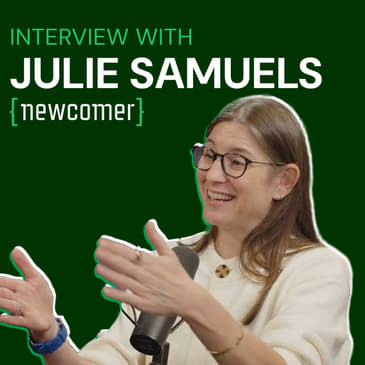
How does New York’s tech industry navigate AI, city politics, and a new mayor in the Trump era?Julie Samuels, President and CEO of Tech:NYC, joins the Newcomer Podcast to discuss the growing intersection of technology and politics. Samuels has spent years at the center of New York’s tech ecosystem, working with founders and policymakers as the industry becomes a larger force in public policy.Eric and Julie talk about tensions between the tech industry and progressive politics, including the rise of Zohran Mamdani and how tech leaders are navigating a shifting political landscape. They also discuss Trump-era tech politics, efforts to modernize government with technology, New York’s Empire AI initiative, and debates around wealth taxes, billionaire flight, and the energy demands of AI data centers.Julie also explains the work Tech:NYC does behind the scenes to advocate for the industry while trying to bridge the growing gap between technologists and the public.Subscribe for more conversations with the people shaping technology, venture capital, and policy.
00:00:00
Imagine doge with empathy. We're not talking about firing
00:00:03
people, but take a resource strapped organization like city
00:00:06
government that has the most antiquated technology you can
00:00:09
imagine and think about how you can identify savings within that
00:00:13
framework to make city government work better for New
00:00:15
Yorkers. This week on the podcast, I had
00:00:17
Julie Samuels, the head of Tech NYC.
00:00:20
Julie has spent her career at the intersection of innovation
00:00:23
and policy, and as the head of Tech NYC, she's become the most
00:00:26
important voice in the room when it comes to the future of this
00:00:29
city, these tech industry. And hey, it wouldn't be an
00:00:32
episode without a little politics.
00:00:34
What is the tech industry's plan post?
00:00:37
Trump, I've been thinking a lot about that.
00:00:38
Welcome to the newcomer podcast. Julie Samuels, Tech NYC.
00:00:49
Thank you so much for joining me on the podcast.
00:00:51
Thank you for having me. You work on sort of New York
00:00:54
politics, New York State and then obviously that all fits
00:00:57
into sort of the federal landscape and sort of advocate
00:01:00
on behalf of the tech crowd. And I feel like we share a
00:01:04
similar sort of frame of reference where, you know,
00:01:07
believe in tech, want it to work, but also believe in sort
00:01:11
of the normal democratic reality and have to navigate that.
00:01:14
So excited to have this whole to have a.
00:01:16
Conversation. We've been talking for a long
00:01:18
time, you and I. Yeah, I know it's more than a
00:01:20
decade. More than a decade, yeah.
00:01:23
So, yeah, I mean, let's start with the Mum Donnie Trump
00:01:25
meeting. Yeah, in some ways, you know,
00:01:28
the tech community, you know, it's hard to paint with too
00:01:30
broad of a brush is what wouldn't have picked Mom Donnie
00:01:34
as their mayor. I think among the different
00:01:36
candidates, his ability to sort of like cozy up to Trump, is
00:01:41
that a sign that he can sort of win over the business community
00:01:44
or what do you take of? Yeah, that's really.
00:01:45
Popularity. Well.
00:01:47
Firstly, I think his popularity is also, well, firstly, he's
00:01:51
uniquely, uniquely talented. Greater retail politics, just
00:01:55
really good media presence. But so much of that is also that
00:02:00
he knows how to use the tech platforms.
00:02:02
He's the first, not the first, but one of the first mainstream
00:02:07
politicians who's just nailed that, who knows how to use the
00:02:10
media to speak to people in a way that most politicians,
00:02:13
surely most Democrats, have just not figured out at all.
00:02:17
You know who else has, though is of course Donald Trump, right,
00:02:20
Right. Right.
00:02:21
So the politicians that maybe tech did not, you know,
00:02:24
certainly, you know, plenty of people embrace tech, Trump in
00:02:27
tech. But you know, it took them a
00:02:29
while. He wasn't their first choice.
00:02:31
And yeah, and then AOC obviously is pretty good at it, too.
00:02:34
None of the candidates that tech leaders might have chosen to
00:02:38
lead the United States are the best.
00:02:41
That's right. That's it's very interesting and
00:02:43
you know, part of this is the second time Zoran Mamdani has
00:02:46
gone to the to The West Wing to to the Oval to see Trump.
00:02:50
And I think both times the kind of take away was like, oh, you
00:02:54
know, game recognizes game and that Donald Trump, he gets it.
00:02:58
And that's the people should go look up the photo from The West
00:03:03
Wing where Trump is holding up these two newspapers, one with
00:03:06
the famous headline Ford to NYC drop dead.
00:03:10
And the other one which is a mock up base, you know, the same
00:03:13
but Trump to NYC let's build. And you know that it's all about
00:03:17
getting funding to build a more affordable.
00:03:19
Housing, sunshine development or what?
00:03:21
Sunnyside. OK, what is the big?
00:03:23
Affordable housing development. And basically, as I understand,
00:03:28
the mayor went and asked for $21 billion in federal funding to
00:03:31
help build this really big affordable housing project,
00:03:34
which, you know, everyone wants to build more housing.
00:03:36
Everyone's a winner, Trump, you can take credit.
00:03:40
And, and the picture is so telling because clearly the
00:03:43
mayor's team brought these mock ups, but Trump is holding them
00:03:46
and he's got a big smile. Like, you know, you can tell
00:03:49
it's not a fake smile. It's like, I mean, I don't know,
00:03:51
listen, I can't get in Trump's head, but he's smiling like it's
00:03:54
a smile. And it wasn't just the
00:03:56
newspapers. They also, you know, kept
00:03:57
emphasizing how historic this would be.
00:03:59
One of the biggest projects. That's right.
00:04:01
Obviously, this is a New York real estate developer.
00:04:03
This is what he wants. So what?
00:04:06
What is? What is the tech?
00:04:08
Read on Mumdata. Well, let me go back for a
00:04:10
second. You said that a lot of people in
00:04:11
tech didn't, you wouldn't be tech's first choice.
00:04:14
And I, I think I generally agree with that.
00:04:16
But I also want to point to one thing that is so interesting
00:04:19
about tech and why tech is different than the other kind of
00:04:23
traditional industries here, business, industry, whatever, is
00:04:27
that when they went, they went back through the primary, the
00:04:32
mayoral primary and looked where all the donations came from.
00:04:35
The employer, the business with the most employees who wrote
00:04:40
checks to Zoron during the primary was you want to guess.
00:04:45
Google. Is Google yeah and and many
00:04:47
other tech employers were high in that top. 10 was, but was he
00:04:50
Google's most contributed candidate?
00:04:53
I think so, but I'm not, I'm not certain.
00:04:55
I can't say for sure. We should look that up and maybe
00:04:57
put in the notes or something. I'll, I'll double check now.
00:05:01
I think that where the employees are is not always where
00:05:05
management and the executives are, to be fair.
00:05:08
But I also don't think that a lot of the kind of traditional
00:05:12
finance firms, the real estate firms, I don't think they have
00:05:15
that same dichotomy where their employees are all supporting the
00:05:19
the kind of DSA candidate in the primary.
00:05:22
That is a uniquely tech dynamic. And you and I know that that
00:05:26
dynamic has been part of the industry.
00:05:27
When I when I had, you know, Keith Ruboy on the podcast the
00:05:30
other day, you know, conservative pro Trump, he was
00:05:33
sort of making the case that part of why all these, you know,
00:05:35
tech CEOs needed to capitulate so much to Trump was, you know,
00:05:39
because their employees, it all donated to the Democrats.
00:05:41
And this was make good sort of a contorted argument, but it's
00:05:45
funny to hear it. So yes, the the rank and file in
00:05:48
Silicon Valley and New York of these tech companies is fairly
00:05:51
liberal and sometimes even to the point of supporting DSA.
00:05:54
It also makes the even the executives who by and large
00:05:57
might be more even anti mom Donnie.
00:06:02
It, it kind of numbs that a little bit because even now,
00:06:06
even with AI, so much about success in tech is attracting
00:06:10
the right talent. And this is all part of their
00:06:13
competitive landscape too, you know, to be able to attract the
00:06:16
right, smartest, best young people to come work at your
00:06:19
company. So it's there's a balance for
00:06:21
tech execs when you think about politics that is different than
00:06:25
in other industries, I think. Who do you represent in tech?
00:06:27
I mean, it's interesting because you represent a lot of startups
00:06:30
and those startup founders are often more similar, I imagine to
00:06:32
some of the rank and file in terms of their outlook.
00:06:35
And then then the execs or how do you think about who you
00:06:38
represent? I'll tell you quickly how Tech
00:06:39
NYC is set up at a high level. We can dig in.
00:06:42
So Tech NYC has got about 500 members and it is a sliding
00:06:47
scale. So it's free for startups to
00:06:48
join and then you know, the largest employers pay $60 a
00:06:52
year to be members and and then investors have their own scale.
00:06:55
So we have 500 total members. We have a board of about 60
00:06:59
people. They are executives, CE OS,
00:07:04
founders, GPS and firms, other senior execs from companies.
00:07:08
So it's really, even though we spend a lot of time on politics,
00:07:11
we're our main goal is to ensure that New York is the best place
00:07:14
to build and grow a tech company.
00:07:16
So, so that's everything we do is through that vision.
00:07:19
So we work with policy people, but we also really work with the
00:07:22
executives themselves. So who do we represent?
00:07:24
Tends to be the executives, yeah.
00:07:26
And do you survey like how do you decide what state has to
00:07:30
take on an issue given you know, we can talk about tech with a
00:07:33
broad brush, but then. It's really complicated.
00:07:35
Well, yeah, this is, I don't have a very satisfying answer to
00:07:40
this because I would tell you when we built the organization,
00:07:43
I was really worried about this. How do we do the right process?
00:07:45
How do we make sure we're getting it right?
00:07:47
And something I've learned, we started the organization 10
00:07:50
years ago. This is our 10th anniversary
00:07:51
this year. Something I've learned that's so
00:07:53
interesting is that part is actually pretty easy.
00:07:56
There is not a lot of space, not space.
00:07:59
There's there's not a lot. It's much more aligned and
00:08:02
almost much more obvious which issues we should work on and why
00:08:06
and how. Then I than I really feared
00:08:09
going. I thought that would be much
00:08:10
harder. Than what are the top three
00:08:12
right now? I imagine like AI.
00:08:14
Fear. Yeah, it's.
00:08:16
All AI, it's like energy data centers.
00:08:19
Everything that like can touch right.
00:08:21
Obviously, listen, I think something that's been really
00:08:24
interesting over the past decade that's shifted in our work is
00:08:27
when we first started the organization, the issues were
00:08:30
all kind of core tech policy, like what impacts the company's
00:08:33
bottom line, data privacy, There was a marketplace tax, like very
00:08:37
tech specific issues. The work has broadened
00:08:41
significantly over the past 10 years for many reasons, but one
00:08:45
of the reasons that I find the most interesting is that
00:08:48
increasingly every company is a tech company.
00:08:52
Obviously, I mean it's like kind of a trite thing to say, but
00:08:54
it's true. And increasingly, tech is
00:08:57
becoming one of the biggest, if not the biggest industries here
00:09:00
in New York City. And, and what that means is that
00:09:04
now the industry is more and more made-up of New Yorkers than
00:09:09
than people for whom tech is their primary.
00:09:11
They care about everything, and so you're reflecting a broad set
00:09:14
of interests. That's right.
00:09:15
So we already listen, we already talked about the Sunnyside like
00:09:17
we're talking about housing, we're talking about public
00:09:19
safety, we're talking about good schools, functioning public
00:09:23
transit. We are talking more and more
00:09:25
about the things that make it so that people who work in tech
00:09:29
want to live here. Because if people who work in
00:09:32
tech want to live here, then the companies will continue to
00:09:35
locate here, we think. And then everything.
00:09:37
Everything. AIAIAI.
00:09:39
Yeah. I want, you know, I, I recently
00:09:41
had last year, Daniel Laurie, the mayor of San Francisco on
00:09:45
stage one of my events. I was interviewing him.
00:09:48
He was the most warmly received person on stage all day, you
00:09:51
know, probably at any of our events, you know, like Dario,
00:09:54
the CEO of Anthropic. I mean, politicians, you know,
00:09:57
are much more charismatic than CEOs.
00:10:01
And, you know, so he really had the crowd.
00:10:03
They really were a believer. He was good at staying on
00:10:06
message. It's funny, though, when I was
00:10:07
interviewing him, you know, I was like, yeah, the tech people
00:10:10
love you. Like, why is that?
00:10:12
And he sort of made something, he made a point that, you know,
00:10:14
they weren't, they didn't necessarily love him the whole
00:10:15
campaign. You know, he wasn't necessarily
00:10:17
their first choice. Some of them stuck with London
00:10:20
breeding. But we don't need to get in the
00:10:21
particulars of San Francisco. But now he has this warm
00:10:23
embrace. And I think part of it is just
00:10:26
he likes tech, defends tech, says positive things about tech,
00:10:30
like what? What is what?
00:10:31
What do you think he's figured out?
00:10:33
And what would you like Zoram Amdani to, like, learn from it?
00:10:36
That's realistic, given he is to the left a little bit of Lori,
00:10:40
but Lori's the mayor of San Francisco.
00:10:42
I, I don't think the politics are that fundamentally different
00:10:46
from a right, left balance, but the messaging is different.
00:10:49
I think that that what he's plugged into.
00:10:52
Also, you have to remember, of course, that it came on the
00:10:54
backside of years of the city of San Francisco beating up on
00:10:58
tech. And we were talking about this
00:11:00
earlier before we started recording.
00:11:02
There's this political dynamic. I think This is why so many tech
00:11:06
leaders have kind of gone to the Trump side where, you know,
00:11:11
these these people, they built companies, their grow jobs, they
00:11:14
make big investments. They feel like they've done
00:11:16
everything right. We did everything we we set out
00:11:19
to do. We followed the rules.
00:11:21
Sometimes we broke the rules, but we broke the rules in, in
00:11:24
the conquest of bringing new technology to the world and
00:11:27
employing so many people. And, you know, that's, that's
00:11:30
the tech world that I come from, that techno optimist world that
00:11:32
gets made fun of a lot now, but it's actually like, it's pretty
00:11:35
lovely. It's like a vision for the world
00:11:38
that I wish were, were fundamentally true.
00:11:40
And I think it is actually fundamentally true complex.
00:11:43
Anyway, I think then we've seen we see this backlash and these
00:11:48
are people. They're not, they're not robots,
00:11:50
they're not companies, they're people.
00:11:52
And these people feel like, you know what?
00:11:55
What did I do wrong all of a sudden?
00:11:56
Why are you beating up on me? I.
00:11:59
Right. I think one thing, and the
00:12:02
YouTube commenters might not agree with this, but I think we
00:12:05
both have concluded is that, yeah, tech people and rich
00:12:08
people really want to be like loved and appreciated and
00:12:12
sometimes they care more, right? Everybody does, right?
00:12:15
Right. It is a fun.
00:12:16
They don't lose sight of that and it is sometimes less about
00:12:19
the money seemingly. And more about always less about
00:12:22
the money. But I think what happens is a
00:12:24
lot of the politicians, both on the far left and the far right,
00:12:27
they think it's about the money, you know, and they're well,
00:12:31
they're so rich, why do why would they care?
00:12:33
Why does it matter? But but again, I think they
00:12:35
sometimes, and Daniel Laurie's done a great job of this.
00:12:38
They forget that under all these are still just people.
00:12:41
And when they are feeling attacked as people, they're
00:12:45
going to react. And their reaction can be like,
00:12:50
well, screw you. Like I'm gonna go to the White
00:12:52
House now. But Daniel, Lori speaks their.
00:12:54
Language, right, Daniel? Lori compliments them, says
00:12:56
thank you, even as he knows he represents broader San Francisco
00:13:00
and it's not really their town to run.
00:13:04
I mean, the, you know, the classic madman madman line.
00:13:08
That is what the money is for. You know, there.
00:13:10
I think the the response is often like, you're getting paid
00:13:13
well. Why do you also need to get
00:13:15
thanked by politicians? There are lots of, you know,
00:13:17
politicians need to be looking out for the rank and file
00:13:20
person, not spending all their time thanking people who have
00:13:22
already been rewarded by society.
00:13:25
I mean, I don't know what's. It's really interesting.
00:13:27
I mean, I think from the way I see the world, which, you know,
00:13:31
this is just an opinion, of course, I think you can get
00:13:35
farther if you try and work together in that way that like
00:13:38
making that person an enemy because it's politically
00:13:43
expedient is I think long term more harmful given the realities
00:13:47
of the world we live in. Like the example I always go
00:13:50
back to, the first time I really saw this was when I was in San
00:13:54
Francisco and everyone was throwing rocks at the Google
00:13:58
buses. And I was like, what are you
00:13:59
doing? Like those engineers, you want
00:14:02
those people to be with you. The people on the bus, they're
00:14:05
actually, most of them are young, most of them are early in
00:14:08
their career. Most of them don't have families
00:14:11
or else they wouldn't be living in these apartments and
00:14:13
commuting at the Google bus. And you're turning them into
00:14:15
enemies. And I think we'd all have been
00:14:18
better served had we had the Democrats done a better job of
00:14:21
bringing those people in the fold, because those people who
00:14:25
had rocks thrown at their buses are now, many of them, I'm sure,
00:14:28
people supporting Trump. So can the tech business
00:14:32
community have a strong working relationship with Zoram?
00:14:36
I'm Donnie Given seems unlikely that he's going to run around
00:14:39
saying I love the tech business community.
00:14:42
I guess that's sort of the existential question.
00:14:45
I think they can. I think we will.
00:14:46
I think there will be things we disagree on and I think there
00:14:50
will be things we agree on. And what we're trying to do at
00:14:53
Tech NYC is identify the things we can agree on and, and make
00:15:00
real progress there. And let me just tell you what I
00:15:01
think some of those are. And I think this is true, by the
00:15:03
way, for every city. I think New York has unique
00:15:06
scale and we should be really doing some of this work here
00:15:10
immediately. But I think it's true
00:15:12
everywhere. Tech in government start with
00:15:14
that especially, especially when we are talking about the
00:15:18
affordability crisis. The mayor just announced that
00:15:21
every city agency is going to have a chief savings officer who
00:15:24
will have 45 days to identify savings within the agencies.
00:15:29
It is like a an ideal situation to use tech and dare I say AI to
00:15:34
identify savings. Democrats are traumatized by the
00:15:38
Doge experience. Here, I mean, but this I've
00:15:40
been, I can't not stop talking about this.
00:15:41
Like imagine doge with empathy, like imagine doge in in in a way
00:15:47
that felt more culturally aligned with New York City.
00:15:50
You can totally envision that, right?
00:15:53
You can. We're not talking about firing
00:15:55
people, but take a resource trapped organization like city
00:15:59
government that has the most antiquated technology you can
00:16:02
imagine and think about how you can identify savings within that
00:16:07
framework to make city government work better for New
00:16:09
Yorkers. It's like it's so obvious,
00:16:11
right? So, OK, that I think that's one
00:16:13
place, right? And everybody on the face wants
00:16:16
a productive yes city government, so it's hard to
00:16:18
disagree with. It and in fact some of this I
00:16:20
think has to do with age. We have a young mayor, he has a
00:16:24
young team, is the first time that I, I don't know what the
00:16:27
exact numbers are, but I imagine there are more digital natives
00:16:30
working in City Hall right now than there have ever.
00:16:33
Been and one of the things you know, I ultimately did, you
00:16:36
know, certainly ranked mum Donnie above Cuomo.
00:16:38
He was you know, I was I think it was Brad Lander.
00:16:40
But like the he understands that city government needs to work
00:16:49
and the government needs to work if people are going to sign up
00:16:52
for the progressive agenda and that you can't have sort of, you
00:16:56
know, bleeding heart without like the governance you have to.
00:16:58
Deliver zone. You have to deliver, right?
00:17:00
Right. And clearly you live in a world.
00:17:02
I mean, the great example of seeing technology work in
00:17:06
practice in government to me is Omni tapped to pay on the
00:17:09
subway. We all swiped our subway cards
00:17:13
and then during Covad they redid the entire subway system.
00:17:17
They put in tap to pay technology and it just works
00:17:20
and. It's great for tourists.
00:17:22
I mean, it's great as local, but it's amazing for tourists.
00:17:24
And I think about it a lot in this context.
00:17:27
Tap to Pay technology using Apple Pay on your iPhone every.
00:17:30
I mean, how many times a day do you use Apple Pay?
00:17:32
All the time. It should be table stakes,
00:17:34
right? It right, It should be table
00:17:35
stakes. And when you use the New York
00:17:37
City subway, it is table stakes now.
00:17:39
But we're not even talking about like jumping, leapfrogging to
00:17:44
the next technology. We're talking about getting to
00:17:47
the level of technology that everyone has in their pocket all
00:17:50
the time anyway. So #1 embrace tech, deliver on
00:17:55
the efficient. Progressive number 2 is really
00:17:58
focus on education and think hard about.
00:18:06
I mean, this one's very. Is this.
00:18:07
Gifted in tracking or no, not to.
00:18:10
I'm curious what you're using on education.
00:18:12
But it's funny, like, you know, Gary Tan in San Francisco, I
00:18:15
think tweeted or he has this Garry's listing now that a New
00:18:20
York Post story where it says Zoran's gonna get rid of gifted.
00:18:23
And it's not even clear if they've really done anything
00:18:26
more there. But people keep the right wing
00:18:28
media keeps putting that one front and center.
00:18:30
They love this one. Right.
00:18:31
And obviously the tech community is very sensitive.
00:18:33
I will say that. Not elevating, You know, the
00:18:36
geniuses among us. The the New York City education
00:18:40
is very complicated. It's very complicated.
00:18:43
And on the GNT in particular, like gifted and talented, gifted
00:18:46
and talented, like tech, the tech industry, I would say by
00:18:49
and large would not be happy if that were eliminated.
00:18:53
I mean, they're very happy if it were eliminated, Definitely
00:18:55
wouldn't be happy if it were cut back on.
00:18:59
So I think, but we haven't really, there's a lot of
00:19:02
rhetoric, but we haven't seen what's going to exactly happen
00:19:05
there. So like, maybe I'll come back
00:19:07
when we know more. I know it is sort of one of
00:19:09
those distraction issues in that it gets everybody who's sort of
00:19:12
fired up. Another big one here is charter
00:19:14
schools. That's something that the tech
00:19:16
industry has been very supportive of, and that's
00:19:20
something that the Mamdani administration seems less
00:19:22
supportive of. So that also might come to a
00:19:23
head. Again, we'll see.
00:19:25
Where can they agree on education?
00:19:27
Thinking about curriculum, OK, Thinking about curriculum,
00:19:30
thinking about how we are preparing students not just for
00:19:34
jobs of the future important, but also preparing students to
00:19:38
like, live in a world where these tools are out there.
00:19:42
You know, one of the things that I've been thinking about
00:19:44
politically is 10/11/12 years ago when when Bill de Blasio
00:19:49
first became mayor, Fred Wilson, former chair of Techno ICS
00:19:54
board, venture capitalist of course from Union Square
00:19:56
Ventures, kind of went in, saw the new mayor and said, I think
00:20:00
we should work together to ensure that there's computer
00:20:02
science education in every school.
00:20:05
And they launched A10 year public private partnership
00:20:08
called CS for All and they ensured that there was.
00:20:12
Computer science education in every city, in New York, in
00:20:15
every single New York City public school.
00:20:17
And that that's the answer, right?
00:20:19
Maybe that answer looks a little different now.
00:20:21
The CS education of, you know, 2014 is not the same as what we
00:20:26
think the tech education should look like in 2026.
00:20:29
But those are the places I think where we really can and should
00:20:33
be working together to support the kids in the schools.
00:20:36
Is tech a barrier to getting cell phones out of school?
00:20:40
Or no, we supported that. Yeah.
00:20:41
That was something that we did with the governor last year, the
00:20:44
cell phone ban that, you know, this was so funny.
00:20:46
We could talk. The politics around tech are so
00:20:48
interesting. So we, Tech NYC supported the
00:20:51
governor's proposal for the Belle de Belle ban to get cell
00:20:54
phones out of schools. And we did that very publicly.
00:20:58
And a lot of people called me after, and they were like, wow,
00:20:59
I can't believe you did that, You know, that that was great.
00:21:02
Or that whatever they said. But I got a lot of incoming and
00:21:05
I was like, I don't understand how our politics have gotten so
00:21:08
calcified that you can't understand how I run an
00:21:11
organization who's literally main goal is to support the tech
00:21:15
ecosystem in New York City and state, but also understand that
00:21:18
kids shouldn't have cell phones in classes like these.
00:21:21
This is very weak. And obviously a lot of these
00:21:23
tech executives themselves are very careful about their own
00:21:26
children, yeah, using devices. So they understand that it is a.
00:21:29
I think it's a device. What's made a lot of our
00:21:32
politics actually really hard is that you people feel like you
00:21:35
can't say those two types of truths, that you can't hold
00:21:38
those two truths together. Like, of course both those
00:21:40
things can be true. In fact, I think they need to be
00:21:45
true. I think the tech ecosystem will
00:21:48
thrive if we are more open about the challenges, which is that
00:21:52
like, kids shouldn't be on phones during class.
00:21:55
Like, of course they shouldn't be.
00:21:57
That's insane. So education is number 2.
00:22:01
It seemed like you had a third one.
00:22:03
I mean, I have a lot. I think those are like the first
00:22:06
kind of places we're looking and then, you know, I think that.
00:22:09
Are you on the YIMBY train as an organization?
00:22:13
Yeah, yeah. I mean, I'm definitely on the
00:22:16
YIMBY train. I think we've always been on the
00:22:18
YIMBY train. I think that's also it's
00:22:21
interesting to see which pieces of the kind of tech zeitgeist
00:22:26
are the same here and in the Valley, and which ones are
00:22:29
different and like the MB train, Same, same, same.
00:22:33
Well, in some ways California needs it.
00:22:35
I mean, New York is getting on it after California.
00:22:38
California got to more of like a crisis point, whereas obviously
00:22:41
New York is. Large city California got to
00:22:43
such a crisis. There's a number of reasons, of
00:22:45
course, but we should talk about the subway and public transit
00:22:49
and how transformative it is to have such a huge, 24/7
00:22:54
functioning public transit system, which means you can here
00:22:57
in New York, which means you can live, you know, you have much
00:23:01
more geographic diversity and where you can live and get to
00:23:04
work. And that's a huge
00:23:07
differentiator. How do taxes play into all of
00:23:10
this? I mean, we, you know, I talked
00:23:11
earlier about earlier about the mayor of San Francisco who's
00:23:14
been pro tech, but obviously now California, you have
00:23:17
billionaires literally fleeing the state because they're
00:23:20
worried about a referendum. I mean, referendums themselves
00:23:23
are funny because obviously it's like there's no politician
00:23:26
necessarily to stop it. It's, you know, the public could
00:23:28
do it and there's nothing to be done in so there, you know, we
00:23:31
have the Google Co founders leaving the state and it's crazy
00:23:34
people to get they're not coming to New York, right, They're
00:23:37
going to Florida. I mean, I guess if you're going
00:23:38
to run from taxes, you're going to run.
00:23:40
If you're running from taxes, this is probably not the place
00:23:42
you run to. Have you tried to get it?
00:23:44
Have you made the pitch to anybody, like moved to New York
00:23:46
because of the billionaire tax issue?
00:23:49
Every time a politician says they're going to raise taxes,
00:23:52
people who represent companies, wealthy people, we're always
00:23:56
like everyone's going to leave. And the politicians are like,
00:23:59
they're never, you're never going to leave.
00:24:00
You always say that. And it's this kind of like game
00:24:02
of chicken and mouse. Chicken and mouse?
00:24:04
Is that no cat mouse cat? Mouse, Chicken and egg, Cotton
00:24:09
mouse. It's like it's.
00:24:11
Fine, whatever. It's, it's like, you know, it's
00:24:13
this little or, or that isn't even the right analogy.
00:24:16
The actually the right analogy is it's a little bit of like the
00:24:18
boy who cried wolf, which is to say like, you're never really
00:24:21
going to leave. And then they're like, no, we
00:24:22
will leave. But what's happened in
00:24:25
California has been like, no, no, no, they're going to leave
00:24:27
like, so I think that is interesting to know at what is
00:24:31
the number, you know what, what is enough to push you out.
00:24:35
And I don't think it's ever just a tax proposal alone.
00:24:39
But again, I think it gets to what we're.
00:24:41
Talking about in the California 1, it seems like there's
00:24:44
potential to tax unrealized gains.
00:24:46
Yeah, control of companies. It was constructed and so it did
00:24:50
really poorly. There was a high risk that if it
00:24:52
went. Through it could yeah, hit
00:24:53
specific people in a. And it would hit people before
00:24:55
they're liquid in a way that would be really is right
00:24:58
unrealized gains part. You said that like so I mean
00:25:01
that is its own disaster there. But I think there is a feeling
00:25:05
in tech this kind of like we've been a punching bag for so long
00:25:11
and we're just sick of being your punching bag.
00:25:14
You know, I'd note that most of the billionaires that I've seen
00:25:18
reported having left California are a little bit older.
00:25:22
They don't have school age kids. Much tougher to pick up and move
00:25:26
when you know you don't have school age kids because everyone
00:25:28
uses that app where you count your nights.
00:25:30
Like these people aren't selling their California homes.
00:25:33
Some might be, but they're just going to spend like, you know,
00:25:36
51% of their nights somewhere else or whatever it is.
00:25:39
But but with that goes the tax revenue, which is significant
00:25:41
for a state. So what is?
00:25:43
What's the How much time are you spending opposing taxes on
00:25:47
behalf of the tech? Community right now.
00:25:51
Because I'm Donnie is saying we need more money.
00:25:53
And it's. Like we'll do property.
00:25:54
Tax, I think that's a good that's there isn't really a live
00:25:58
proposal, if there were a tax proposal.
00:26:01
So we're actually in a really interesting time in New York
00:26:03
State's political cycle. We're in the budget process in
00:26:07
Albany right now, which will go on for another month or two,
00:26:09
yeah, two months. And then, you know, our session
00:26:12
here goes until summer. And so right now, this is the
00:26:16
busiest time on a lot of these political things.
00:26:19
There really isn't a tax proposal to react to.
00:26:22
If there was some live tax proposal, but the governor's
00:26:27
been really consistent that she will not raise income taxes and
00:26:31
you can't do it without her. She's done an amazing job.
00:26:34
It's been amazing. She's amazing.
00:26:35
I'm. I mean, maybe you're not
00:26:37
shocked, but it took me a while. But not shocked like when she
00:26:39
delayed congestion. Pricing, I was like, terrible.
00:26:42
And then it was like, oh, you're totally right.
00:26:43
That was the savvy move. She has been she's she's just
00:26:47
she's great, but she she's done things for the state and for
00:26:51
tech specifically that have been so good.
00:26:54
And she just does the work. You know, one thing well,
00:26:57
there's a handful of things. One one of the things she's done
00:26:59
that is the coolest is she has funded a public private
00:27:03
partnership. So there's private dollars too,
00:27:05
called Empire AI, which is amazing.
00:27:08
It is a independent 5O1C3 that she's funded.
00:27:14
It's a coalition of research institutions.
00:27:17
It includes our city system, CUNY, our state system, SUNY,
00:27:20
Columbia, Cornell, NYURPI, Rochester schools, you know, all
00:27:26
these private and public institutions.
00:27:28
They are building a supercomputer in Buffalo.
00:27:31
They already have the first version up and going.
00:27:34
But the eventual final state will be huge It it will be I
00:27:39
think 1 of, if not in the end, the most powerful, the biggest
00:27:43
academic research computer surely in the country, maybe the
00:27:46
world. And New York academics are the
00:27:49
only people who have access to it.
00:27:50
And it's amazing. And right now really only
00:27:55
private sector has access to the kind of compute that our
00:27:59
academics have because of Empire AI.
00:28:00
It is incredibly forward-looking, incredible for
00:28:04
the state. I mean that when you think about
00:28:07
what Stanford did for the Valley, I think that's what
00:28:08
Empire AI will do for New York. Because what happens is you've
00:28:12
got these postdocs and and other professors and they're choosing
00:28:15
which school to go to, and they're going to find out that
00:28:17
the only computer on which they can do their research is in New
00:28:21
York. Part part of me is skeptical
00:28:23
just because, you know, the scale of investment on private
00:28:26
enterprise in San Francisco is so large that if these, you
00:28:29
know, Neo Labs and, you know, opening Anthropic, they get so
00:28:32
much money. On the other hand, obviously,
00:28:34
you know, Mayor Bloomberg's work in New York establishing, you
00:28:37
know, a tech campus here really did change sort of the
00:28:42
penetration. So some of these government
00:28:43
projects do. Can't turn into something I
00:28:46
totally support the companies creating compute for academics.
00:28:50
Like the more compute for academics and research I think
00:28:52
the better in general. But there are a number of
00:28:55
academics and there is good reason to think that academics
00:28:58
want access to compute that is their own.
00:29:01
You know no one else, I mean technically in this instance
00:29:04
OF501-C3 owns it, but but they are they have control over it.
00:29:08
No one else can do or say what kind of research can happen on
00:29:12
that machine. You know the role of government,
00:29:14
Yeah, sort of independent, non corporate.
00:29:16
That's right. And, and how can we help
00:29:18
government, especially with, you know, the way the federal
00:29:22
government is clamp, clamping down on funding, research and
00:29:26
just kind of thinking about funding for universities, it's
00:29:31
even more important. And this is the role state
00:29:34
government can play that role. They are in a unique position to
00:29:37
be able to fund at scale. You know, it's going to end up
00:29:39
being like a $700 million machine over time.
00:29:43
And so that's been that's it's amazing.
00:29:46
And she's done a bunch of other great stuff too.
00:29:49
She, we worked really hard with her at the end of last year.
00:29:52
I'm sure we've talked a lot about the SB53 and the Rays Act
00:29:57
here in New York, the two big kind of.
00:29:59
AI Regulation. Yeah.
00:30:00
And one thing we did here with the leadership of Governor
00:30:03
Hochul, she was really, really just great on this.
00:30:07
She kind of took the bill that we had on the table here and it
00:30:11
was after SB53 had become law in California and, and looked at it
00:30:15
and was like, we can do a version of this, but let's make
00:30:18
them work together. And in the absence of
00:30:20
congressional action, in the absence of Congress, like
00:30:24
creating. Match it with California so
00:30:25
there wouldn't be two regimes, right?
00:30:27
So it's like, and it's important and we're going to have
00:30:29
guidelines here and we're not going to just let the companies
00:30:31
run amok. But what we're going to do is
00:30:34
also make it easy or at least make it streamline for the
00:30:38
companies to comply. We're not going to create all
00:30:40
kinds of barriers just because. And so that was great.
00:30:43
That was like real leadership that was hard to get done.
00:30:45
The public seems very concerned about data centers.
00:30:48
They seem more worried about AI than upbeat.
00:30:51
I mean, I think we, we literally saw this week that, you know,
00:30:55
block is laying off like 40% of their workers that they're
00:30:59
attributing to AI. So I guess workers have a right
00:31:02
to be worried about AI on some level.
00:31:04
I don't know. What.
00:31:05
Yeah. What What is your read on text
00:31:09
sentiment with the electorate? I think it's a very good
00:31:13
question. This is something I worry a lot
00:31:15
about too. I think that if we don't get
00:31:19
this moment right, we'll, you know, we'll really be, we could
00:31:21
be shooting ourselves in the foot here, here across the
00:31:25
country. You know, competitiveness
00:31:27
matters, you know, New York versus, let's say Texas, but
00:31:32
also America versus China or whatever.
00:31:34
Like I, for starters, I come at this from the vantage point that
00:31:39
like technology is coming. There's some tweaks around the
00:31:43
side that regulation can shift it a little bit one way or
00:31:46
another, but it's coming. So we can either find a way to
00:31:50
build it here to figure out how to make it work here, or
00:31:54
somewhere else. I agree with that, but yeah, I'm
00:31:57
not sure the. Voters.
00:31:59
They they are trying to kill data centers.
00:32:01
I mean, the data center, well, to go back to Governor Hochul,
00:32:03
she's got a great proposal on this, which is actually it was
00:32:06
in her budget before. Trump has said something
00:32:09
similar, which is you can build it here, but you can't put it on
00:32:11
our grid. You know, you have to pay for
00:32:13
your own power. And that's, you know, that like
00:32:17
more politicians to find a way to get to, yes, within a
00:32:21
framework like that is what I think we need to see.
00:32:23
But I do worry about the sentiment.
00:32:27
I worry too, that like so many politicians, just kind of follow
00:32:32
those poles and then chase, Chase that chase where the
00:32:35
voters are instead of trying to be.
00:32:37
Leaders, the long arc of tech, One lesson sort of politicians
00:32:43
learned and the public was we didn't regulate social media and
00:32:47
then we came to regret it and it was too powerful to put back in
00:32:50
the box. And we don't necessarily enjoy
00:32:52
our time on it. And I'm sort of sympathetic to
00:32:56
that on social media, whereas I like AI.
00:32:59
To me, when AI's done well, it's sort of a truth seeking valuable
00:33:03
thing like improving our quality of life.
00:33:07
Yeah. I don't know.
00:33:08
How do you sort of stop politicians and the electorate
00:33:12
from taking well? Let me tell you some of the
00:33:14
things we're doing right now. One thing we're doing in
00:33:16
particular that is I'm so proud of is we have a project at the
00:33:20
Tech NYC Foundation called Decoded Futures.
00:33:22
You can Google it, learn more. And what it is, is it's all
00:33:28
again through our foundation. So it's free and we take
00:33:32
cohorts. We're in our 4th cohort right
00:33:33
now of about 2025 nonprofits. And we do 8 weeks, We pair them
00:33:38
with volunteers from the tech sector and we do 8 weeks of
00:33:41
training to teach them about AI, how to build AI, how to use AI
00:33:46
internally, how to also just. Change.
00:33:48
These are the frameworks. Or nonprofits, OK.
00:33:50
Nonprofits, OK, but the idea like.
00:33:54
Get them hooked. Yeah, and get them hooked.
00:33:56
I mean it's. Actually no, if people are vibe
00:33:58
coding seeing the value like building something or using.
00:34:01
It right or I mean to go back to the block example that's you
00:34:04
know they today announced how many people the layoffs like
00:34:09
thousands, thousands 4000 or something I don't know yeah I.
00:34:12
Think it was 4000. Yeah, I think it was 4000.
00:34:14
But most nonprofits, city agencies, these are resource
00:34:17
trapped organizations. We're not talking about laying
00:34:20
people off. We're talking about being able
00:34:22
to do more. And, and some of it is so basic.
00:34:25
You know, it, it's, it's thinking about AI tools that
00:34:29
help you automate a spreadsheet. Most people I know who go work
00:34:32
in the social sector, who go work for nonprofits don't go
00:34:35
there because they want to sit in front of Google Sheets all
00:34:37
day. You know, they're, they want to
00:34:39
be out in the field. They want to go do the work that
00:34:41
they're passionate about. That's why they choose to work
00:34:43
in the nonprofit sector. And something AI can do is like.
00:34:48
Skip the bullshit work. Yeah, create capacity, create
00:34:51
capacity. And and we think fundamentally
00:34:56
that a couple things. Number one, you start working.
00:34:59
We started in New York with nonprofits.
00:35:00
Nonprofits, you know, they're hundreds of thousands of
00:35:03
nonprofits here. Nonprofits do so much of the
00:35:06
social services that New Yorkers depend on, you know, meeting New
00:35:10
Yorkers where they are. It doesn't have to be
00:35:12
nonprofits. That's that's our project.
00:35:14
But whatever. You can do this with small
00:35:15
businesses. You can do it with city
00:35:16
government. Imagine any small resource
00:35:19
limited organization that probably doesn't have a lot of
00:35:21
internal technical skill. OK.
00:35:24
So #1 we've been doing that and it's been great.
00:35:26
And the nonprofits, at the end of their eight weeks, tell you
00:35:29
about what they've built. And like, literally might.
00:35:31
Sometimes I tear up. It's transformative for them.
00:35:34
It's amazing. And with the idea that they can
00:35:36
be strong advocates for you if. They're and they're just regular
00:35:39
people too. They're not like tech, you know,
00:35:41
they're not tech Bros saying AI is great.
00:35:43
They're like regular people in the world.
00:35:45
So I think that is that is the actual work.
00:35:48
But the thing I think is crucial about it, and this is like a
00:35:51
little abstract or maybe like a little woo woo or whatever.
00:35:55
It's not woo woo. It's a little like trite maybe,
00:35:58
But there is a moment, I mean, we are living in a moment of
00:36:01
significant technological transformation.
00:36:03
Like whether you like it or not, we are.
00:36:06
And the one of the biggest risks we face is that some people are
00:36:12
going to capitalize on that and everyone else is going to get
00:36:14
left behind. And I think it is incumbent upon
00:36:16
us just as like people in the world, but also on us at Tech
00:36:20
NYC and wherever that we try and like avoid.
00:36:23
That, and especially in New York City, we win at capitalism, yes.
00:36:26
We win at capitalism, but we had to bring everyone along with us.
00:36:29
So that, I mean, that's the kind I think we need more decoded
00:36:31
futures. We need more work like that.
00:36:33
When people actually, to your point, when people play with AI,
00:36:37
they're like, oh, this is awesome Right now.
00:36:39
People are scared. Like we need to do a better job
00:36:42
of demystifying it, of explaining what it actually is,
00:36:44
how it can fit in to a regular person's life or job right now.
00:36:50
Yeah, And I, I think a lot of, you know, people who are just
00:36:51
using Google search results and getting Gemini answers don't
00:36:55
always appreciate that that is the sort of AI we're talking
00:36:58
about. And also the tech industry is
00:37:00
still turning the technology into like direct applications
00:37:03
where it's like, you can do this thing, you know, right now you
00:37:06
sort of have to be a little more proactive and like motivated to
00:37:09
get some of the value out of. It that's the case for New York,
00:37:12
right? Like the way I think a lot of
00:37:13
these technical cycles go is they build the hard tech in the
00:37:17
Valley and it's kind of like just, you know, a bunch of
00:37:21
dudes. It's always dudes.
00:37:23
I wish there were more women like in, you know, in a group
00:37:26
house. It used to be a garage in Palo
00:37:28
Alto. Now maybe it's like a, a
00:37:30
townhouse in Hayes Valley or whatever.
00:37:31
And they're like tinkering away and they've got this great idea.
00:37:34
But then it comes time to figure out, well, who's going to pay
00:37:37
for it? Who's going to actually use it?
00:37:39
What are they going to use it to do?
00:37:40
And I feel very bullish on New York 'cause I think we will
00:37:44
answer those questions here. Right, build the applications,
00:37:47
understand what the companies. And we don't have those answers
00:37:50
yet. We don't.
00:37:51
The I mean, if you, if you were to give like to go back to the
00:37:56
mayor and where we started the mayor or like one piece of
00:37:58
advice to build like an agenda that it is at once progressive
00:38:03
and fitting his values and in the tech industry, like what
00:38:06
would the advice be? It would be to dig in and figure
00:38:09
out how to make technology work better in government.
00:38:12
People see that, they understand it.
00:38:15
I think it aligns with his campaign, with his vision for
00:38:17
New York. I think it aligns with his base.
00:38:20
It aligns with the private sector as well.
00:38:22
Like I think that is, I think for every politician, for every
00:38:27
elected official, there's a different answer.
00:38:30
You know, it's how you ran, it's what you ran on, it's what you
00:38:32
believe in. And I think that what it seems
00:38:36
to me the mayor believes in and where technology can be
00:38:39
deployed, it's very clear that it's in the the space of like
00:38:44
making government work better. What's, you know, this is more
00:38:49
national, but like, the tech industry in California certainly
00:38:53
has cozied up to Trump, like New York.
00:38:57
I mean, we don't necessarily have all the CE OS to do the
00:39:01
cozying, but like what is the tech industry's plan post Trump
00:39:05
or if if if Democrats come back in like I don't I don't know.
00:39:09
I've been thinking a lot about that.
00:39:10
Well, first of all, I think New York will do much better in that
00:39:13
instance because. We and that they have to
00:39:15
navigate. They saw, well, I mean, in
00:39:17
California, they have a Democratic governor, you know.
00:39:19
You know, there's there's something that I think about a
00:39:22
lot. I think this is true.
00:39:23
Surely in tech, I'm not sure it's specific to tech.
00:39:27
I think tech is just a little bit more immature than some
00:39:30
other industries in that it's newer, you know, not, I don't
00:39:33
mean to mature in any way other than it's literally younger, but
00:39:37
something that's really interesting about politics is a
00:39:40
lot of times you'll see people who've seen great success in
00:39:43
business assume that they also get politics and it's different
00:39:47
and it's a different skill set. It's a different set of
00:39:50
equities. And I think that, you know,
00:39:54
you've got some people in tech who are like chasing the thing
00:39:57
they think is the right thing. And there's.
00:40:00
They're going to be some hard lessons, like if a Democrat,
00:40:02
depending on which Democrat is in the White House, which I
00:40:06
personally hope is the case in 2028, again, depending on who
00:40:11
that person is, yeah, I think there's going to be some people
00:40:14
in tech. We're going to have to pay a
00:40:15
price, right? I think that there is space to
00:40:21
show up at certain events. People understand like that,
00:40:24
whether you like it or not, Donald Trump is the
00:40:27
democratically elected president.
00:40:28
And there are meetings and things that you go to, but then
00:40:31
there are certain things, donations, certain events,
00:40:35
certain vibes that you don't have to go to.
00:40:37
And I think that there are no hard and fast rules.
00:40:40
But I think that Americans who pay attention to these things,
00:40:45
like have a gut sense of where those lines are with the
00:40:48
difference between kind of responsibly running a business
00:40:54
during this administration. Versus without being Marc
00:40:57
Benioff and saying no send. Without, like, fealty.
00:41:01
He's a dear leader. Yeah.
00:41:02
Yeah, I think that. Who do you think in New York is
00:41:06
doing a good job of like representing the tech industry
00:41:08
or who do you see as sort of like the standard bearers here?
00:41:13
That's a very good question. I mean, I think if you look at
00:41:16
technyc.org and look at my board and you get a sense of who I
00:41:20
think that is. You know, like I said, Fred
00:41:22
chaired my board for 10 years. We have our first news is that
00:41:24
Fred Wilson. Fred Wilson.
00:41:26
I'm guessing who's the Yeah, I mean the VC is like loom a
00:41:29
little larger. Yeah, of course we've got
00:41:31
clearly we have thrive, right? Makes a ton of news.
00:41:35
Neil Blumenthal. Someone from Thrive is on your
00:41:38
board or? Yeah, Josh is not on our board,
00:41:41
but Kelly Sims, a partner that is on your board.
00:41:44
Yeah, I mean, people are really engaged here.
00:41:46
People who live in New York care a lot about the civic
00:41:49
infrastructure. Not just infrastructure, just
00:41:52
like kind of the civic landscape of New York.
00:41:53
NY is a city where people care a lot.
00:41:57
You cannot. It's like kind of logistics in
00:42:00
some ways. You don't get in your car and
00:42:02
drive to work and go to your office.
00:42:04
Like you are constantly among the New Yorkers.
00:42:06
No matter how wealthy you are, no matter how big the business
00:42:10
you run is, it doesn't matter. You are surrounded by New
00:42:13
Yorkers and that creates, I think, a really special dynamic
00:42:17
with the city that makes my work so much more fun.
00:42:20
I mean, that's the beauty of, you know, the subway you feel
00:42:22
and just walk in the streets. You're part of the community in
00:42:26
a way that I think part of what's corroded California is
00:42:29
San Francisco in particular. It's like you can Uber from one
00:42:32
place to the next and be in your little enclave and the next
00:42:35
place and then be like, why is the city letting you know almost
00:42:37
people? It's like the the failures of
00:42:39
San Francisco corroded text politics, I think, in a way that
00:42:43
New York just hasn't. And it won't, but, and there's
00:42:46
other industries here and there's other things going on
00:42:50
and we talk about tech, but we'll talk about Wall Street.
00:42:52
And like, you know, it's, it's not.
00:42:55
New York benefits from the diversity, not just of people,
00:42:57
but of industry and experience. And I think that's why tech
00:43:01
continues to thrive here. Is competition with China like
00:43:04
animating people or do you think that is?
00:43:07
I do think it's animating people.
00:43:08
I think it should animate people.
00:43:11
I think it's it's real. And I think, particularly in
00:43:16
this moment, I think to go back to the data centers like, you
00:43:18
know, are we going to stop building data centers here?
00:43:21
Does do we think that people are just going to stop building data
00:43:23
centers anywhere then like I, I just.
00:43:27
Right. I mean, I do feel like you know
00:43:28
this dumorism well, it's good to be careful.
00:43:31
I'm very supportive anthropic having the Constitution and
00:43:34
pushing back on the Defense Department or but I think.
00:43:38
It's the Department of War now. No.
00:43:39
Well, the Congress hasn't said it's the Department of War.
00:43:41
It depends where, you know, where you take your cues.
00:43:44
You know, they've put Department of War on the wall, but I don't
00:43:47
think, you know, the law has actually been changed.
00:43:50
But you know, the steam engine analogy is basically like, if
00:43:55
you have this great technology coming, do you really not want
00:43:58
to lean into something that is going to ultimately improve your
00:44:01
quality of life? And if you don't do it, whether
00:44:03
it's in Texas or China, it's going to happen somewhere.
00:44:06
I get, and I'm bought into some of the like, we need to build AI
00:44:10
in a sort of ethical and intentional way, but we
00:44:13
shouldn't let that sort of concern stop us from embracing a
00:44:16
technology that will ultimately make our lives much.
00:44:19
Better, absolutely. I think there's, I just see the,
00:44:24
it's funny, the word progressive doesn't really mean this
00:44:27
anymore, but I think of myself as a progressive person in that
00:44:30
like progress to me means looking at how new technology
00:44:34
can make things better. And that history shows as a
00:44:37
guide that whenever these really disruptive moments happen, there
00:44:42
are always more new jobs on the other side, for instance.
00:44:46
But I don't want to be too Pollyanna ish.
00:44:49
The transition to get to what those new jobs are is messy.
00:44:54
And that's the moment we're living in.
00:44:55
And we can either, I think, do the hard work of addressing that
00:44:58
head on and having like the real hard conversations about what
00:45:03
that means for New York City, for New York State, for America.
00:45:06
What's it going to do to the workforce?
00:45:07
How do we prepare people? Or we can like spend our time
00:45:12
debating banning data centers, which in my mind is actually a
00:45:16
real distraction from the hard work of figuring out what a kind
00:45:20
of not post AI world, but what a world with AI prevalent AI tools
00:45:26
is going to look like and how to make sure that transition works
00:45:28
for as many people as possible like that.
00:45:31
To me, that is the question for our time.
00:45:34
Julie Yeah, we'll have you on a year we see.
00:45:37
All right. Turned out all right.
00:45:38
Thanks. For coming on so much for having
00:45:39
me. That's our episode.
00:45:42
I'm Eric Newcomer. Thank you so much for listening
00:45:45
to the Newcomer podcast. If you're new here, I was a long
00:45:48
time tech reporter at Bloomberg and the Information.
00:45:52
I started a sub stack called Newcomer.
00:45:54
It's my last name in 2020 and I've been tirelessly working on
00:45:59
a YouTube channel. I also host the Surreal Valley
00:46:03
AI Summit and have a podcast with my friends Max and James
00:46:06
called the Surreal Valley Show. Here at the Newcomer podcast,
00:46:09
we're trying to get to the heart of what's going on in startups
00:46:12
and venture capital. Sometimes we veer into the
00:46:17
intersection of tech and politics, trying to have honest,
00:46:20
direct conversations, an independent minded show with
00:46:23
someone who knows how to ask hard questions, who likes to
00:46:26
fight a little bit. We're finding our voice.
00:46:28
We love your comments. I've stopped saying right, you
00:46:31
know, I'm I'm reading the YouTube comments for good and
00:46:34
bad and we appreciate all your support.
00:46:36
Go harass us on the sub stack too.
00:46:39
You know, newcomer.co, thank you so much for following along.
00:46:42
Please. We really do enjoy your
00:46:43
feedback. Of course, like comments,
00:46:46
subscribe. Excited for what we've got in
00:46:48
store for you this year. Thanks so much.
00:46:50
See you next week.