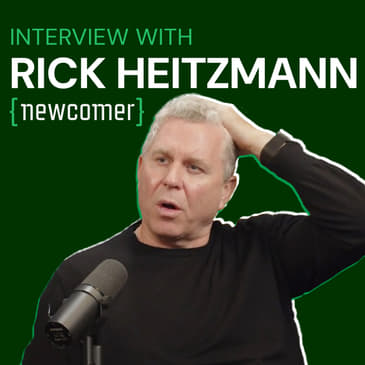
Rick Heitzmann of FirstMark joins the Newcomer Podcast to discuss the state of venture capital, the AI investment boom, and why the next wave of tech IPOs may be closer than many expect.
Rick shares how investors are thinking about AI infrastructure, the role of data as the core advantage in the AI race, and why massive private capital has allowed companies to stay private far longer than in previous cycles. As AI companies continue raising unprecedented amounts of money, the conversation turns to what happens when that capital eventually runs out and why public markets may become the next step.
Eric and Rick also discuss the broader venture cycle, the impact of market uncertainty on IPO timing, and how investors are navigating a period defined by rapid technological change and massive AI spending.
This conversation explores how venture capital is adapting to the AI era and what it could mean for the future of startups, public markets, and the next generation of tech giants.
00:00:00
So my new product that I'm going to take years to develop, I
00:00:03
might be able to sell to an existing customer for less.
00:00:06
That's a bitter pill, Swallow. Trivialize humans by saying
00:00:09
you're just an NPC. Now we're going to have agentic
00:00:11
NPCS that are. Very flush.
00:00:14
Send our digital twins over to to Yankee Stadium and send us
00:00:19
pictures like so. You could be social evil when
00:00:21
you're working. Today on the Newcomer podcast,
00:00:23
an old friend, Rick Heitzman, one of New York's most iconic
00:00:27
venture capitalists. He Co founded first Mark Capital
00:00:29
back in 2008 when betting on New York as a tech hub felt like a
00:00:33
contrarian take. He's invested in a lot of
00:00:35
companies, you know, love or maybe hey, Pinterest, Airbnb,
00:00:39
Riot Games, DraftKings and Discord.
00:00:41
So he's going to help us make sense of what could be MW IP OS
00:00:45
coming later this year with SpaceX, open AI and potentially
00:00:49
anthropic. This episode is all business
00:00:52
seed rounds, valuations, IP OS, what's not to love?
00:00:56
Here's the episode. Rick Heisman, thanks for joining
00:01:06
the Newcomer Podcast. It's awesome man.
00:01:08
Be good to be here. I only have been on in a long,
00:01:10
long time, so it's great to be back.
00:01:12
We've known each other for a long time, so it's fantastic.
00:01:15
Great to do it in person. I'm excited about this
00:01:18
conversation. You know, if you've been
00:01:19
watching the channel, we've veered into the political This,
00:01:21
this is business. If there ever was business, I
00:01:24
like talking to you because you're a startup guy.
00:01:27
You invest in early stage startups, but you're also in New
00:01:30
York. You talk to the bankers.
00:01:31
You have a sense of the capital markets and how startups
00:01:33
eventually go public. I feel like there are a lot of
00:01:36
financial people who want one or the other and it's hard to find
00:01:39
both so great. Way to talk to you.
00:01:41
It's good to be like that, man. You know, we, we think about it
00:01:43
in the power law companies, right?
00:01:45
The companies that generate most of our returns usually generate
00:01:50
those in the public markets. So you have to be public market
00:01:53
aware to really understand where your returns are coming from.
00:01:56
And as much as VCs like to be, you know, pickers where they
00:02:01
like to be style makers, they like to be podcasters, you know,
00:02:05
we view our job as being asset managers who actually have to
00:02:09
think about not only buying but also selling security.
00:02:12
You have to get the time in, right.
00:02:13
I think that's sort of something right In and out yes, so 2026
00:02:19
could be an insane year for public investors and getting
00:02:23
access to tech stocks. You know SpaceX, the now sort of
00:02:27
ultra merged Elon company should could go public open AI could go
00:02:33
public. Obviously we've just gone to to
00:02:38
war in Iran like and you know, as you mentioned to me, bankers
00:02:42
don't love wars. Companies don't love wars.
00:02:45
They want I'm. Not sure who loves wars.
00:02:46
Right. Exactly.
00:02:46
Nobody does. So yeah.
00:02:48
Do you think those IPOs are likely to happen this?
00:02:50
Year, I think they're so likely to happen.
00:02:52
You know, as we know the world shifts very quickly.
00:02:55
So so there's probably two things I think you alluded to
00:02:59
the market hates uncertainty and you know what are the most
00:03:02
uncertain companies previously private companies are getting
00:03:05
ready to go public. What else creates uncertainty?
00:03:07
Uncertain regulatory environments, things like
00:03:11
tariffs and things like an uncertain presidency.
00:03:14
And then what else creates uncertainty?
00:03:16
Wars, you know, unstable macroeconomic times, very
00:03:20
volatile currencies. So this is not a great time for
00:03:24
IPOs. I don't know if anyone would
00:03:26
anticipated this war. I don't know if anyone would
00:03:28
anticipated, you know, these changes with the Supreme Court
00:03:31
and tariffs or all these things. But I think people were feeling
00:03:35
good about an IPO market. And then there's probably going
00:03:37
to be one of two things. And I think we talked a little
00:03:39
bit about this sooner. Could smaller companies slide in
00:03:43
and you know, say, hey, here are interesting companies, might be
00:03:47
great companies. You know, these are founders who
00:03:49
worked very hard for a decade or more building a couple $100
00:03:52
million company, even a billion dollar company that could go
00:03:56
public and maybe Q2 after they do their annual audit.
00:04:00
And then what does it mean for these mega companies?
00:04:03
They're going to raise $50 billion plus.
00:04:05
So you talked about open AI and thropic maybe Stripe depending
00:04:10
on where they wind up and obviously SpaceX that they will
00:04:13
have such gravity. Rank Make your prediction on the
00:04:17
most likely to least likely of of.
00:04:18
Those I think SpaceX is definitely is going to go.
00:04:21
It needs it. Or I think it probably needs at
00:04:24
least because I think it's less capital consumptive than maybe
00:04:29
some of the other ones. I would say, you know, if I
00:04:31
would, if I was picking a bit ago, I, I, you know, now that
00:04:34
this is this mega Elon company, mega Elon company probably does
00:04:39
need some capital, especially if they're going to be providing
00:04:43
Internet from space and doing all kinds of different stuff.
00:04:47
That's still a bit unclear. But you know, the main the main
00:04:51
thing that's going to drive that IPO is going to be Elon and but
00:04:56
you know, open AI seems like the company that needs to go public
00:05:00
just talking about how much. Money it wants to spend so.
00:05:02
Yeah, just just raise more money in the private markets and
00:05:05
probably for the first time in, in, you know, in history or my
00:05:09
history, and I go back in the markets to the 90s, that
00:05:13
companies are going to run out of private capital.
00:05:15
I mean, SpaceX open AI have accessed every bucket, every
00:05:21
pocket, every sofa cushion of private capital and they're
00:05:26
about done. And, and if there was any more
00:05:28
money to come, it would be sovereign wealth.
00:05:30
And that, you know, the Middle East is not tied up.
00:05:32
Yes, they have. They have their they have their
00:05:34
other problems and the and the world's more uncertain.
00:05:36
And it seems like I, I, I don't know if you scrutinize it, but
00:05:40
the reporting the Amazon investment in Open AI seemed
00:05:43
like there was some potential IPO.
00:05:46
Yeah, there's there's some stuff like it'll be interesting in the
00:05:51
S ones to actually read the details.
00:05:53
Definitely if you think about everything from what is that,
00:05:56
what does that mean? What are some of the NVIDIA
00:05:58
deals mean? What does you know, what do some
00:06:01
of the private credit things people have done off balance
00:06:04
sheet? You know, there's one reported
00:06:07
at X dot AI where they did a massive private credit deal to
00:06:12
buy in video, which video also participated in equity.
00:06:16
So the disclosure around them will keep you busy for weeks.
00:06:20
Definitely. So SpaceX number one, open AI
00:06:23
#2. Open AI #2 Anthropic, you know,
00:06:26
you know, Dario famously says. You know, I don't know, maybe
00:06:28
next year I'm out of money, or maybe next year I'm a trillion
00:06:31
dollar company. I don't think he's going to be
00:06:33
out of money, but I think that they're probably #3.
00:06:37
Venture capitalists are very excited about that.
00:06:39
I mean obviously VCC only. Have So we've never seen a
00:06:42
company scale like this, right? Some of these companies have
00:06:45
scaled like things we've never seen before.
00:06:47
The consumer adoption of open AI is amazing, just the revenue
00:06:51
scale of Anthropics amazing. And then the market power of
00:06:55
Anthropics really amazing if you know, they just can announce a
00:06:59
I've never seen a private company just kind of announce a
00:07:03
product and crash a whole public sector.
00:07:06
And that's just going to be really interesting to see.
00:07:10
And you know, it's aside from a centrini of just being able to
00:07:13
say, you know, Anthropic got into security and that sectors
00:07:17
down 10 plus. And you know, you know, just
00:07:19
well, we're giving commentary on anthropic.
00:07:21
You know, once it's Simo. This fight with the Defense
00:07:23
Department was terrible. On the other hand, anthropic so
00:07:27
weak with consumers. If every you know, Lib mom is
00:07:30
about to go get and clawed. It seems like they're getting
00:07:33
huge download numbers. So it could.
00:07:34
Yes, there's like consumer, you don't know what it what that
00:07:37
means. And then you also don't know how
00:07:40
this changes, right. I mean, I think, you know, the
00:07:43
current administration has had back and forth with every single
00:07:47
company where they've been on the naughty list and I'm on the
00:07:49
nice list. All of a sudden the government
00:07:51
winds up in 10% and everything and everyone's off to the races.
00:07:54
And that could be prediction markets where chip companies?
00:07:59
Well, in your portfolio, probably the buzziest is Discord
00:08:02
that has had some reporting around there.
00:08:05
There are some others that are sort of in the mix that could
00:08:07
potentially go. And I think that everybody's
00:08:10
kind of waiting. You know, there's this weird
00:08:13
time in the market now where everyone has to finish their
00:08:15
audit and that kind of will probably take another couple
00:08:18
weeks if you're on an annual cycle.
00:08:19
Certain SAS companies are on a January fiscal year end.
00:08:23
So that takes time. So it's traditionally Q2 is a
00:08:26
time companies will get ready to go.
00:08:29
And I think you saw probably as good as a backlog as you've seen
00:08:31
in years that you know, it was, it was as bad of a time as
00:08:34
you've seen in years between 2223 and 24.
00:08:38
The market started to open up a little bit across the board,
00:08:40
right? We saw some crypto IP OS, we saw
00:08:42
fintech IP OS, we saw traditional SAS IP OS with
00:08:45
things like Figma. And now people thought, hey,
00:08:49
it's going to be open and it's going to be open for companies
00:08:51
of all types, both sectors wise and size wise.
00:08:55
And now all this uncertainty is, is, is kind of hitting a pause
00:08:59
button. And there's, there's probably 2
00:09:01
uncertainties that people are thinking about. 1 is macro
00:09:04
uncertainty, war, trade, regulatory.
00:09:08
And then what's going to be the gravity that these mega guys
00:09:11
have? And even if you're doing a
00:09:13
billion dollars in revenue, you're profitable, you're
00:09:16
growing well, no one care because everyone's just staring
00:09:20
at SpaceX open eye anthropic and trying to figure out both and I
00:09:24
would also in. Terms of like the retail story
00:09:28
or? I mean, even, yeah, I've heard
00:09:31
from some companies the it's, you know, getting banker
00:09:34
interest because bankers are like, oh, if I could raise 50
00:09:38
billion from Anthropic, this is going to be a huge year for me,
00:09:41
for my firm. So I got to stay close to
00:09:44
Anthropic. I'm not going to be bothered
00:09:46
with a, which was sort of a great IPO, $500 million IPO.
00:09:51
If I could just be part of that syndicate.
00:09:53
I need to focus on, you know, where the money is.
00:09:56
Say this is a thought exercise like say SpaceX or Anthropic did
00:10:01
their last fundraise on the public markets versus the
00:10:04
private. Do you have an intuition of
00:10:05
where they would have gotten a better price?
00:10:08
Like they stay public, they use capital scarce, they leave room
00:10:12
for sort of the growth in valuations or or do you think
00:10:16
you know, in some ways the private markets have become more
00:10:18
bullish than the public? Market, it's it's the age-old
00:10:21
question. I mean if you look at the
00:10:22
secondary markets, it definitely depends on buzz.
00:10:26
So we have companies in our portfolio so that we we keep an
00:10:28
eye on those very increasingly liquid secondary markets for
00:10:33
probably the first top 20 or so positions we just named about
00:10:37
you know, five or seven of them. There's probably another 15
00:10:40
companies that we can rattle off that have liquid enough markets
00:10:44
that the trading price matters. The buzziest ones traded a
00:10:48
premium to last round. The ones who are not as buzzy
00:10:51
traded discount. And you think?
00:10:52
That tracks with the public market and that I.
00:10:54
Think that that's a better predictor of public markets than
00:10:57
anything else. And you know, historically you
00:11:00
and it's also because they raised so much money and those
00:11:03
syndicates are so broad, tending to be with crossover investors,
00:11:06
right? So if you see a a Bailey
00:11:08
Gifford, a Fidelity, a Black Rock investing in a big private
00:11:12
round, they're kind of pricing it like an IPOI mean that whole
00:11:16
part of the market has been somewhat wiped out of small cap
00:11:21
tech investing. And that used to be, used to be
00:11:23
going back to the 90s, there used to become like a $300
00:11:26
million market cap where you'd be, you have a whole sector of
00:11:29
people that would follow it from 300 to 3 billion.
00:11:32
And it was somewhat inefficient part of the market, really good
00:11:36
part of the market that billions of dollars were invested in.
00:11:39
And that just doesn't exist. So you you predicted SpaceX
00:11:43
opener would probably still go what any other predictions about
00:11:47
what you think happens the anthropic?
00:11:49
Goes, I think, I think, I think Stripe waits till next year.
00:11:55
Stripe. Never wants to go public.
00:11:56
I don't. Think Stripe ever wants to go
00:11:57
public? They have a great business.
00:12:00
They're able to, you know, the things that they need to do of
00:12:04
raising capital and providing early employees and investors
00:12:07
liquidity. I I'd heard.
00:12:11
Chatter that thrive was sort of signaling to people you should
00:12:15
never go public like we'll find we'll do vehicles and there's
00:12:18
this argument that there's this sort of private investor class
00:12:22
that has an incentive It's like if I'm going to get exclusive
00:12:24
access, you don't need to get scrutinized on the public
00:12:27
markets. I'll price you, you know well, I
00:12:29
don't know what what do you make of does Stripe ever need to go
00:12:33
public it. Doesn't it?
00:12:35
Doesn't because they're getting the benefits of being in the
00:12:38
public market of liquidity and capital.
00:12:42
Is there some other reason that they need a depth of capital
00:12:46
they can't get in the private markets?
00:12:47
As the private markets have evolved, there's a tremendous
00:12:50
depth of capital. Like, you know, 20 years ago you
00:12:52
weren't seeing sovereigns, you weren't seeing large
00:12:56
institutional LP's who are Co investing in these large rounds.
00:13:00
And it's two things. It's companies are wanting to
00:13:02
stay private longer. What you're seeing is bigger
00:13:05
outcomes in when the companies do go public.
00:13:08
So the venture capitalists who stick with them are being
00:13:11
rewarded tremendously. And then you're seeing an
00:13:15
absence of, you know, whether institutions or public market
00:13:20
investors being able to participate in the small cap
00:13:23
tech, They're going back to the private markets.
00:13:25
So the venture capital entries totally subsumed that whole
00:13:29
sector. And they've done it kind of
00:13:34
somewhat slowly and quietly and maybe, you know, at least and we
00:13:39
have a growth fund unintentionally and, but I think
00:13:45
you're seeing great value creation there.
00:13:47
And I think the LP's in the and the institutional community is
00:13:50
saying, hey, if I want access to the best companies, I have to
00:13:53
get it through the best venture capitalists all.
00:13:56
Right we have to talk SAS apocalypse yes are you in the
00:14:01
abstract sort of buyer seller of figma like what what's your to
00:14:05
pull one or you know yeah I. Know, I know.
00:14:08
I know a little bit about Figma. I know they put up great
00:14:12
numbers, right, 136% net dollar retention, yeah.
00:14:16
You got more numbers on it than I do off the top of my.
00:14:18
Head yeah, they grew about, they grew about 40%.
00:14:20
So they're they're back to being a rule of 40 company.
00:14:26
You know, they've gotten beaten up in the public markets.
00:14:28
I think they're down about 70%, you know, depending on the day
00:14:31
this comes out. So that's a very, very good
00:14:35
company. You know, probably the best SAS
00:14:36
software company to a public last year, maybe the one of the
00:14:39
best companies the last couple of years, excellent CEO and
00:14:44
transitioning into AI. So I haven't followed the story
00:14:47
completely, but I followed it through the IPO and they had a
00:14:49
whole interview strategy at one of our.
00:14:52
Events last year, the CEO. Yeah, yeah.
00:14:54
And they have, you know, they're responding to the vibe coding
00:14:56
thesis. Yeah, they're really trying to
00:14:57
follow the person is trying. To evolve that, I mean they're,
00:15:00
they're competing on the edge with, you know, the replets, the
00:15:03
replets and Lovables over here, obviously competing a little bit
00:15:06
with Adobe on the collaboration side across SAS, you know, they,
00:15:11
they have a pretty big market space.
00:15:13
So I think that, you know, like a lot of other things, if you
00:15:16
have a big market, you have an excellent CEO, hopefully when
00:15:21
somebody else throws the baby out with the bathwater, that's a
00:15:23
good opportunity. I think some companies, and it's
00:15:27
no different than how we think about SAS and software investing
00:15:30
today, that you have to be two things.
00:15:33
You can't just be workflow because that's being
00:15:36
commoditized incredibly quickly by companies that could do that.
00:15:40
So you need to have some sense of a network effect and
00:15:43
collaboration. And then the most important
00:15:46
thing is having access to proprietary data, right?
00:15:48
So data is the oxygen for AI. It's also the Mouten AI.
00:15:55
So if you're either building horizontal or vertical software,
00:15:59
how do you have access to that data?
00:16:02
Because that's what's going to enable you to compound that
00:16:06
competitive advantage grow over time.
00:16:08
Your, your. Answer on figment.
00:16:10
Not that it's more of an example than anything, but if answer on.
00:16:12
Figment is is people have blanketly said SAS is dead, Some
00:16:19
SAS companies are dead. I think Figma is a very good
00:16:22
company which is not dead right you buy.
00:16:24
Into the somewhat the move against SAS, but you think there
00:16:27
are companies that will sort of yeah.
00:16:28
I think there's some SAS companies, especially companies
00:16:31
that haven't evolved and developed and you know, there's,
00:16:34
I don't want to name them, but you know, the companies that
00:16:36
maybe even gotten taken private by private equity companies who
00:16:39
then cut R&D, tried to milk that, that user base.
00:16:44
That user base is probably tired of getting milked that there's a
00:16:47
new AI forward company that provides a lot more value at
00:16:52
probably a similar cost that they're going to be, they're
00:16:56
going to be taken out and you know those companies then as you
00:17:00
start to unwind those companies then especially the ones that
00:17:03
are burdened with debt you can't reinvest, I agree with you on.
00:17:07
Sort of the private equity company that sort of allowed
00:17:10
their customers to hate them and now the customers have a tool to
00:17:13
say, oh, we we can do that. We can build custom much more
00:17:16
easily than we could before. You're extracting everything
00:17:19
from us we don't want. But what about like a sales
00:17:21
force? I mean, it's interesting there
00:17:23
because you know on sales force was on the come up in some ways
00:17:26
it could have been presented as a Oracle versus Salesforce
00:17:29
story, but Oracle has also done tremendously well since the rise
00:17:34
of Salesforce. So that's been sort of a
00:17:36
response like why does software necessarily need to get
00:17:39
decimated just because there's a new generation of company and
00:17:42
it's. Not like they're sitting on
00:17:43
their hands, right? Salesforce just yesterday bought
00:17:46
one of our company's momentum that is Fury AI Ford.
00:17:51
And you know, they have obviously amazing distribution.
00:17:55
If they can buy great products to plug into that distribution.
00:17:58
That's kind of how Salesforce has grown over the last 25
00:18:01
years. And so now that they have that
00:18:04
great distribution, are they being thoughtful and careful
00:18:07
about what products they build by and partner with to drive out
00:18:11
there? I don't know enough about
00:18:14
Salesforce to see how they're competing across each of those
00:18:16
things because Salesforce does so many things today.
00:18:19
But I know they're not, you know, thinking, you know, I know
00:18:22
they're not crying in their beer.
00:18:24
I know that they're being aggressive and being out there
00:18:26
and getting stuff done right. They're.
00:18:27
Very loud on agents and embracing the change.
00:18:31
On the other hand, it does sort of have some of the workflow
00:18:33
like a lot of their strength is you're doing sales, we do sales
00:18:36
like well, hey, you're doing. Sales, can you put this in this
00:18:38
other database and should you send that person an e-mail who
00:18:41
might buy something from you that could be agentic?
00:18:44
But and then the problem a little bit of the problem with
00:18:47
the public markets is can you slow down to speed up?
00:18:51
And will the public markets give you that grace to say, hey, I'm
00:18:55
going to need to disrupt myself. I'm going to need to cannibalize
00:18:58
myself either on pricing or on product.
00:19:02
And you know, that'll be the best thing for me in the long
00:19:05
term. I think the best CEOs get that
00:19:08
grace. I think, you know, Benioff
00:19:10
probably is that, you know, you'll, you'll obviously see
00:19:12
Elon who's done some things like that, that you're going to be
00:19:15
able to do that. And then it's going to be the
00:19:18
expectations in the public markets, a key thing being
00:19:23
pricing. And historically, you know, Sass
00:19:25
is priced on a seat basis. Well, there's a lot less seats,
00:19:29
right? People think there's going to be
00:19:31
a lot less seats and hard. To a complicated transition to
00:19:35
make. If you have to swap your
00:19:36
business model, take risk, especially on the public
00:19:39
markets, yeah. I I have to reinvent myself.
00:19:42
I sell a new product to an existing customer that I'm going
00:19:47
to charge less for and they're going to want to buy less seats,
00:19:50
even if they they live with that seat based model.
00:19:53
So my new product that I'm going to take years to develop, I
00:19:57
might be able to sell to an existing customer for less.
00:20:00
That's a bitter pill, Swallow. Changing gears to another
00:20:03
important topic, what do you make of the block layoff, You
00:20:08
know 40% of their employees, is that specific to block or you
00:20:12
think more to come? I think that's.
00:20:14
Going to be a trend. I mean Shopify famously has been
00:20:17
able to grow revenue over the last couple years. 70% will
00:20:21
keeping the employee base constant.
00:20:23
You know, there's two things that are happening there.
00:20:25
I think people grew very inefficiently during COVID.
00:20:29
And this might be the last piece of saying, all right, let's
00:20:32
reset ourselves. How many people do we need,
00:20:35
especially if we're here in person and we're able to act
00:20:37
more efficiently. All right, that might be how did
00:20:40
we look at the end of 2019 and how were we able to generate
00:20:44
efficiency then? And then on top of it, where can
00:20:48
we add agents? So I don't know many companies
00:20:52
who have done that analysis incredibly well.
00:20:55
You know, obviously companies on the board of that are smaller,
00:20:57
easier, more centralized through doing less things.
00:21:01
It's easier. But you think it's more over
00:21:03
hiring than agents creating value today, I think.
00:21:06
It's less focus on efficiency in the near term and then more
00:21:11
agents over time. So if you know, block takes out
00:21:14
40% of their employee base, that employee base might not grow
00:21:17
that much, right? They have the.
00:21:19
Confidence is sort of what they're trying to lean into in
00:21:21
terms of exactly new capacity is and you know.
00:21:24
Famously, X, you know, not only do they take out a whole bunch
00:21:27
of people, but they didn't grow that employee base.
00:21:30
Yeah. X will be fascinating what we
00:21:32
unfortunately, how much. Is we will never.
00:21:34
Necessarily know how well he did with that whole deal or not I I
00:21:38
can't imagine SpaceX really has to get granular about the
00:21:41
performance it'll. Be interesting.
00:21:44
It'll be interesting to see. I mean, they'll probably have to
00:21:46
report revenue numbers. Maybe that's about it.
00:21:48
I don't, I don't, I don't. I'm not a thank God, I'm not a
00:21:52
security player. What in terms of sort of the AI
00:21:56
deal making? Yes, it's been happening.
00:21:58
I know you have some point a point of view on that like what
00:22:02
I don't know, revenue round tripping I guess is the most
00:22:05
like charged way to put it. But like to what extent do you
00:22:09
think these deals, you know, including like now with Amazon
00:22:12
wanting opening out how to use Tanium chips are I pay you to
00:22:17
spend money with me? Yeah.
00:22:18
And then? There's some of the some of it's
00:22:20
off balance sheet with private credit that I'll give you some
00:22:24
equity, you'll agree to buy my stuff.
00:22:27
We're also going to put this private credit thing that's off
00:22:29
balance sheet we somewhat opaque that you know, opacity has never
00:22:34
been proven to be good for shareholders, right?
00:22:37
And transparency is the key thing to if you're not really
00:22:41
transparent and straightforward about something, what are you
00:22:44
trying to hide and why? And it's not because it's so
00:22:47
awesome that, you know, you want to hide it from the public.
00:22:50
So I think that's going to be a case, you know, just the, I
00:22:55
think the. Thirst.
00:22:57
For AI will let this go longer, right?
00:23:00
So everything, every new technology that was incredibly
00:23:04
CapEx intensive crash, right, whether that was the railroads
00:23:07
or television or fiber and the Internet at some point.
00:23:11
I will overextend at some time. What we're saying, because
00:23:13
there's no one ever says, maybe I'm maybe I'm OK, maybe I don't
00:23:17
need dessert tonight. Everyone's like ice cream and
00:23:20
all some gummy bears and hot fudge and, and you continue to
00:23:25
get rewarded right As the hyperscalers have said, I'm
00:23:29
doubling down on AI. I'm spending more stock prices
00:23:32
gone up. So not only is there an ego
00:23:36
thing of like, hey, I'm looking next to me and I got to keep
00:23:38
spending and keep up with my my fellow hyperscaler CEOs.
00:23:44
My stock price will go up when I do.
00:23:45
That my stock price goes up and I remember going back to the old
00:23:49
infrastructure Celex in the early days of building out
00:23:54
software that they, they came up with a a metric of you got
00:23:58
valued at 7 times whatever CapEx you put in the ground and that
00:24:02
became a a metric for next generation telco companies and
00:24:06
Internet providers in 2000. So you know what what's the
00:24:11
incentive there? You'll you will put as much as
00:24:14
you can in the ground and it's insane in.
00:24:15
Retrospect to think Internet providers were, once, you know,
00:24:18
obscenely valuable well. In in that every dollar, I mean,
00:24:22
once that metric came out that every dollar you spent, he was
00:24:26
worth $7.00. Your only incentive is just to
00:24:29
spend as much as you can as quickly as you can by getting
00:24:32
dollars, however you can get them.
00:24:35
And I'm not sure we're at that point now.
00:24:37
I think you're still seeing GPUs be somewhat.
00:24:43
There's no dark GPUs, there's no dark data centers.
00:24:47
What do you mean? By that, so there's.
00:24:49
Not being used in the, in the fight when people were laying
00:24:51
fire, they were, they called it, you know, 1% was dark, they
00:24:54
wasn't being used. We haven't lit that up yet.
00:24:57
And therefore we're building things for tomorrow.
00:25:00
And don't worry, the customers will come, because right now
00:25:04
NVIDIA. Has been great about projecting.
00:25:06
There's more demand, Yeah. We could seemingly set whatever
00:25:09
price we want exactly. So they said, you know, in that,
00:25:12
in that, in that analogy, the dark fiber people were
00:25:15
overbuilding, saying eventually the customers would come and
00:25:19
they did. It was just five years too late
00:25:20
and all the companies went bankrupt.
00:25:22
In this case, they are saying as many chips as I could produce,
00:25:28
someone's buying them and actually I can charge whatever
00:25:32
and there's a line outside the door.
00:25:34
You know, they're also investing in companies to buy their chips
00:25:37
and round tripping it. So you don't know what real
00:25:40
demand is, but until you see a little bit of of stopping a real
00:25:45
demand and some of that demand being driven by, you know,
00:25:49
consumers, some of enterprises, maybe a lot of that demand being
00:25:53
driven by fear in both enterprises and hyperscalers,
00:25:57
it's not going to stop anytime soon.
00:25:59
But you think it has. Another year or two years I
00:26:01
just. Think that given how we're
00:26:06
seeing some of these companies scale, given the fact that the
00:26:10
capital markets seem wildly open for them even, you know, as open
00:26:14
AI has hit some choppy waters and still continue to raise a
00:26:17
lot of money at very high prices open.
00:26:20
AI in particular is insane because it is still a nonprofit.
00:26:22
Obviously they resolve some of this, but.
00:26:24
They're structure court. There's so many.
00:26:26
That'll be interesting. We know they're interesting
00:26:28
disclosure when they go to court, I think later this year,
00:26:30
right, Right. They're yeah.
00:26:31
They're in a big legal battle with Elon.
00:26:33
You know, it's just, yeah, you can see, you know how Anthropic
00:26:38
is a less complicated company to invest in, where they're selling
00:26:41
to businesses, they're more eager to be profitable.
00:26:44
Whereas open AI, it's like weird structure, all the legacy
00:26:47
problems of being a yeah, they, they, they.
00:26:49
Have they have some consumer facing stuff?
00:26:51
They have some agentic stuff, they have some infrastructure
00:26:54
stuff. They're going to get into
00:26:55
specific agents. Are they going to?
00:26:57
You don't have a bet, right? You're disinterested.
00:26:59
In either of those and then, you know, how does that stack of,
00:27:03
hey, there's going to be consumer agents.
00:27:04
Some of those consumer agents are going to be shopping.
00:27:07
Well, they don't have a commerce.
00:27:08
They have a commerce strategy, but they don't have commerce
00:27:10
revenue. They have an ad strategy.
00:27:12
They're just getting into ad revenue.
00:27:14
You know, they're going to do specific roles for you.
00:27:17
They'll they're going to be involved in healthcare.
00:27:19
No one's quite sure exactly what that means.
00:27:21
Are they going to be your payment agent?
00:27:23
Are they going to be your, your healthcare coach?
00:27:26
Are they going to be your doctor in your pocket?
00:27:29
And then you're like, wow, these guys are kind of trying to do
00:27:32
everything, which was, you know, why I submitted the code red a
00:27:36
couple months ago. It's like, hey, we're doing
00:27:37
everything and we can't win a we can't fight a battle on every
00:27:41
front. I mean, I I wrote a piece of
00:27:43
being bearish at 157 billion, which seems clearly wrong.
00:27:47
Now I'm. Sure, you're going to edit that
00:27:49
out. No, I'm still bringing it up.
00:27:51
I can't help myself, you know, I wear my, my mistakes on my
00:27:55
sleeve. I mean, it's just very hard to
00:27:56
call, you know, pricing tops in new markets.
00:27:59
I mean, I remember when Silicon Valley was super divided by Uber
00:28:03
at 3 billion and thinking that was, you know, so far ahead.
00:28:07
So it's, it's really hard to know, you know, we will
00:28:10
overextend given the nature of how these will go.
00:28:12
But then you, you, you know the markets could the I forget it
00:28:16
was just Druckenmiller or or Julian Robertson.
00:28:19
The markets can remain irrational longer than you can
00:28:22
remain liquid. So betting against a market,
00:28:25
especially a runaway train market like this is, is, is
00:28:29
really, really hard, which is as in the, in the venture markets,
00:28:33
how do you kind of, you know, don't get irrationally excited
00:28:37
about it. Stay close to your knitting,
00:28:39
continue to invest in the in the strategy that you've committed
00:28:42
to yourself, your LP's, your partners about and continue to
00:28:46
do good deals in that space and good things happen.
00:28:50
What, how are you playing on the private markets right now or
00:28:52
where do you see investable opportunities in AI so?
00:28:56
We, we see really three different things.
00:28:58
We've begun to see consumer AI experiences and actually, and we
00:29:02
do a lot on the consumer side and even as people have
00:29:05
abandoned consumer, you did riot.
00:29:07
Games you did, riot. Games.
00:29:09
Yes, we're the seed investor in Riot and they've gone on to be
00:29:13
the biggest video game in the world over the last 20 years.
00:29:17
So you know, gaming is really interesting that non player
00:29:19
characters can be agents and therefore it makes a game more
00:29:22
fun assets and games can be created much more cheaply.
00:29:25
So we we've looked at a lot of things there.
00:29:29
We've looked at things of you know what are next generation
00:29:31
social networks and social constructs company called people
00:29:35
that does you can have a digital twin who exists out in the world
00:29:39
as an agent for you. You can have a digital friend,
00:29:41
you can have a digital pet. And what does that mean as these
00:29:47
these other things that are out there in the world, whether
00:29:49
you're pet or digital twin, are now interacting with yours.
00:29:52
So like, hey, digital Rick, go go digital Eric and go get an
00:29:56
ice cream cone at the Yankees game and then send us pictures.
00:30:00
And that's I can't claim to. Understand what's the appeal or
00:30:03
what's the it's no. Different than the Roblox of
00:30:06
you, you're you're basically able to have something else that
00:30:10
extends your social experience and But no, we were.
00:30:15
Hanging out, I guess we're friends now, you know, it's like
00:30:17
we've done that. We outsourced them in school.
00:30:19
We were working, we were doing a podcast, send our digital twins
00:30:23
over to to Yankee Stadium and send us pictures like so you
00:30:27
could be social evil when you're working.
00:30:30
But don't I? What I want from being social is
00:30:33
primarily like the experience, right?
00:30:36
You're getting old, man. I want the networking of it or
00:30:39
like the. Or you want you want the
00:30:41
experience or do you? You know, there's obviously a
00:30:45
whole generation's growing up that want the the likes and the
00:30:47
friends and you want the. Sort of saturation like.
00:30:51
Hey, look at look at little you're like Instagram if we're.
00:30:54
If we're going to the aquarium performatively on Instagram,
00:30:57
like why go at all just like have the yeah if you.
00:31:00
And if you could get likes, thumbs up points for for having
00:31:04
a very cool picture of little Rick and little Eric at the
00:31:08
Yankees game, that's just another way you could do things
00:31:11
when you don't have to do anything.
00:31:13
It's an accelerationist. View of getting rid of
00:31:15
Instagram. Yeah.
00:31:17
Well, I think yeah. I think there's going to be
00:31:18
agents or it's not just a flat photo that, you know, you're
00:31:21
hoping because you put a good filter on that people will like
00:31:24
you have people doing things for you.
00:31:26
So you know, whether it's the dating market, the social media
00:31:29
market, the gaming market, the commerce market, we do have done
00:31:34
a lot in digital health on the consumer side, which we think is
00:31:37
going to be transformed because Healthcare is so broken, you
00:31:40
know, better, you know, AI could definitely make that better,
00:31:43
faster and cheaper. And then on the enterprise side,
00:31:46
you know, we have two sides. We got, you know, call it, you
00:31:48
know, application layer enterprise AI that we talked a
00:31:51
little bit about having data and proprietary data and proprietary
00:31:54
access to data and the ability to use that data in to create
00:32:00
new applications, new enchanted applications.
00:32:02
We're also seeing companies like crisp who create inter
00:32:07
enterprise applications. So think about supply chain.
00:32:10
If I'm able to have an agent, if I'm able to have my data and
00:32:13
your data, you know, I'm Mandalay is your Walmart, you
00:32:18
know, somebody else's unify, which is, you know, the
00:32:22
logistics company. How do I understand how that
00:32:25
works and then be able to put intelligence on top of a multi
00:32:28
hop data system And you think about the lock in of that if
00:32:31
you're across enterprise and the data network effects which would
00:32:35
exist and why that's really important.
00:32:38
And then even, you know, the third bucket might be on the
00:32:40
infrastructure side. You know, a lot of Fortune 500
00:32:44
companies are still trying to pull data out.
00:32:48
You know, a lot of these companies have grown through
00:32:49
acquisition. They have a spaghetti of all
00:32:53
kinds of different databases, software, languages, all that
00:32:57
stuff. And they're just trying to
00:32:59
unlock that data. And there's a whole generation
00:33:02
of companies that are doing that.
00:33:04
And then what happens when you unlock the data?
00:33:06
Holy shit, you know, is that secure?
00:33:09
And who gets access to that? You know, so I, I've, now I have
00:33:12
this data, who's getting access, the agents getting access to
00:33:14
that. How long does the agents have
00:33:16
it? So if the agents has access to
00:33:18
your credit card and financial information all the time, well,
00:33:23
what is that agent doing? What is is that what does?
00:33:26
What are they gonna do and why? I'm very.
00:33:28
Interested in what company is actually willing to play
00:33:31
gatekeeper for agents spending your money right.
00:33:35
It's like, is it the actual application?
00:33:37
You know, you can see existing, you know, like a, a Plaid or
00:33:40
something. But it doesn't seem like a a lot
00:33:43
of companies I think are wary about signing up to be the one
00:33:45
that says yes, this is safe to let your agent go.
00:33:48
Spend or what does that and where does that data go?
00:33:52
Even if it's just your bank account number, like, oh, you
00:33:54
could go, you could go buy me that sweater, but you know that
00:33:58
would. So what's that agent give that
00:33:59
bank account to another agent who gives it to another agent?
00:34:02
And what does that mean? And, or if it's, you know, even
00:34:06
worse Social Security number, which you can't just cancel and
00:34:09
get another one tomorrow, you know, how does that how does
00:34:12
that data exist, whether it's payroll data.
00:34:14
So we think about that we've had.
00:34:18
Space. Yes, we have a.
00:34:19
Couple different things around that we have Daytona which which
00:34:22
does sandboxes around agents to keep them more secure and
00:34:26
running specific things. We have LM Studios, which
00:34:28
manages data around this problem and we're looking at a lot of
00:34:33
things because you know, the one of the best and worst things
00:34:37
about agents is they're always working, right?
00:34:39
So they're always working. I know we're.
00:34:40
Going to I feel like they're hope.
00:34:42
They're doing good stuff, but if they're doing bad stuff, they
00:34:44
could really. A new anxiety we're inventing
00:34:47
right now is this sort of when you wake up, you have to see
00:34:49
what your agent did. It's like, have I been
00:34:51
productive overnight? You know, did I set everything
00:34:54
up so that, you know, the night time agent work was super useful
00:34:57
and I have stuff to do today so or did they?
00:34:59
Get. Or did they, you know, take my
00:35:01
credit card on a Shopping Express shopping spree with
00:35:03
little Eric at the Yankees game? What?
00:35:05
I mean games, games and consumers obviously the most
00:35:08
fun. And what what in gaming in
00:35:11
particular, are you optimistic? Better.
00:35:13
Have you made any bets yet? Not?
00:35:15
Recently we we looked at some stuff in terms of content
00:35:18
creation with some stuff in terms of pure content creation.
00:35:21
So if I wanted to play you in a game, we can create a much
00:35:24
better game than we ever could of right.
00:35:26
So there's kind of next generation unities, which is
00:35:29
great game creation. Game engines, you know, game
00:35:33
engines are able to leverage, you know, existing IP and they
00:35:36
work with companies like Disney or Epic, they leverage existing
00:35:40
IP. So that game creation is going
00:35:42
to be easier or no different than it's just easier to create
00:35:44
applications or anything else like that today.
00:35:47
So we've looked at those things. It's hard to create a lot of
00:35:51
long term competitive differentiation.
00:35:54
So there's a lot of these companies are doing it.
00:35:56
They're all creating a lot of value, but it's hard to say
00:35:58
where they're creating a long term competitive
00:36:00
differentiation. So we haven't done anything
00:36:02
there. We've companies that are
00:36:04
creating really good at gentic non player characters, right.
00:36:09
So NPCS is you know the the term for them.
00:36:12
They used to be had an NPC. It was like, it was like, I know
00:36:15
well. NPC We trivialize humans by
00:36:18
saying you're just an NPC. Exactly.
00:36:19
Now we're going to have a gentic NPCS that are like, oh, it's.
00:36:22
Very fully fleshed, you know, So, you know, those were like
00:36:24
the stormtroopers. You're going to go straight
00:36:26
ahead and you're just going to shoot them.
00:36:28
And now these NPCS are going to be smarter, and there's people
00:36:31
who are making smarter NPCS, and that's kind of interesting.
00:36:34
But again, there was lack of differentiation.
00:36:37
You know what we're really probably most excited about on
00:36:39
the game side because I think that more people are playing
00:36:42
more games and maybe even some AI will let people work less and
00:36:46
therefore play even more games. And we both love playing games
00:36:51
is the opportunity to create, you know, independent studios,
00:36:54
right? So Riot despite being enormous
00:36:57
today was independent studio who said, you know, we were able to
00:37:00
bring League of Legends to market for about $6.7 million,
00:37:04
which you would just. Bet on a game, so I think.
00:37:07
There's going to be small teams of game studios who have
00:37:11
different play patterns. We've looked at things around
00:37:14
audio being a really interesting thing because the ability to use
00:37:19
AI to ingest audio and come back with audio.
00:37:22
So are there audio formats which are really interesting and
00:37:25
different? Are there interfaces that are
00:37:28
different? You know, looked at a company
00:37:30
that does kind of audio formats on TV.
00:37:33
So can you play? Yes, there are.
00:37:35
Some of my best friends, I host events with them, so I know them
00:37:38
very well. Yeah, there's a.
00:37:39
Couple yeah, really good. That's you know, and you know,
00:37:43
so are there different ways that hopefully I'll meet somebody
00:37:48
that'll say, you know what we thought about all these things
00:37:52
and we believe believe with like a handful of people, we can come
00:37:55
up with a game. They'll be completely different.
00:37:57
It'll be audio or voice driven and it'll be super cool and fun.
00:38:02
It'll be and we'll pull into all these things.
00:38:03
We'll be social, you know, they'll have a chantic NPCS and
00:38:07
they'll do all these things. But you know, we often times we
00:38:11
spend a long time looking for looking at mega trends and
00:38:16
figuring out what's going to be it.
00:38:18
And then you have to find that special entrepreneur the way
00:38:20
Brandon Beck and Mark Merrill were at Riot, who were like, ah,
00:38:25
you're actually saying what I've been trying to articulate for
00:38:28
years. This is an old one and we don't
00:38:30
need to spend a lot of time on it, but the whole like Major
00:38:33
League Gaming, like the did you guys made a play in that world?
00:38:37
We didn't. There was I.
00:38:39
Wrote about it and I got excited.
00:38:40
Founders Fund? Didn't they even make a play
00:38:41
like this? Sort of?
00:38:43
And obviously, you know, Activision went big on having
00:38:46
more. Broader E sports, E sports.
00:38:48
So there was a whole bunch of things in E sports, a whole
00:38:51
bunch of So there was teams, there was leagues, there's some
00:38:53
other things died. Right, like has that.
00:38:54
It's not. Happened well, if not the.
00:38:57
Pandemic when right it well. It died a little bit.
00:39:00
There's two reasons I think it died that different than like
00:39:05
Major League Baseball or the NFL.
00:39:07
The a lot of the rights and the IP was so controlled by the
00:39:11
games, by the games and the developer publishers that you
00:39:15
really were just playing someone else's game and he had less
00:39:18
control. And then they sort of.
00:39:20
Because then they got built sort of as marketing for the game,
00:39:23
but then because it wasn't a real business, they didn't have
00:39:25
to set it up in a way. And you can.
00:39:27
Only play in the in certain places and then therefore the
00:39:30
rules were very much dictated by that in the there was some very
00:39:35
big companies. 100 Thieves is still a really good company
00:39:38
growing that space 9 liquid. There was there was a lot of
00:39:41
companies that were very valuable at a time, but their
00:39:45
ability to gain audience didn't let them capture as much value
00:39:49
as I think people would have thought.
00:39:51
But there's still a really active, you know, riot, you
00:39:55
know, sells out, you know, any kind of regional event, You
00:39:59
know, I think they sold out. They had a three day champion
00:40:02
worlds in in Paris this past summer and it sold out in 8
00:40:06
minutes. So people are still, people
00:40:09
still love it, people still enjoy watching it.
00:40:12
I think that just the developer publishers are capturing the
00:40:14
lion's share of those economics a big.
00:40:16
Portfolio company of yours is Roe.
00:40:18
You know what's I mean, it's a fascinating space given the rise
00:40:23
of GLP ones like, yeah. What's your read on sort of
00:40:26
their Business Today? Yeah, I.
00:40:28
Think, you know, again, we're talking about megatrends thing
00:40:30
about the rise of GLP ones, the rise of direct to consumer
00:40:33
healthcare, the ability to put the patient first.
00:40:36
So you know, going, you know, one of the things you're looking
00:40:39
for as venture capitalists, incredibly large markets where
00:40:43
people are paying a lot of money and are very unhappy with the
00:40:46
service. And you think about healthcare
00:40:49
being very clear in that, that people have a lot of money for
00:40:52
healthcare either as an individual or even employer in
00:40:56
government being the other other very large payer who doesn't
00:41:00
feel like they're getting their money's worth.
00:41:02
The patients are unhappy. The payers tend to be unhappy
00:41:07
about everything. And So what do you, so how do
00:41:11
you fix that? I think it's around six weeks to
00:41:15
get an appointment with the doctor today in America.
00:41:18
So if you think about all the things you could use help on and
00:41:22
when you get an appointment, you get about, you know, 10-11
00:41:25
minutes. So it's not like, you know,
00:41:27
people are really, really have the time to really provide
00:41:31
personalized healthcare. You know, can, can you do
00:41:34
something in a better way with remote access with AI to help
00:41:39
that provider know what's important to you and why and
00:41:43
then to solve very large problems and you know, GOP ones
00:41:47
and you know, obesity have been a huge problem for a long time.
00:41:51
GOP runs have now been proven to be very helpful and a lot of
00:41:56
other conditions. And are they still?
00:41:58
Able to produce them because for a while they had the
00:42:00
opportunity. So there was there's.
00:42:02
Like a scuffle there, yeah. GLP ones became so popular that
00:42:07
there was a global shortage. If there's a global shortage of
00:42:10
a necessary medication, the FDA says, OK, we're basically going
00:42:14
to suspend the patent and we're going to let people compound
00:42:17
their own drugs. And then when when that shortage
00:42:22
is over, it flips back and says, hey, you know, you got to
00:42:25
respect the patent again. And that's been a lot of chop in
00:42:28
the market with different players.
00:42:30
You know, we're always been incredibly good about respecting
00:42:33
those patents and saying, OK, when we need to compound to be
00:42:37
able to fill that consumer demand because there's excess
00:42:40
demand, we'll do that. And now when that's not there,
00:42:43
how do we partner with the Nova Nordics or Eli Lilly's of the
00:42:46
world to provide the best possible medication to the right
00:42:50
person at the right time at the right price?
00:42:54
And that that's moved on. And, you know, they've continued
00:42:57
to provide a great service. You know, they're kind of, you
00:43:01
know, Morgan Stanley put out a great note saying they're kind
00:43:03
of the Spotify of direct to consumer healthcare that you're
00:43:07
getting a premium service in a white glove way.
00:43:10
And you feel like you're being treated like this is a really
00:43:14
good service and you're a patient and and you're being
00:43:17
treated even as a patient like a customer finally.
00:43:20
And I think, you know, the growth of Roe, you know, kind of
00:43:25
riding that tide of GLP ones and that being maybe the most
00:43:29
important drug in the last 20 years is going to be a great
00:43:31
story for, you know, some of the stories they tell and how
00:43:35
they've changed people's lives, the ability to access
00:43:39
healthcare. And then from a digital health
00:43:42
side, how it's really changing the way that pharma companies go
00:43:45
to market and the impact they're able to have they they can.
00:43:48
Get the consumer excited about a drug that's good for them and
00:43:51
not Yeah, well. They hear it, they go see it,
00:43:53
and then they if they want to have access to it, they have
00:43:56
access to it. There's now a bunch of different
00:43:57
formulations. You get a pill, you could get a
00:44:00
shot. You can go from Lilly or
00:44:02
Nordisk, there's different providers and therefore you have
00:44:07
the ability to say, hey, this one's right.
00:44:09
For me it's differentiated. In some, yeah.
00:44:10
Well. There's enough, there's enough
00:44:11
providers out there that this one's right for me.
00:44:13
Hey, I'm afraid of needles. I'd rather take a pill.
00:44:17
I'd rather, you know, payless or pay more for it.
00:44:20
Maybe a different brand, no different than anything else.
00:44:23
But you know, here's what I definitely know what I want.
00:44:24
I definitely want to be able to take this drug, which is proven
00:44:27
to help people lose weight, you know, push off dementia, have a
00:44:31
lot of these other knock down effects.
00:44:34
And I want it delivered to my house and I want to be able to
00:44:37
do my regular check UPS. I want to be able to check on
00:44:40
make sure there's no side effects.
00:44:41
I want to be able to do that right, right through my phone
00:44:44
and get what I believe is a very high quality service.
00:44:49
And that's, you know, this next generation of companies are able
00:44:52
to provide a very high level of service, delight their customers
00:44:57
and then have, you know, a huge viral effect.
00:45:00
First, Mark was an investor in DraftKings.
00:45:02
Yes. Have the prediction market
00:45:04
companies, have you made a play there?
00:45:06
We have. Not and not because we were in
00:45:08
draft investors, DraftKings, we looked at some of them, maybe
00:45:12
because we were concerned maybe about the regulatory
00:45:15
environment. You're like we were.
00:45:16
Deep in the regulatory environment, and these companies
00:45:19
don't seem worried about it. We lived.
00:45:21
Through. It right?
00:45:22
And, and, and got and, you know, felt some of the pain of that
00:45:26
and these companies didn't seem concerned about it, which gave
00:45:29
us some concern. Do you think they were?
00:45:32
Always the prediction markets were always sports betting
00:45:34
companies in sheep's clothing, basically.
00:45:37
Well, I think now you could look at the and whether it's the
00:45:41
banks, Oregon, everyone else doing research, I think it's 85
00:45:45
plus percent of the prediction market stuff definitely now.
00:45:48
It is. I mean, for a little while they
00:45:49
had a 6A about, you know, elections and everything and
00:45:51
then. All of a sudden it's a little
00:45:52
bit about it. And then I mean, I was even over
00:45:55
in in Europe for a board meeting during the NFL playoffs.
00:45:59
And I wanted to look up. I, I think it was, you know, how
00:46:03
long the PM, how long people thought the PM was going to stay
00:46:06
in, stay intact in, in, in Great Britain.
00:46:10
And I go to pull up my prediction market and I couldn't
00:46:15
even get to how long that PM was going to be there because it was
00:46:19
8 pages of NFL ads, NFL playoff ads.
00:46:24
How do you? Think you think there's
00:46:25
eventually a crackdown? I think it's going to be
00:46:28
interesting. I think the current
00:46:30
administration is not going to crack down.
00:46:33
I think that might change under different administrations.
00:46:37
You know, the key thing is California, Texas and Florida,
00:46:41
huge part of the US that were, you know, at least California
00:46:46
bought, you know, actively voted to not allow sports gambling and
00:46:51
then now sports gambling exists. So what does that mean?
00:46:56
Maybe under a different administration or someone's
00:46:59
different way to view it or has this completely just, you know,
00:47:04
horses are so far out of out of the out of the paddock that
00:47:08
there's like a we, we can't turn this back anymore, you know,
00:47:12
which I think would just grow that market tremendously.
00:47:15
I think you know, DraftKings just had their investor day and
00:47:18
they said, you know, maybe we were not on our front foot on
00:47:22
the prediction markets because we we were trying to be is so
00:47:26
good on the regulatory side. But they were able to buy a
00:47:29
company in prediction markets and they believe this is growing
00:47:32
their Tam tremendously. So I think all those companies
00:47:36
will benefit from it. You know Flutter and DraftKings
00:47:38
on the current public side with their with their brands they
00:47:42
have today. But then obviously calcium
00:47:44
polymarket, are you still? Drafting as investor as.
00:47:48
Individual I, I still own a lot of the stock I got as an
00:47:51
individual as part of first mark, but we, we've distributed
00:47:55
all our stock this this. Sort of.
00:47:56
Political swing is interesting. Sort of closing out with, you
00:48:00
know, the IPO conversation again, I mean, do you think some
00:48:03
of these companies, yeah, they sort of need to go public in a
00:48:06
Trump era like the SpaceX and Elon's, where he's so close to
00:48:10
the. Administration, you know, I
00:48:12
don't know if you have to rush out before the midterms.
00:48:16
I don't know if the market cares that much about like rushing out
00:48:19
before the midterms. You know, what do you were, you
00:48:24
know, if something happened in the midterms and then that
00:48:27
emboldened the Democrats to say, hey, these prediction markets
00:48:31
are, you know, we're, we're after them, we're after them.
00:48:35
And that's going to be a huge piece of our 28 platform.
00:48:39
I think, you know, if you're a polymarket investor, you'd
00:48:42
rather be out than in, right? You'd rather have just already
00:48:46
gone public, just gone. Public and at least I always
00:48:49
think, and this might be a bias I have that if you can get out
00:48:54
and, and you, you think there's going to be something rough
00:48:57
ahead, you're better being out. We have more access to the
00:49:01
financial markets, even though it might be harder or more
00:49:04
expensive than it might, you might have thought and you at
00:49:08
least have some liquidity for some of your early employees and
00:49:12
investors. They might not be happy if you
00:49:15
hit a, a speed bump with the stock price, but they'll be more
00:49:18
happy than if you were private. So you just have greater degrees
00:49:22
of fleet of freedom to operate. You know, you have to provide
00:49:25
more transparency, but if you're uncertain about what's ahead and
00:49:28
you have the opportunity to be a public company during that time
00:49:31
of uncertainty and obviously if you have the great CEO, you want
00:49:35
to be up, Rick. Thanks for coming on the
00:49:37
podcast. Awesome.
00:49:38
Thanks. Great seeing you man.
00:49:39
That's our. Episode enjoyed having Rick on
00:49:41
the podcast. Thanks for sticking around to
00:49:43
the end. Please, if you've made it this
00:49:45
far, you've got a like comment subscribe excited to grow the
00:49:49
channel And of course, you can find our writing and reporting
00:49:52
on Sharpson Venture Capital at newcomer.co.
00:49:57
We also host events. You can check out what we're
00:49:59
doing at Newcomer dot events. Share the podcasts, help us get
00:50:02
distribution, support the channel comment support, like
00:50:06
comment subscribe. You know, you know the deal.
00:50:08
Thanks. Thanks for being on the journey
00:50:10
with us. All right, see you next week.